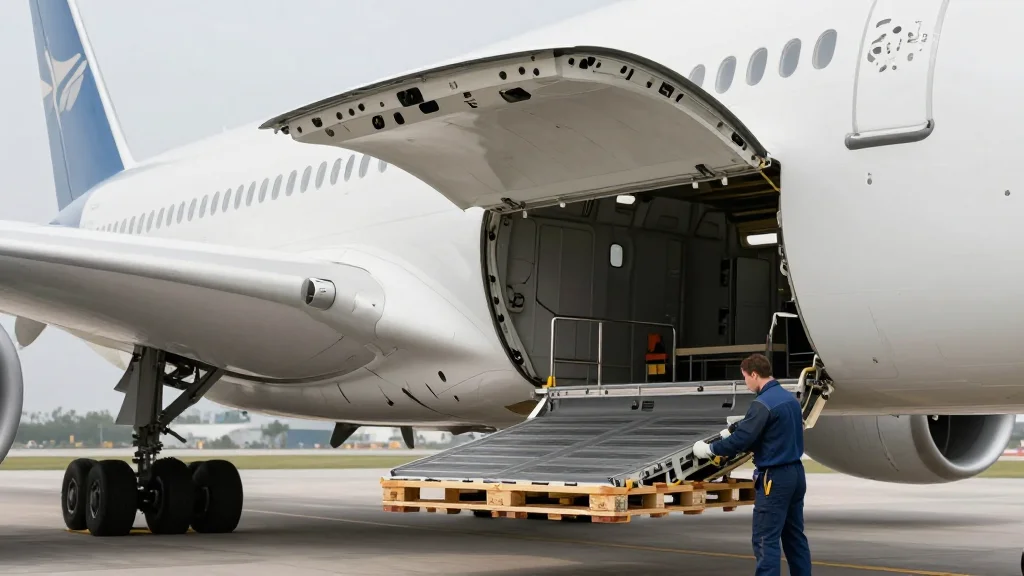
Airbus Pushes A350 Freighter Toward Final Validation
Why It Matters
Ground testing de‑risks the A350F’s certification schedule and confirms its ability to meet growing air‑cargo demand, positioning Airbus against rivals in the high‑value freighter market.
Key Takeaways
- •Ground testing started on A350F during final assembly.
- •40% of test instructions are new or adapted for freighter.
- •Main‑deck cargo door cycles to verify sensors and alerts.
- •Max payload test confirms 111‑tonne capacity.
- •Composite structures include 4.5 m cargo door and stabilizer.
Pulse Analysis
Airbus’s decision to begin serial ground testing on the A350F marks a pivotal step in the aircraft’s development timeline. Conducted while the airframe is still on the line, these tests bridge the digital design phase and real‑world performance, ensuring that every system behaves as intended before the first flight. By integrating the ground‑test design team early, Airbus can resolve testability constraints during preliminary design, reducing costly re‑work later in the program and keeping the certification schedule on track.
The A350F’s test matrix focuses on freight‑specific innovations that differentiate it from the passenger A350. Engineers are cycling the main‑deck cargo door both manually and electrically to validate sensor feedback and the anti‑tail‑tipping warning system, while an automated wiring self‑test lets crews verify hundreds of connections from the cockpit. Additional trials examine the new water‑waste infrastructure, multi‑zonal air distribution, and smart connectivity that streams video from the cargo hold. A dedicated max‑payload test will prove the aircraft can safely handle its 111‑tonne design limit, a figure comparable to the weight of 18 elephants, reinforcing Airbus’s claim of superior payload efficiency.
The freighter market is tightening as e‑commerce and global supply chains demand faster, higher‑capacity air transport. Competitors such as Boeing’s 777F and the upcoming 777‑XF are already in service, so Airbus’s entry with a composite‑rich, fuel‑efficient platform could reshape capacity economics. By leveraging carbon‑fiber sections for the fuselage barrel, wingset and horizontal stabilizer, the A350F promises lower operating costs and reduced emissions, aligning with airlines’ sustainability goals. Successful certification will not only expand Airbus’s product portfolio but also give cargo operators a modern alternative that blends range, payload, and operational flexibility, potentially reshaping freight fleet strategies over the next decade.
Airbus pushes A350 freighter toward final validation
Comments
Want to join the conversation?
Loading comments...