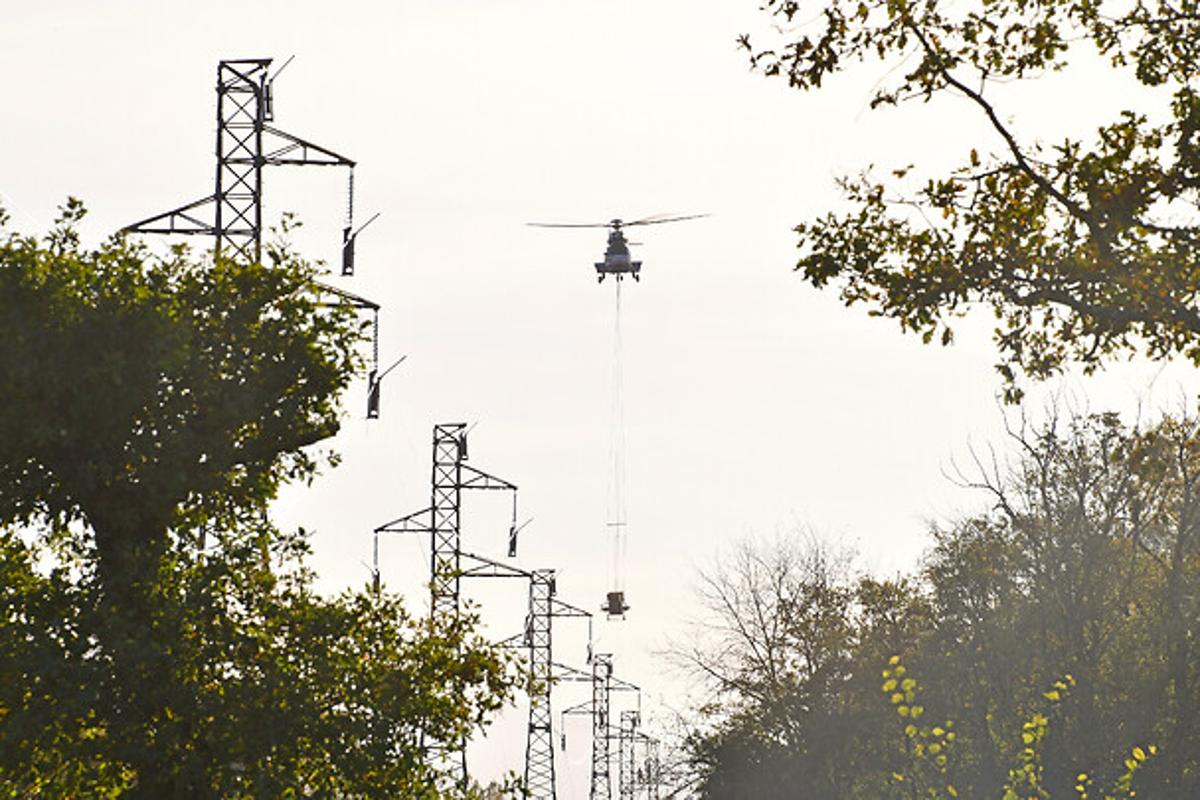
Airbus Super Puma: Power and Precision for Airtelis
•March 3, 2026
0
Companies Mentioned
Why It Matters
The H225 showcases how heavy‑lift helicopters can bridge gaps in public‑safety response and critical‑infrastructure restoration, shaping future procurement for utilities and emergency agencies.
Key Takeaways
- •H225 dropped 500,000 litres water in Marseille fire.
- •4.5‑ton lift capacity enables power‑line “flying crane” tasks.
- •Precision automation reduces crew workload during complex missions.
- •Rapid deployment from Marignane supports island‑wide disaster response.
- •Airtelis uses Super Puma for firefighting and utility repairs.
Pulse Analysis
Heavy‑lift rotorcraft like Airbus’s H225 have become indispensable assets for governments and utility operators seeking rapid, high‑capacity response to natural disasters. The Super Puma’s combination of a powerful turboshaft engine, extended range, and a 30‑metre sling system allows it to transport and release massive water volumes, a capability that traditional ground crews cannot match in rugged, wind‑laden terrain. Moreover, its onboard precision automation—ranging from GPS‑guided hover to automated bucket release—reduces pilot fatigue and improves drop accuracy, directly translating to faster containment of fast‑moving fires.
During the July 2025 blaze that threatened Marseille, Airtelis crews coordinated with civil protection agencies to execute an eight‑hour sortie, delivering half a million litres of water while navigating power‑line corridors. Pilot Stéphane Lucchini highlighted the challenge of avoiding live wires, a task made feasible by the H225’s advanced situational‑awareness sensors and stable hover envelope. The aircraft’s ability to stay airborne longer without refuelling minimized interruption, a critical factor when every minute allows a fire to spread. Such operational efficiency not only safeguards lives but also curtails economic losses associated with prolonged wildfire damage.
Beyond firefighting, the Super Puma’s 4.5‑ton lifting capacity transforms it into a “flying crane,” ideal for restoring electricity networks after cyclones or earthquakes. The La Réunion deployment demonstrated rapid mobilization from Marignane, delivering six containers of equipment and enabling crews to access hard‑to‑reach transmission sites. This dual‑role capability positions the H225 as a strategic investment for utilities aiming to enhance resilience, prompting a shift toward integrated aerial solutions in national emergency‑response frameworks. As climate‑driven events increase, demand for such versatile platforms is expected to rise, influencing future procurement cycles across Europe and beyond.
Airbus Super Puma: Power and precision for Airtelis
0
Comments
Want to join the conversation?
Loading comments...