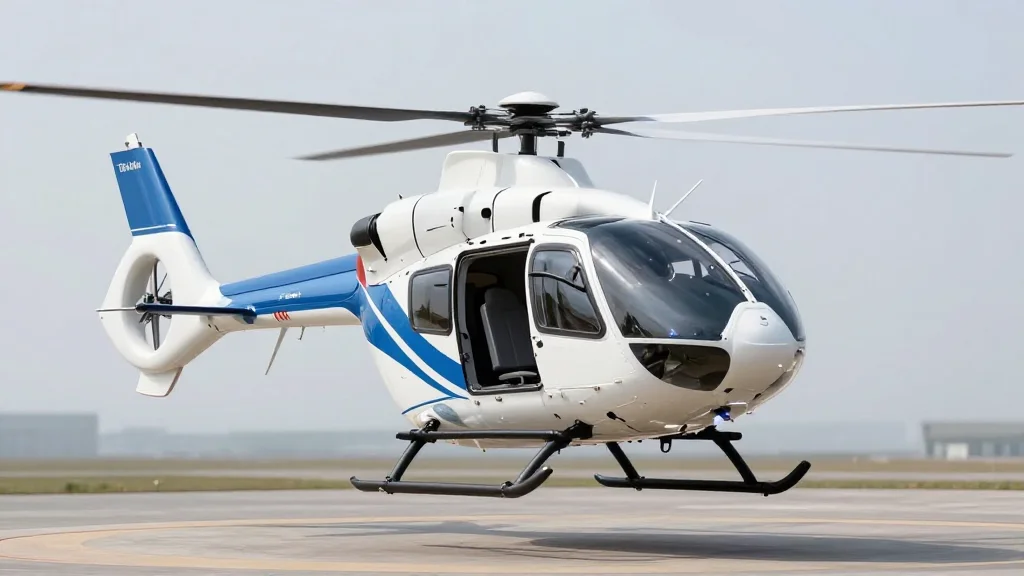
Airbus Unveils Autonomous U145 Helicopter Platform
Why It Matters
The U145 expands Airbus’s foothold in the rapidly growing autonomous aviation market, offering a versatile, payload‑rich solution for both civil logistics and defence operations. Its cockpit‑free design could reshape rotorcraft architecture and supply‑chain logistics worldwide.
Key Takeaways
- •U145 derives from H145, 1,800+ in service worldwide
- •First flight with safety pilot slated for late 2026
- •Cargo-focused redesign includes nose door and foldable loading table
- •Airbus aims at high‑volume cargo, disaster response, and armed recon
- •Autonomous design removes cockpit, boosting payload and mission flexibility
Pulse Analysis
Airbus Helicopters unveiled the U145 at the ILA Berlin Air Show, marking its second foray into converting a crewed rotorcraft into an uncrewed platform. Built on the proven H145 airframe, which has logged more than 8.5 million flight hours and serves over 1,800 operators worldwide, the U145 integrates a dedicated sensor suite and artificial‑intelligence flight‑control software. By leveraging an existing, widely supported platform, Airbus accelerates entry into the fast‑growing autonomous aviation market, positioning the aircraft for both civil logistics and defence missions.
The U145 eliminates the traditional cockpit, freeing internal volume for cargo handling. Airbus has added a nose cargo door, a fold‑out loading table and a reinforced cargo floor, enabling rapid reconfiguration between missions such as high‑volume freight, disaster relief, firefighting, and armed reconnaissance. With a maximum take‑off weight of 3,800 kg, the aircraft can transport sizable payloads while maintaining the H145’s twin‑engine reliability. Integrated AI‑driven navigation and a suite of lidar, radar and optical sensors provide beyond‑visual‑line‑of‑sight autonomy, reducing crew risk and operational costs.
The U145 signals a broader shift in aerospace design, where removing the crew opens new possibilities for weight savings, electromagnetic compatibility and thermal management. Suppliers will need to adapt material strategies to meet the dual demands of structural efficiency and the integration of high‑density electronics. Airbus plans to collaborate with specialist autonomous‑mission partners, expanding Europe’s ecosystem for unmanned aerial systems. As regulators gain confidence in AI‑controlled flight, platforms like the U145 could accelerate adoption of crew‑less logistics, reshaping supply chains and offering militaries a versatile tool for contested environments.
Airbus unveils autonomous U145 helicopter platform
Comments
Want to join the conversation?
Loading comments...