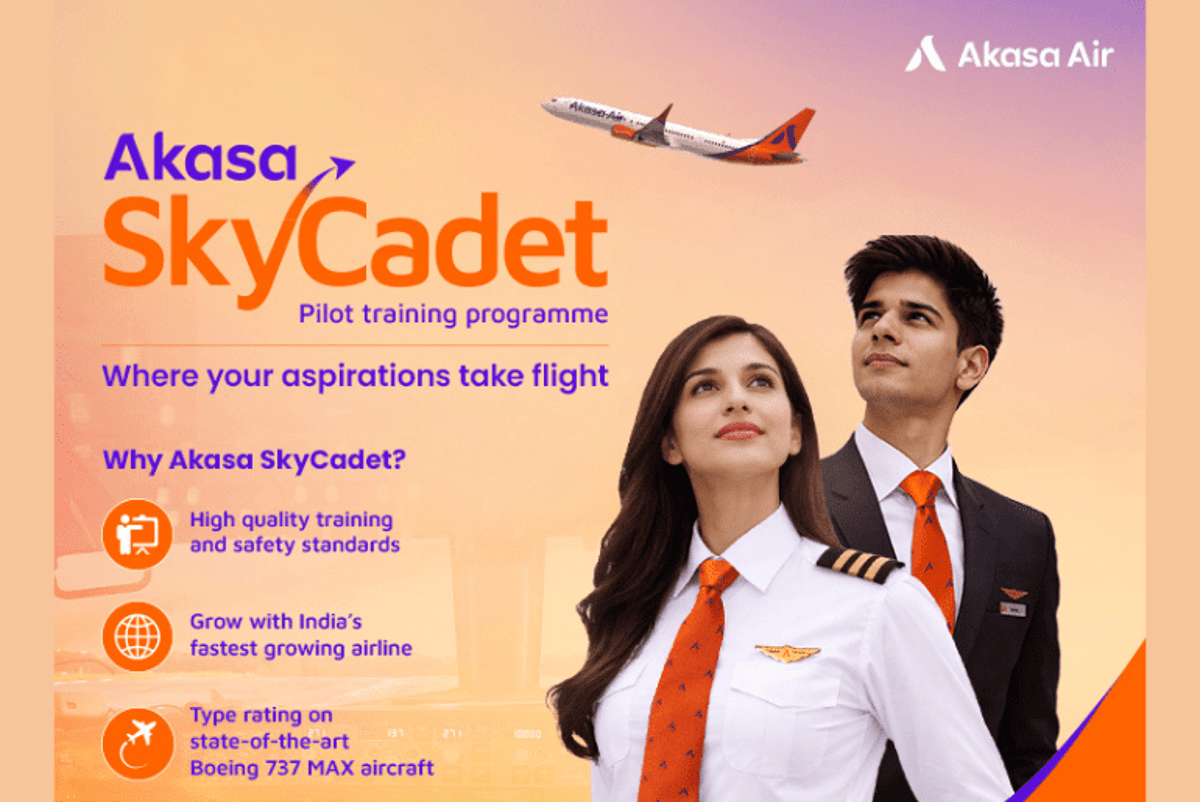
Akasa Air to Build Future Pilot Talent Pipeline with SkyCadet
Companies Mentioned
Why It Matters
By building a home‑grown pipeline, Akasa mitigates the industry‑wide pilot shortage and strengthens its long‑term operational scalability as India’s air travel demand soars.
Key Takeaways
- •Akasa SkyCadet creates structured pilot pipeline for India’s growing market
- •Programme partners with Skynex Aero and Dunes Aviation Academy for training
- •Targets 35,000 pilots needed by 2035, addressing talent shortage
- •Includes Boeing 737 MAX type‑rating to fast‑track airline readiness
- •Supports Akasa’s fleet expansion and long‑term talent strategy
Pulse Analysis
India’s aviation sector is on a growth trajectory unlike any seen in the past decade, with carriers ordering roughly 1,700 new aircraft and the commercial fleet expected to nearly triple by 2035. This surge translates into a looming pilot shortfall; estimates suggest the country will need about 35,000 commercial pilots within the next twelve years, far outpacing the current pool of 12,000‑15,000. The scarcity threatens route expansion, aircraft utilization, and overall profitability for airlines seeking to capture rising passenger demand.
Akasa Air’s SkyCadet programme addresses this gap through a comprehensive, three‑phase curriculum. The ground‑school component imparts core theoretical knowledge, followed by a Commercial Pilot Licence (CPL) phase that blends dual and solo flight, instrument navigation, and cross‑country operations. The final stage delivers Boeing 737 MAX type‑rating via simulators and aircraft systems training, aligning cadets directly with Akasa’s fleet requirements. Partnerships with Skynex Aero and Dunes Aviation Academy ensure compliance with DGCA and ICAO standards, while the structured pathway offers clear career progression for fresh entrants.
Strategically, the initiative positions Akasa Air as a talent‑centric carrier capable of scaling its operations without relying solely on external recruitment. By cultivating pilots internally, the airline can embed its safety‑first culture early, reduce onboarding costs, and secure a steady supply of crew for its expanding network. For the broader market, SkyCadet serves as a model for other Indian carriers, highlighting how proactive talent pipelines can turn a looming workforce crisis into a competitive advantage.
Akasa Air to build future pilot talent pipeline with SkyCadet
Comments
Want to join the conversation?
Loading comments...