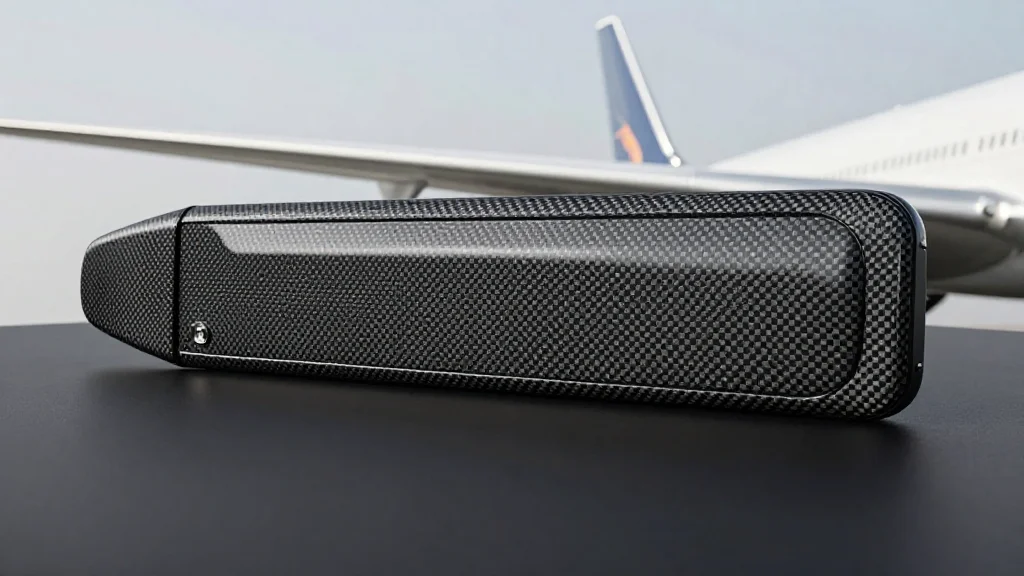
Albany Receives Pratt & Whitney Engine Component Contract Through 2036
Companies Mentioned

Why It Matters
These contracts show major OEMs scaling composite manufacturing to cut aircraft weight and operating costs while complying with tighter environmental regulations, positioning suppliers like AEC and Airbus at the forefront of next‑generation commercial jets.
Key Takeaways
- •AEC wins Pratt & Whitney contract through 2036 for composite engine parts
- •Contract marks AEC's first high‑volume production program with Pratt & Whitney
- •Airbus completes largest composite cargo door for A350F, 4.3 m wide
- •A350F door enables faster loading, improves weight efficiency, reduces emissions
- •Both deals underscore rising composite demand in commercial aviation
Pulse Analysis
The aerospace industry is accelerating its transition to advanced composites, and Albany Engineered Composites’ new agreement with Pratt & Whitney underscores that momentum. The contract, extending to 2036, secures AEC as a primary supplier of high‑precision composite structures for the Geared Turbofan (GTF) engine, a powerplant that powers many new‑generation narrow‑body jets. By leveraging carbon‑fiber technology, Pratt & Whitney aims to shave weight from critical engine components, directly translating into lower fuel burn and reduced maintenance cycles—key competitive differentiators in a market where airlines are tightening cost structures.
Airbus’s recent delivery of the largest composite main‑deck cargo door for the A350F freighter further illustrates the material’s strategic value. The 4.3‑metre‑wide door, built in Illescas, Spain, not only simplifies loading operations but also contributes to the aircraft’s overall weight savings, helping the A350F achieve a 46‑tonne advantage over rivals. Coupled with a 20% reduction in fuel consumption and compliance with ICAO’s 2027 CO₂ standards, the door exemplifies how composite integration can meet both operational efficiency and sustainability goals, especially as the freighter targets up to 50% sustainable aviation fuel use at entry‑to‑service.
Taken together, these developments signal a broader industry shift toward composite‑centric design philosophies. Suppliers that can deliver high‑volume, high‑precision parts are poised to capture long‑term contracts, while OEMs benefit from lighter, more fuel‑efficient aircraft that meet evolving regulatory pressures. As airlines increasingly prioritize lower emissions and operating costs, the demand for composite solutions is set to expand, reshaping supply chains and fostering further innovation in manufacturing processes.
Albany receives Pratt & Whitney engine component contract through 2036
Comments
Want to join the conversation?
Loading comments...