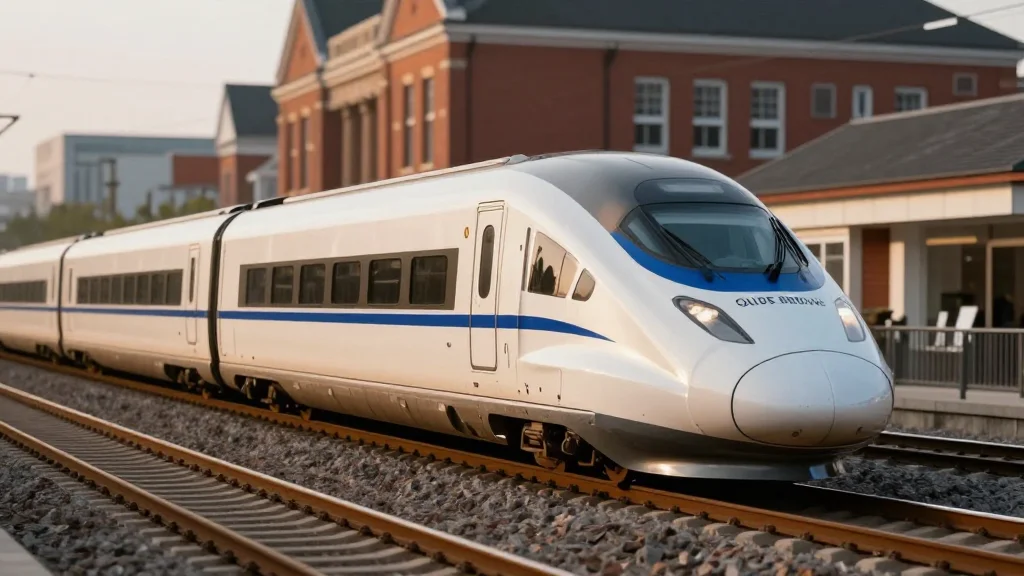
Alstom Strengthens U.S. Rail Future Through Partnerships with Academic Institutions
Companies Mentioned
Why It Matters
By linking industry expertise with academic research, Alstom secures a skilled workforce and accelerates innovation, strengthening its competitive edge in the fast‑growing U.S. rail sector.
Key Takeaways
- •Alstom endows $50k engineering scholarship at Alfred State College.
- •Joins NYU Rudin Center advisory board to guide transportation research.
- •Founding sponsor of Penn’s Transportation Initiative, linking policy and practice.
- •Recent U.S. orders include hundreds of commuter cars and first high‑speed train.
- •Supports workforce for plants in New York and Pennsylvania, bolstering local jobs.
Pulse Analysis
Alstom’s latest academic alliances illustrate a strategic shift toward ecosystem‑wide talent development. While many manufacturers focus solely on hiring, Alstom is investing directly in education, creating a pipeline that feeds its factories in Hornell, NY, and its engineering hubs in Pennsylvania. The $50,000 scholarship fund at Alfred State College not only funds tuition but also reinforces hands‑on technical training that aligns with the company’s production needs, ensuring graduates are job‑ready from day one.
Beyond scholarships, Alstom’s presence on the NYU Rudin Center advisory board and its sponsorship of Penn’s Transportation Initiative bridge the gap between cutting‑edge research and real‑world implementation. These collaborations give faculty access to industry data and field sites, while Alstom benefits from early insights into emerging mobility concepts, policy trends, and sustainability metrics. Such knowledge exchange accelerates the development of next‑generation rail solutions, from energy‑efficient propulsion systems to advanced signaling platforms, keeping Alstom ahead of rivals in a market where innovation cycles are tightening.
The timing of these partnerships dovetails with Alstom’s robust order backlog in the United States, where the company has secured hundreds of commuter cars and delivered the nation’s first domestically built high‑speed train. Coupled with a FY 2026 revenue conversion of roughly $20.7 billion, the firm’s financial muscle supports sustained investment in both infrastructure and human capital. For investors and policymakers, Alstom’s approach signals a long‑term commitment to U.S. rail modernization, job creation, and the broader transition to sustainable, high‑capacity public transit.
Alstom strengthens U.S. rail future through partnerships with academic institutions
Comments
Want to join the conversation?
Loading comments...