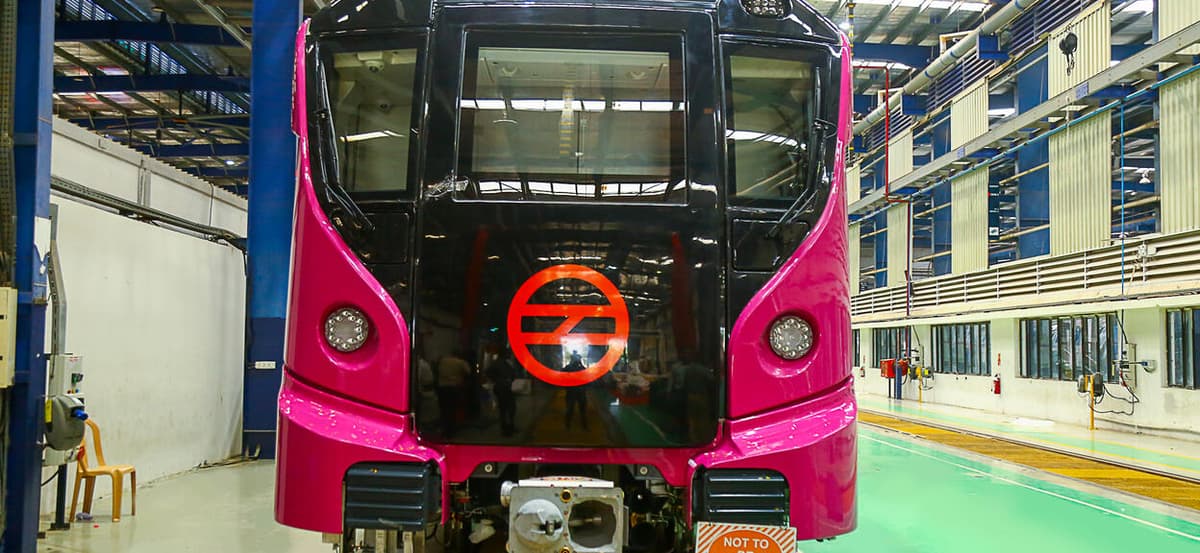
Alstom Supports Delhi Metro Pink and Magenta Line Extensions
•March 9, 2026
0
Why It Matters
These extensions boost Delhi’s transit capacity and set a benchmark for driverless metros in India, accelerating the shift toward sustainable, high‑frequency urban transport. The project also showcases domestic manufacturing, reinforcing the Make‑in‑India strategy and creating new economic opportunities.
Key Takeaways
- •Pink Line becomes India's first circular driverless metro
- •Alstom supplies 312 Metropolis cars, built in India
- •Extensions improve interchanges with Yellow, Red, and Pink lines
- •CBTC Urbalis Flo enables future fully automated operations
- •Phase IV adds 95 km/h capable trains, boosting capacity
Pulse Analysis
The Delhi Metro’s Phase IV rollout marks a pivotal moment for India’s urban rail landscape. By opening the Majlis Park‑to‑Maujpur stretch on the Pink Line and the Majlis Park‑to‑Deepali Chowk segment on the Magenta Line, the network not only extends its reach but also introduces the country’s first circular metro line. This expansion strengthens connectivity across the National Capital Territory, linking key interchange stations such as Badli, Madhuban Chowk and Majlis Park. The new sections are designed for Grade of Automation 4, positioning Delhi as a leader in driverless metro operations.
Alstom’s contribution goes beyond signalling; the company is delivering 312 Metropolis trainsets built at its Sricity plant in Andhra Pradesh. These cars are engineered for high recyclability, energy efficiency and a top speed of 95 km/h, with an operational cruising speed of 85 km/h. The deployment of the Urbalis Flo Communications‑Based Train Control (CBTC) system provides the high‑capacity backbone required for future fully automated service. Local manufacturing not only reduces import dependence but also creates a skilled workforce, aligning with India’s Make‑in‑India agenda and sustainability goals.
The operational launch of the Pink and Magenta extensions sends a clear signal to other Indian cities about the commercial viability of driverless metros. With Alstom’s proven track record—over 800 cars already in service—the partnership reinforces confidence among investors and municipal authorities seeking to modernise transit infrastructure. The enhanced interchanges are expected to alleviate peak‑hour congestion, improve passenger experience and attract higher ridership, which in turn supports revenue growth for the Delhi Metro Rail Corporation. As more regions adopt similar technology, the competitive landscape for signalling and rolling‑stock suppliers will intensify, driving further innovation.
Alstom supports Delhi metro Pink and Magenta line extensions
0
Comments
Want to join the conversation?
Loading comments...