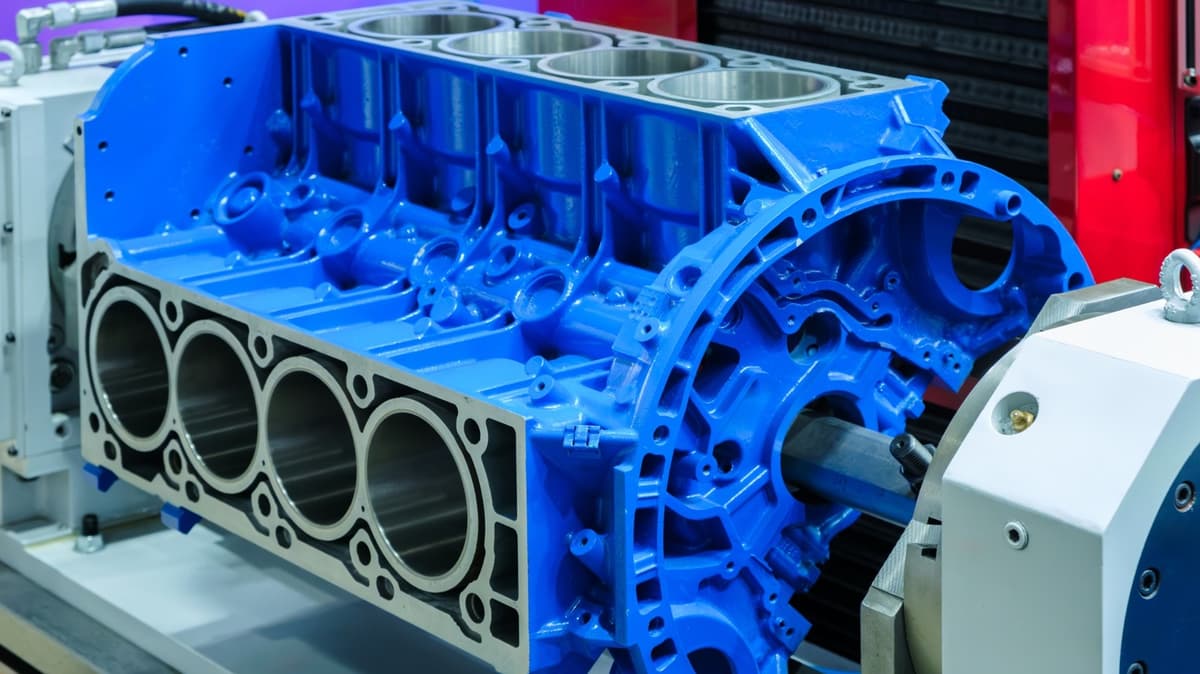
Aluminum Vs Cast Iron Engine Blocks: What's Actually Better For Big Power?
Why It Matters
Cast‑iron’s strength and cost efficiency give performance builders a reliable platform for extreme horsepower, influencing engine design choices across racing and aftermarket markets.
Key Takeaways
- •Cast‑iron blocks cost ~40% less than billet aluminum alternatives
- •Higher rigidity reduces cylinder wall flex, improving seal and horsepower
- •Stronger block extends crankshaft and camshaft lifespan under boost
- •Aluminum offers lighter weight and better heat dissipation but less strength
Pulse Analysis
Automakers and specialty engine builders constantly weigh the trade‑offs between aluminum and cast‑iron engine blocks. Aluminum’s low density translates to a lighter powertrain, which benefits fuel economy and handling, while its superior thermal conductivity helps keep combustion chambers cooler. However, the material’s lower tensile strength and higher thermal expansion demand thicker walls and additional machining, driving up production costs. In contrast, cast iron delivers a dense, rigid structure that resists deformation under extreme cylinder pressures, and it can be cast at lower cost, making it the default choice for many high‑output applications.
When an engine is tuned for 800 horsepower or more, block rigidity becomes a decisive factor. Cast‑iron’s stiffness limits cylinder wall flex, preserving the seal between pistons and rings and allowing higher compression without detonation. This rigidity also protects ancillary components such as crankshafts, camshafts, and valve train parts from the torsional stresses introduced by turbochargers or nitrous oxide. Consequently, builders often report fewer catastrophic failures and longer service intervals on iron blocks, even though the added weight can affect vehicle dynamics.
The market response reflects these engineering realities. Aftermarket crate engines like Mopar’s 1,000‑horsepower Hellephant still use aluminum for its weight advantage, but they command premium prices and require meticulous cooling solutions. Meanwhile, racing series that prioritize durability and cost favor cast‑iron platforms, reinforcing the material’s dominance in drag and endurance events. Emerging technologies—such as compacted graphite iron and aluminum‑silicon alloys—aim to blend strength with lightness, suggesting a future where the binary choice may blur. For today’s performance builders, understanding the material trade‑offs remains essential for achieving optimal power‑to‑weight ratios.
Aluminum Vs Cast Iron Engine Blocks: What's Actually Better For Big Power?
Comments
Want to join the conversation?
Loading comments...