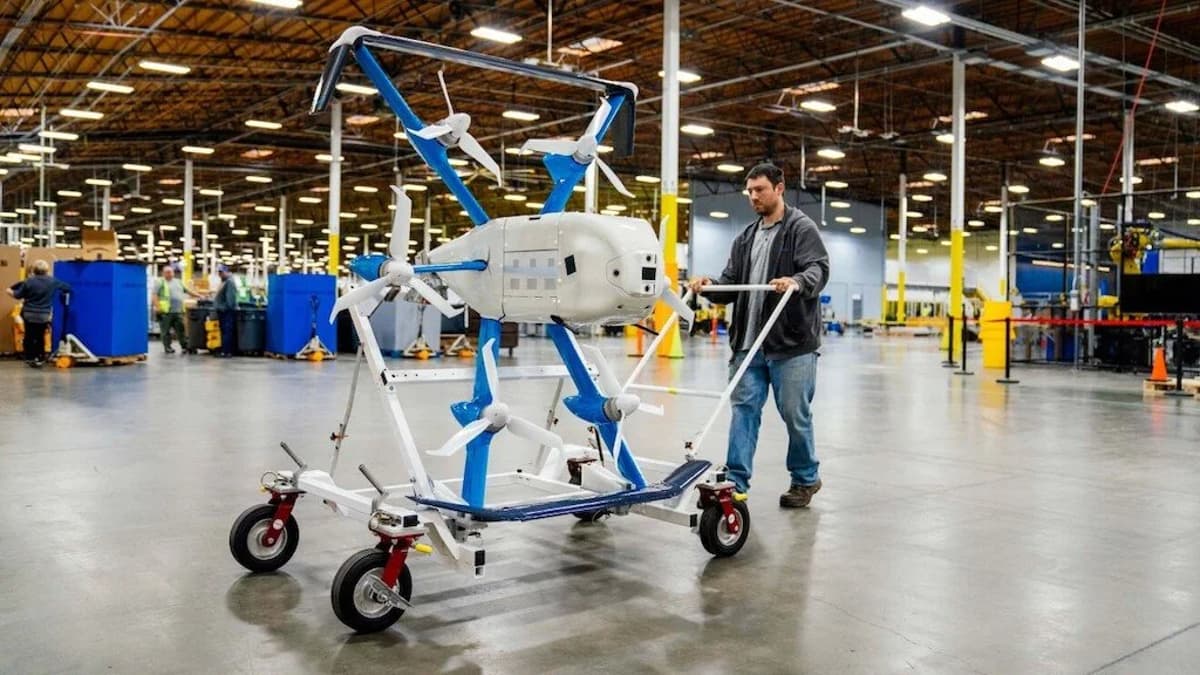
Amazon Launches UK Drone Delivery Service
Why It Matters
The service showcases Amazon’s drive to shrink delivery windows and lower last‑mile costs, potentially reshaping UK e‑commerce logistics. Success could accelerate regulatory frameworks for beyond‑visual‑line‑of‑sight drone operations.
Key Takeaways
- •MK30 drones deliver sub‑2.2 kg parcels within 7.5‑mile radius
- •Up to ten autonomous flights per hour, weekdays only
- •Packages lowered to delivery points, no landing required
- •Trial gathers data for regulator approval and future UK sites
- •Aims to cut delivery times and last‑mile logistics costs
Pulse Analysis
Amazon’s entry into commercial drone delivery in the United Kingdom marks the latest milestone in a global push toward autonomous logistics. After years of testing in the United States, the company chose Darlington, County Durham, as the launch pad for its MK30 Prime Air fleet, leveraging a nearby fulfillment centre to serve a 7.5‑mile radius. The move aligns with the UK Civil Aviation Authority’s recent efforts to codify beyond‑visual‑line‑of‑sight (BVLOS) rules, a prerequisite for scaling aerial networks. By partnering with regulators early, Amazon hopes to set a template for other firms eyeing the same airspace.
The MK30 drones are engineered to carry parcels under 2.2 kg, lowering them onto designated drop‑off points without touching the ground. Autonomous navigation, obstacle‑detection sensors and a tethered release mechanism enable up to ten flights per hour on limited weekdays, translating to deliveries within hours of order placement. For retailers, this promises a dramatic reduction in last‑mile costs, which traditionally account for up to 30 % of total shipping expenses. Consumers benefit from near‑instant receipt of small items such as electronics accessories, health products, and household essentials.
If the Darlington trial proves operationally and financially viable, Amazon could replicate the model across other UK cities, pressuring traditional courier firms to adopt similar aerial solutions. The data collected will inform not only Amazon’s internal logistics algorithms but also the regulatory framework governing BVLOS operations, potentially accelerating approvals for larger fleets. Competitors like Alphabet’s Wing and UPS Flight Forward are already piloting comparable services, suggesting a forthcoming shift in e‑commerce fulfillment strategies. Ultimately, widespread drone delivery could reshape urban logistics, reduce road congestion, and set new expectations for delivery speed.
Amazon launches UK drone delivery service
Comments
Want to join the conversation?
Loading comments...