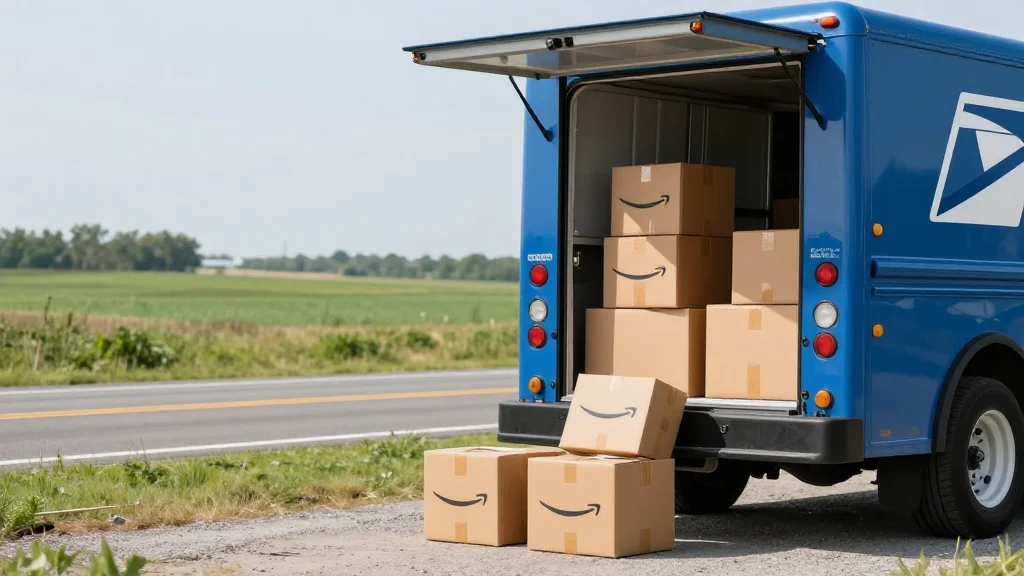
Amazon Signs New Delivery Deal with Postal Service at 20% Less Volume
Why It Matters
The agreement softens the immediate financial blow to the Postal Service while signaling Amazon’s gradual shift toward self‑managed delivery, reshaping the U.S. parcel market hierarchy.
Key Takeaways
- •Amazon will ship ~1 billion parcels via USPS annually
- •Volume cut equals 20% reduction from prior agreement
- •USPS loses $6 billion revenue but retains critical partner
- •Amazon continues rural deliveries using USPS’s universal service
- •Full USPS exit projected by 2028 if trends continue
Pulse Analysis
The Amazon‑USPS partnership has long been a cornerstone of America’s last‑mile logistics, with the e‑commerce giant relying on the carrier’s universal service mandate to reach sparsely populated addresses. By agreeing to ship about one billion parcels annually, Amazon trims its volume by 20%, yet still secures a reliable conduit for the most challenging deliveries. For the Postal Service, the contract cushions a $6 billion revenue stream that is vital as it battles a multi‑billion‑dollar loss and the threat of cash exhaustion by next year. This compromise reflects a pragmatic balance: USPS retains a marquee client while conceding to lower margins, and Amazon avoids a sudden service gap in rural markets.
Strategically, Amazon’s decision underscores its broader logistics evolution. Over the past year the company invested roughly $4 billion in its own rural delivery infrastructure, aiming to internalize the most costly routes. The reduced reliance on USPS signals a phased insourcing strategy, complementing Amazon’s ongoing reclamation of volume from UPS and selective use of FedEx for oversized shipments. Industry observers anticipate that as Amazon’s network matures, the reliance on external carriers will diminish, potentially culminating in a complete USPS disengagement by 2028. This trajectory mirrors Amazon’s ambition to control the end‑to‑end parcel journey, enhancing speed, cost predictability, and data visibility.
The broader parcel ecosystem feels the ripple effects. USPS’s financial fragility intensifies scrutiny from regulators and lawmakers, especially as the agency contemplates new revenue mechanisms like auctioning its last‑mile capacity. Competitors such as UPS and FedEx may capture displaced Amazon volume, but they also face pressure to match Amazon’s aggressive pricing and technology standards. Meanwhile, the shift hints at a future where a handful of tech‑driven logistics firms dominate domestic delivery, compelling traditional carriers to innovate or consolidate. Stakeholders should monitor the Postal Regulatory Commission’s approval process and Amazon’s subsequent infrastructure rollouts, as these will shape the competitive dynamics and profitability of U.S. parcel transportation for years to come.
Amazon signs new delivery deal with Postal Service at 20% less volume
Comments
Want to join the conversation?
Loading comments...