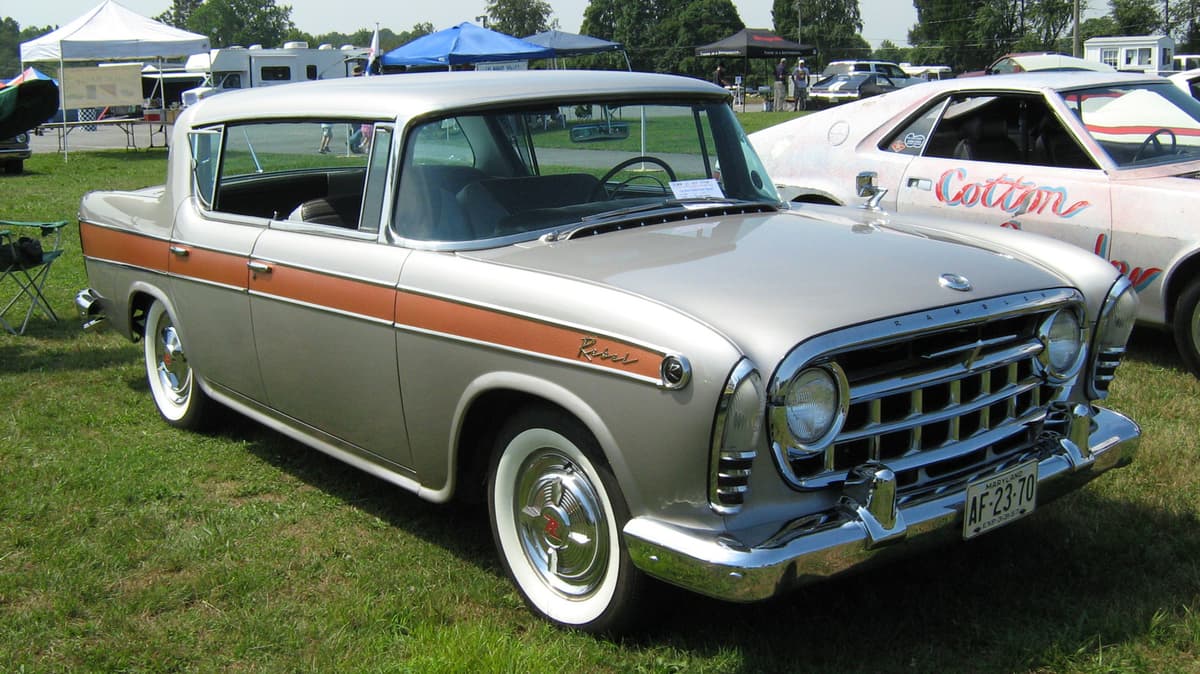
AMC Canceled The First Car With An Onboard Computer At The 11th Hour
•March 1, 2026
0
Companies Mentioned


Why It Matters
The episode shows how early EFI reliability problems cost AMC a potential market‑changing edge and paved the way for Bosch’s long‑term dominance in fuel‑injection technology.
Key Takeaways
- •1957 Rambler Rebel slated for Bendix Electrojector EFI
- •Cold‑weather reliability halted mass production
- •One prototype possibly fitted with the system
- •Bendix licensed patents to Bosch after abandoning project
- •Bosch’s 1967 VW Type 3 launched first successful EFI
Pulse Analysis
When the automotive industry first turned to electronic fuel injection, AMC’s 1957 Rambler Rebel represented a bold experiment. The Electrojector system, built by Bendix, used an analog computer to translate sensor data—intake pressure, acceleration, altitude—into precise fuel‑air mixtures. By moving injection from the carburetor to the combustion chamber, the technology promised better performance, fuel economy, and adaptability across driving conditions, positioning the Rebel as America’s fastest sedan of its era.
Despite the technical promise, the Electrojector suffered a fatal flaw: it could not start reliably in temperatures below 50 °F. In an era when most of the U.S. market experienced cooler climates, this limitation threatened customer satisfaction and warranty costs. AMC’s engineers and Bendix technicians worked to the eleventh hour, but the risk‑averse decision to cancel the program preserved short‑term brand reputation while forfeiting a potential EFI leadership role. The cancellation also reinforced AMC’s image as the “last independent automaker,” missing an opportunity to differentiate itself from the Big Three.
Bendix’s exit from automotive EFI did not end the technology’s story. By licensing its patents to Bosch, the company enabled the 1967 Volkswagen Type 3 to become the first production car with a reliable EFI system. Bosch’s solution refined the analog control concepts and spread rapidly throughout the 1970s, powering models from Volvo to Porsche. Modern electronic fuel injection, now a standard in every new vehicle, traces its lineage back to those early experiments, underscoring how a single engineering hurdle can reshape an entire industry’s trajectory.
AMC Canceled The First Car With An Onboard Computer At The 11th Hour
0
Comments
Want to join the conversation?
Loading comments...