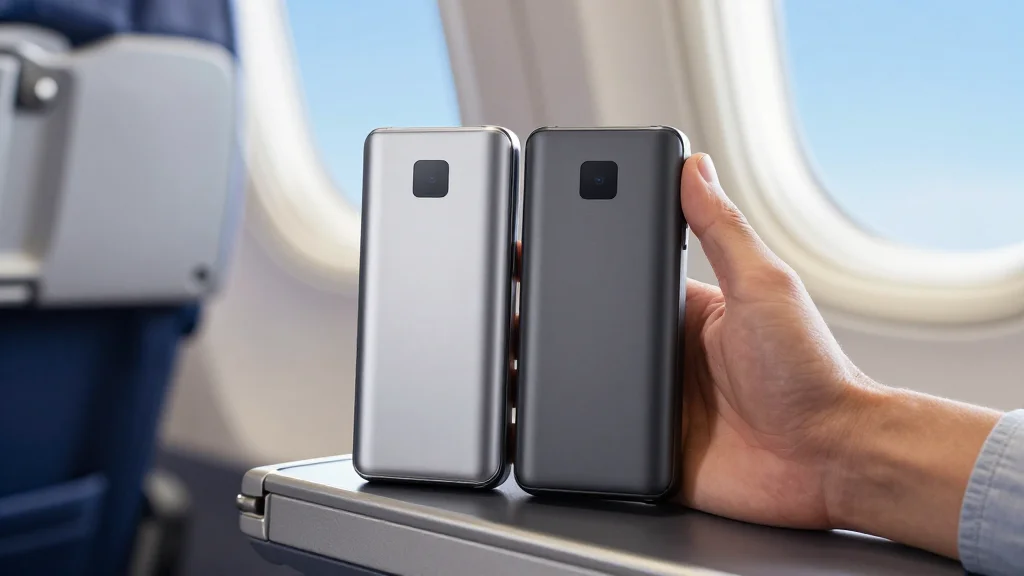
American Airlines Debuts New Portable Power Pack Rule Starting May 1
Companies Mentioned
Why It Matters
The change addresses growing safety concerns over lithium‑ion battery fires, potentially preventing costly in‑flight incidents. It also forces travelers to adjust packing habits, influencing ancillary revenue from in‑flight charging services.
Key Takeaways
- •American Airlines bans stowing power packs in overhead bins starting May 1.
- •Passengers limited to two lithium‑ion chargers with restricted watt‑hour rating.
- •Battery packs must remain visible; in‑flight recharging prohibited.
- •Rule aligns with United, Delta to improve onboard fire safety.
Pulse Analysis
Lithium‑ion batteries have become indispensable for modern travelers, powering smartphones, headphones, and laptops on long journeys. Yet their high energy density makes them prone to overheating, a risk that has prompted regulators and airlines to tighten transport rules. Federal aviation statutes already forbid checked‑baggage carriage of spare lithium cells, and recent incidents involving smoke and fire have spurred carriers to scrutinize how these devices are handled in the cabin.
American Airlines’ May 1 policy takes the airline’s safety posture a step further by mandating that power packs stay in the passenger’s line of sight and limiting each traveler to two units with capped watt‑hour ratings. The airline also bars the use of its in‑flight power outlets for recharging, a move that mirrors similar measures at United and Delta. By keeping chargers visible, crew members can spot signs of overheating sooner, reducing the likelihood of a fire spreading in the confined cabin environment. The restriction on watt‑hour capacity aligns with industry standards that typically allow up to 100 Wh for personal devices, ensuring that only low‑risk packs are brought aboard.
For consumers, the new rule means revisiting packing strategies and possibly purchasing additional chargers to stay within the two‑pack limit. Airlines may see a dip in ancillary revenue from in‑flight charging services, but the trade‑off is a safer cabin and fewer disruptions caused by battery incidents. As airlines continue to refine safety protocols, we can expect further innovations—such as onboard battery monitoring systems—to complement these procedural changes, reinforcing the industry’s commitment to passenger security.
American Airlines Debuts New Portable Power Pack Rule Starting May 1
Comments
Want to join the conversation?
Loading comments...