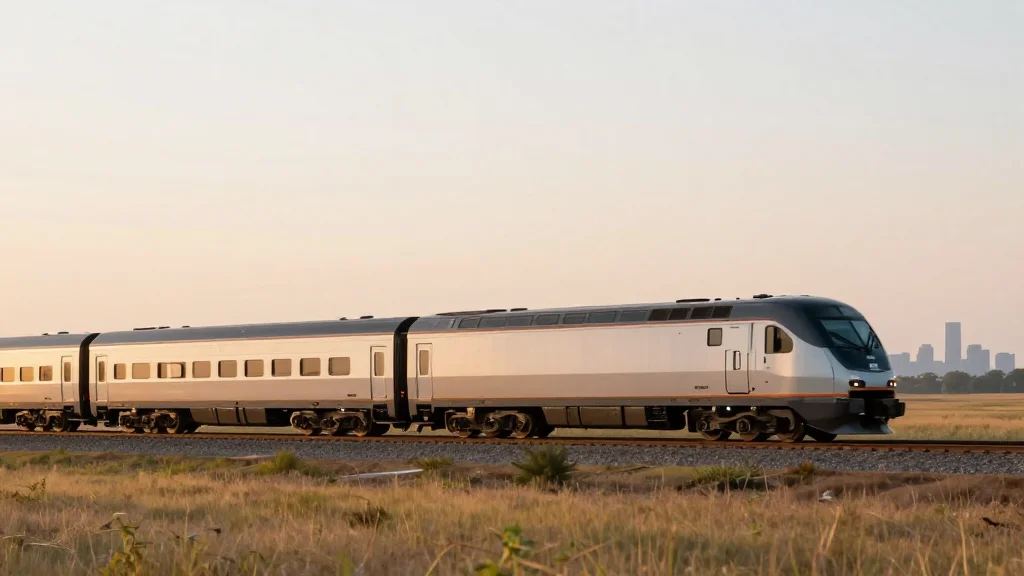
Amtrak Marks Two Years of Borealis Service with Over 400,000 Riders

Why It Matters
The Borealis corridor illustrates how coordinated state‑federal investment can revive passenger rail in regions traditionally dominated by car travel. By delivering reliable daily service and attracting hundreds of thousands of riders, the line demonstrates a viable demand for intercity rail that can reduce highway congestion, lower emissions, and support economic development in smaller cities. The anniversary also spotlights the financing challenge: without a clear funding roadmap, the corridor risks stagnation, limiting its ability to meet growing demand and to serve as a template for similar projects nationwide. Furthermore, the service’s success may influence upcoming transportation legislation, as lawmakers weigh the merits of expanding rail infrastructure versus other mobility priorities. If the Borealis model proves scalable, it could catalyze a wave of state‑backed rail initiatives, reshaping the U.S. intercity transportation mix and advancing broader climate and equity goals.
Key Takeaways
- •May 21 marks the two‑year anniversary of Amtrak’s Borealis daily service.
- •More than 400,000 passengers have traveled the Chicago‑Milwaukee‑St. Paul corridor since launch.
- •The service is funded by Wisconsin, Illinois, Minnesota, the federal government and Amtrak.
- •Ridership exceeds original expectations, prompting calls for additional capacity and frequency.
- •State legislators are urged to treat passenger rail as an equal partner in transportation budgets.
Pulse Analysis
Amtrak’s Borealis corridor arrives at a pivotal moment for U.S. passenger rail. Historically, intercity rail has struggled to compete with highways and airlines, especially in the Midwest where population density is moderate and car ownership high. The Borealis model—state‑backed, daily service with a clear regional focus—offers a counterpoint to the nation’s broader rail challenges. By delivering a dependable schedule and integrating smaller communities, the line taps into a latent market that traditional long‑haul routes have overlooked.
The ridership figure—over 400,000 in two years—translates to an average of roughly 550 passengers per day, a respectable load factor for a corridor of this length. This performance suggests that, when funded and marketed effectively, regional rail can achieve sustainable demand without the massive subsidies required for high‑speed corridors. The next step will be to leverage this momentum into tangible capacity upgrades. Adding extra cars during peak periods or increasing frequency could push daily ridership into the 1,000‑plus range, creating economies of scale that lower per‑passenger costs.
Politically, the Borealis anniversary is a litmus test for state‑federal collaboration on transportation. The call for “equal partnership” in budgeting reflects a growing awareness that rail cannot thrive on federal dollars alone. If state legislatures respond positively, the corridor could become a blueprint for other multi‑state projects, such as the proposed Midwest Regional Rail Initiative. Conversely, a funding shortfall could stall expansion, leaving the corridor underutilized and eroding public confidence. The upcoming federal transportation reauthorization will be a decisive arena where the Borealis story could shape policy, potentially unlocking new grant programs or matching funds that cement rail’s role in the nation’s mobility mix.
Amtrak Marks Two Years of Borealis Service with Over 400,000 Riders
Comments
Want to join the conversation?
Loading comments...