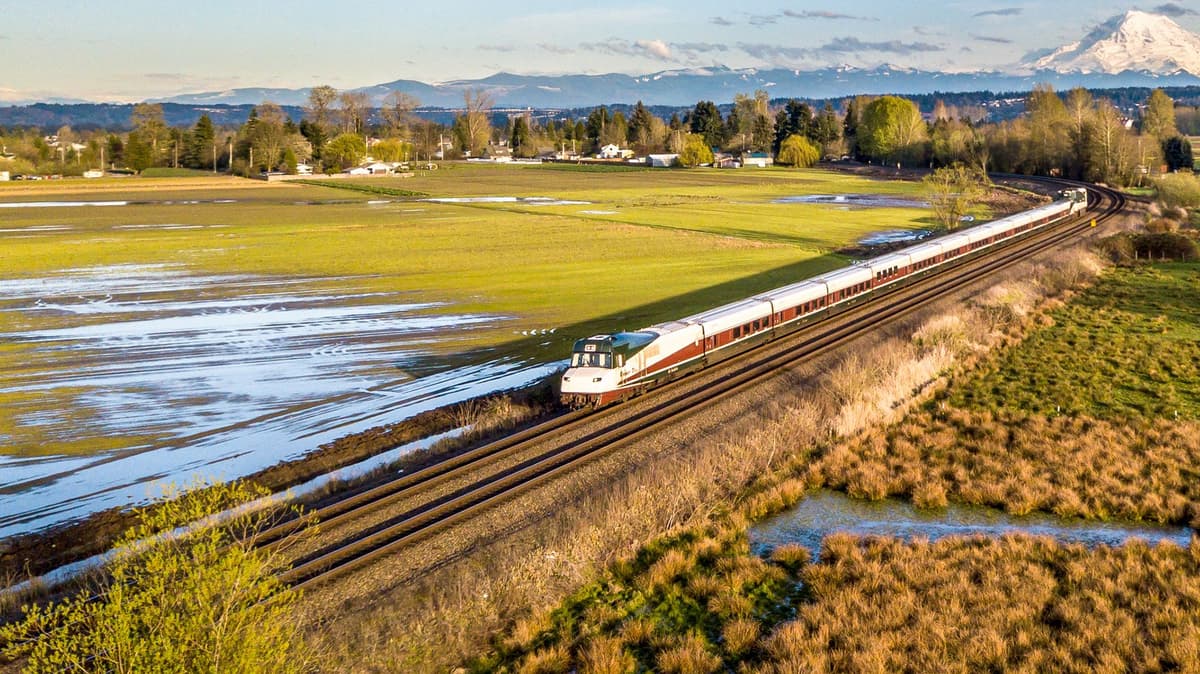
Amtrak's New Airo Trains Just Arrived in Seattle—Here’s What to Expect
Companies Mentioned
Why It Matters
The upgraded Airo fleet boosts capacity and passenger experience on one of Amtrak’s fastest‑growing routes, positioning rail as a more competitive alternative to short‑haul flights and road travel in the Pacific Northwest.
Key Takeaways
- •Airo trainsets add 50% more seats to Cascades line
- •First of eight sets arrive; full rollout by end‑2026
- •Siemens-built coaches feature USB ports, larger windows, ergonomic seats
- •Trains can reach 125 mph, but freight‑owned track limits speed
Pulse Analysis
Amtrak’s decision to introduce the Airo trainsets on the Cascades corridor reflects a broader industry shift toward modern, high‑capacity rail that can compete with airlines and automobiles. The Pacific Northwest corridor has seen ridership climb to nearly one million annual passengers, a 1.4 % rise in 2025, underscoring demand for faster, more comfortable service. By deploying European‑style equipment, Amtrak aims to revitalize a route that has historically suffered from aging rolling stock and punctuality challenges, echoing the successful Acela rollout in the Northeast.
The Airo coaches bring a suite of passenger‑focused upgrades: larger panoramic windows for the region’s dramatic scenery, ergonomic seats with ample legroom, USB charging, and self‑service café options. Capacity jumps from roughly 200 to 300 seats per train, a 50 % increase that should alleviate crowding as demand grows. While the trains are capable of 125 mph and emit fewer pollutants, the line’s ownership by freight carrier BNSF means speed gains will depend on future infrastructure investments. Nonetheless, the newer, lighter Siemens‑built sets promise smoother rides and lower operating costs.
Strategically, the Cascades rollout serves as a pilot for Amtrak’s nationwide Airo deployment, with 83 trainsets ordered for routes across the country. Successful integration could accelerate the shift toward higher‑speed, lower‑emission rail travel, attracting business travelers and tourists alike. It also signals to policymakers the need for public‑private collaboration to upgrade track infrastructure, especially where freight priorities limit passenger speed. As Amtrak modernizes its fleet, the company positions itself to capture a larger share of intercity travel, potentially reshaping the transportation landscape in the United States.
Amtrak's New Airo Trains Just Arrived in Seattle—Here’s What to Expect
Comments
Want to join the conversation?
Loading comments...