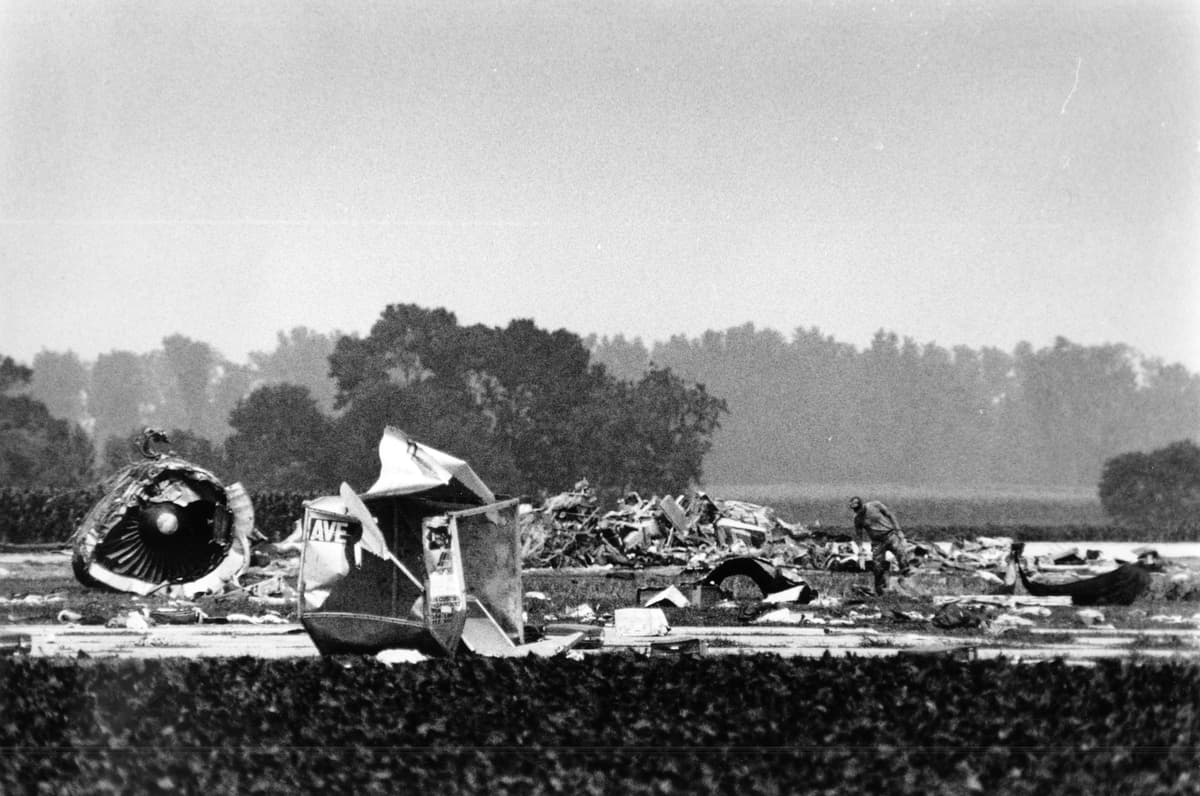
An Airliner Was Falling Out of the Sky With No Way to Steer. Then the Pilots Tried Something Unthinkable.
Companies Mentioned

Why It Matters
The crash exposed critical design vulnerabilities and demonstrated how crew resource management can mitigate disasters, prompting regulatory reforms that have saved countless lives since.
Key Takeaways
- •Tail engine explosion severed all hydraulic lines, disabling flight controls.
- •Pilots used asymmetric thrust to steer, a rare emergency technique.
- •185 of 296 aboard survived, highlighting effective crew coordination.
- •Crash spurred FAA mandates for redundant hydraulic systems in airliners.
- •Incident inspired research into thrust‑only flight control concepts.
Pulse Analysis
United Flight 232’s harrowing descent remains a textbook case of how a single mechanical failure can cascade into a total loss of control. When the tail‑engine burst, shrapnel cut the three independent hydraulic systems that powered the DC‑10’s ailerons, elevators and rudder. With no conventional means to pitch, roll, or yaw, Captain Haynes, First Officer Records, and off‑duty DC‑10 instructor Dennis Fitch turned the remaining thrust from the two wing engines into a makeshift steering system. By throttling one engine forward and the other back, they generated enough yaw to keep the aircraft on a rough trajectory toward Sioux City, buying precious minutes for evacuation preparations.
The aftermath reshaped the regulatory landscape. The FAA mandated that new transport aircraft incorporate multiple, physically separated hydraulic circuits and, where feasible, incorporate electric or fly‑by‑wire backups. Airlines also overhauled crew‑resource‑management (CRM) curricula, emphasizing clear communication, role flexibility, and rapid decision‑making under duress. Training simulators now replicate total hydraulic loss scenarios, ensuring pilots rehearse thrust‑only control techniques and emergency checklists that were absent in 1989.
Beyond hardware and procedures, Flight 232 reinforced the human element of safety culture. The crew’s calm coordination, willingness to share control, and transparent communication with air‑traffic control set a new standard for crisis leadership. Modern research continues to explore thrust‑only flight dynamics, especially for unmanned or electric aircraft, but the consensus remains that such methods are a last‑resort tool, not a substitute for robust system redundancy. United’s tragedy thus endures as a catalyst for engineering rigor and disciplined teamwork across the aviation industry.
An Airliner Was Falling Out of the Sky With No Way to Steer. Then the Pilots Tried Something Unthinkable.
Comments
Want to join the conversation?
Loading comments...