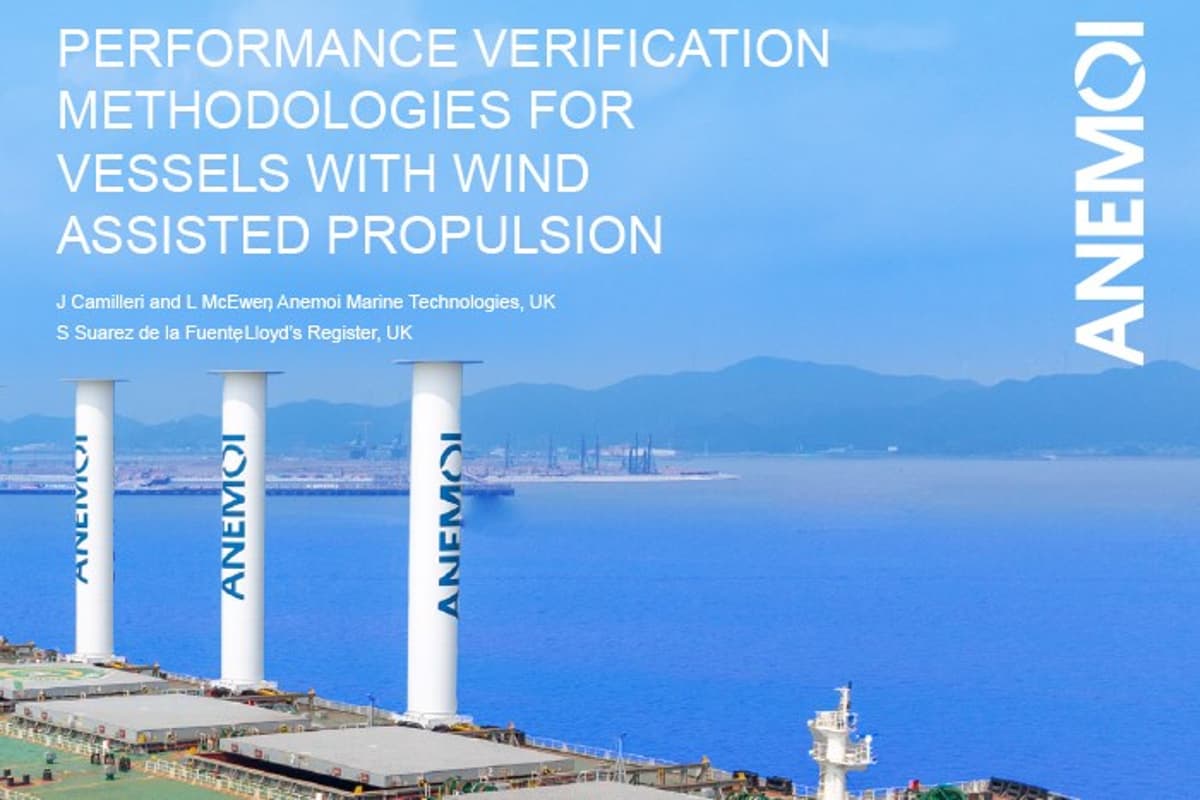
Anemoi White Paper Calls for Greater Alignment in Wind Propulsion Performance Verification
•March 9, 2026
0
Why It Matters
Consistent, transparent verification metrics enable ship owners to build robust business cases for WAPS, accelerating maritime decarbonisation and cost savings.
Key Takeaways
- •LR, Anemoi align three WAPS verification methods.
- •ITTC, DNV, Anemoi frameworks complement each other.
- •Integrated approach simplifies performance comparison for ship owners.
- •Technology‑agnostic verification predicts fuel savings confidently.
- •Standardization could accelerate wind propulsion adoption.
Pulse Analysis
Wind‑assisted propulsion is emerging as a practical route to cut emissions and fuel costs, yet the sector suffers from fragmented performance measurement standards. Ship operators often face disparate data from sea‑trial simulations, in‑service testing, and proprietary models, making it difficult to quantify real‑world savings. This lack of comparability hampers investment decisions and slows broader adoption, especially as regulatory pressure mounts for greener shipping solutions.
The new white paper from Anemoi and Lloyd’s Register maps three leading verification frameworks—ITTC’s controlled sea‑trial guidelines, DNV’s long‑term in‑service testing practice, and Anemoi’s LR‑validated calibration methodology—highlighting their complementary strengths. ITTC delivers short‑term, condition‑specific validation; DNV offers continuous operational insight; Anemoi bridges the gap by using on‑board data to calibrate predictive models across vessel types. By integrating these methods, operators gain a single, technology‑agnostic tool that delivers high‑confidence fuel‑saving forecasts, simplifying the business case for installing wind sails, rotors, or kite systems.
Standardizing this integrated approach could transform the market. Consistent metrics will boost confidence among ship owners, insurers, and financiers, unlocking capital for larger‑scale WAPS deployments. Moreover, the alignment dovetails with parallel initiatives from Norsepower and Kongsberg Maritime, suggesting a converging industry consensus. As the maritime sector pursues net‑zero targets, unified verification standards will be pivotal in turning wind propulsion from a niche experiment into a mainstream, cost‑effective technology.
Anemoi white paper calls for greater alignment in wind propulsion performance verification
0
Comments
Want to join the conversation?
Loading comments...