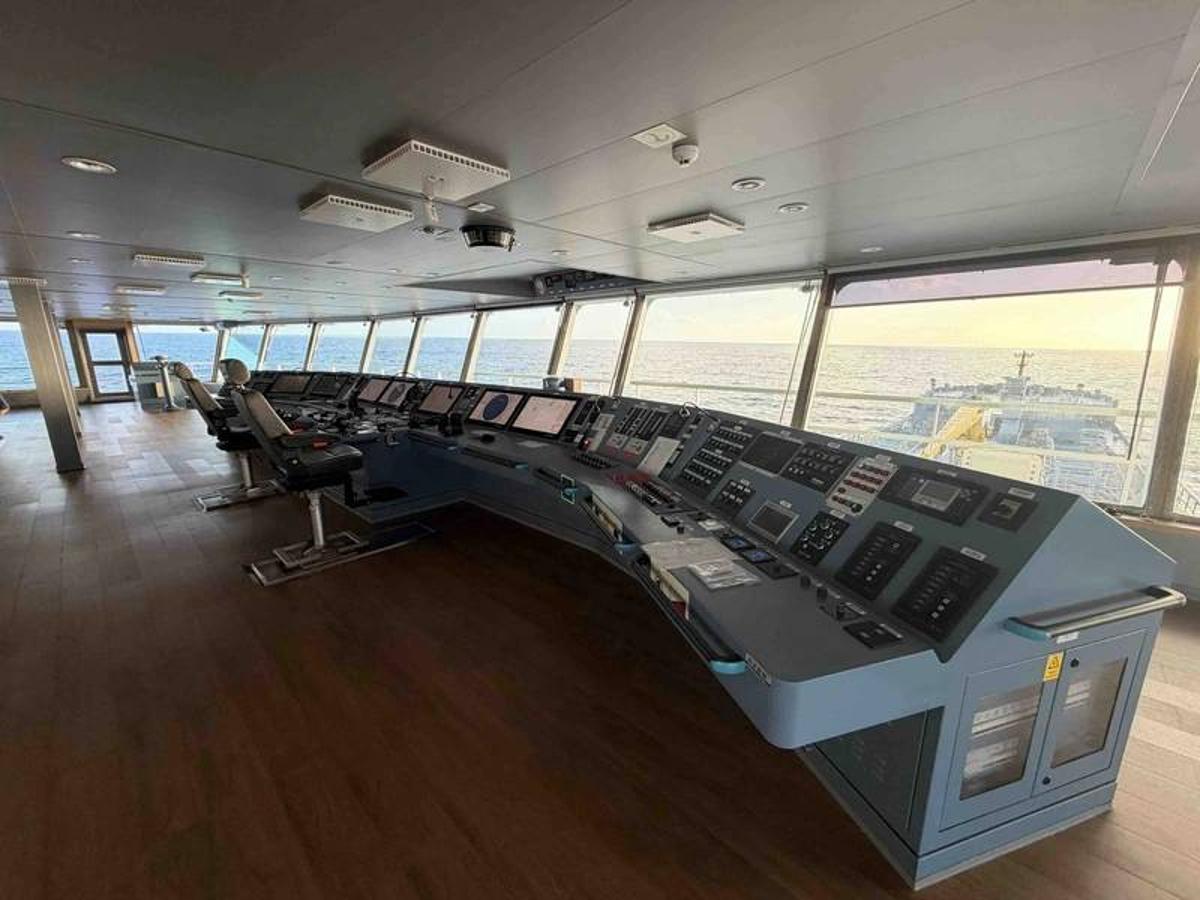
Anschütz Delivers SYNAPSIS Integrated Navigation System for First Newbuild Tanker
•March 3, 2026
0
Why It Matters
The deployment introduces cutting‑edge navigation technology that boosts safety, fuel efficiency, and operational reliability for large tankers, setting a new benchmark in maritime bridge systems.
Key Takeaways
- •First commercial vessels with Anschütz solid‑state radars.
- •Seven multifunction workstations provide unified navigation interface.
- •NautoPilot 5400 enables precise, fuel‑efficient steering.
- •Dual Standard 30 MF gyro compass ensures reliable heading data.
- •Project demonstrates seamless Germany‑China engineering collaboration.
Pulse Analysis
The maritime industry is increasingly reliant on integrated bridge solutions that fuse radar, charting, and steering controls into a single, coherent interface. Anschütz’s SYNAPSIS system exemplifies this trend, combining next‑generation solid‑state radars with a unified workstation architecture. By eliminating mechanical moving parts, solid‑state radars deliver sharper target detection, lower power consumption, and reduced maintenance cycles, which are critical for vessels operating in congested or restricted waterways. The system’s modular design also simplifies future upgrades, aligning with the digitalization roadmap of modern fleets.
On the 41,000‑dwt TMS Seadevil, SYNAPSIS equips the bridge with seven multifunction workstations, a 42‑inch chart display, and the NautoPilot 5400 autopilot. This configuration enables precise maneuvering in tight ports and energy‑efficient course keeping across long voyages. The dual Standard 30 MF gyro compass provides continuous, maintenance‑free heading information, reinforcing data integrity across all navigation displays. Together, these components reduce crew workload, lower fuel consumption, and enhance safety margins, directly translating into operational cost savings for German Tanker Shipping’s global fleet.
The successful rollout of SYNAPSIS on the lead vessel underscores the growing synergy between European navigation technology providers and Asian shipyards. Coordination between Anschütz’s German headquarters, its Shanghai office, and Xiamen Shipbuilding illustrates a collaborative model that accelerates project timelines while maintaining stringent quality standards. As the remaining five tankers enter production, the program positions Anschütz as a preferred supplier for high‑value tanker projects, potentially influencing broader market adoption of solid‑state radar and integrated bridge suites. Industry observers will watch how this deployment shapes future regulatory expectations for navigation safety and emissions efficiency.
Anschütz Delivers SYNAPSIS Integrated Navigation System for First Newbuild Tanker
0
Comments
Want to join the conversation?
Loading comments...