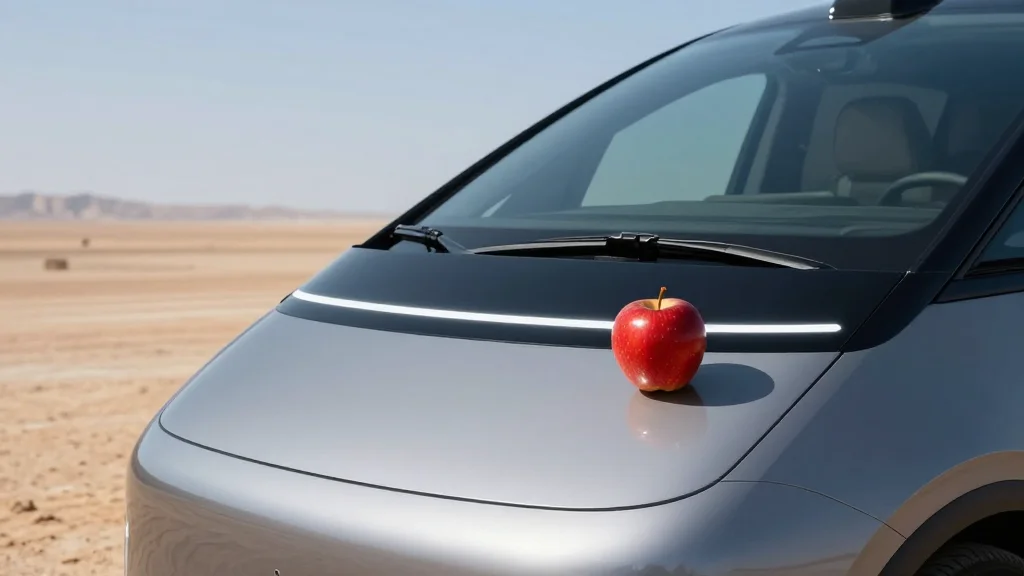
Apple’s Project Titan Exit Refocuses Investment Story On Devices And Services
Companies Mentioned
Why It Matters
The exit removes a capital‑intensive, high‑risk venture from Apple’s pipeline, allowing R&D dollars to be redeployed to higher‑margin devices and AI services. It simplifies the investment thesis, making Apple’s future growth more predictable for shareholders.
Key Takeaways
- •Waymo acquires Apple’s Arizona self‑driving test site.
- •Apple fully exits Project Titan autonomous‑car program.
- •Focus returns to devices, services, and AI platforms.
- •R&D budget now directed toward Apple Intelligence and Xcode 27.
- •Partners like Alphabet, Nvidia handle autonomous driving heavy lifting.
Pulse Analysis
Project Titan, Apple’s secretive autonomous‑vehicle initiative, has been a source of industry speculation for nearly a decade. The program invested billions in hardware, software, and a sprawling test track in Arizona, yet never produced a production‑ready robotaxi. Waymo’s acquisition of the test site not only provides a tangible exit point but also signals that Apple’s ambitions in the auto space have stalled in favor of more immediate, profitable opportunities. By divesting the physical asset, Apple eliminates a lingering liability and clears its balance sheet for other strategic bets.
The strategic shift redirects Apple’s multi‑billion‑dollar R&D budget toward areas where it already commands market leadership. Resources are now being funneled into Apple Intelligence, the next generation of Siri AI, and developer tools such as Xcode 27, which promise to deepen the ecosystem’s lock‑in effect. This reallocation aligns with Apple’s broader push into generative AI and augmented reality, sectors that can leverage its massive installed base without the heavy capital outlays required for vehicle manufacturing. The move also underscores a partnership‑first approach, allowing Alphabet’s Waymo and Nvidia’s AI chips to shoulder the heavy lifting of autonomous driving while Apple concentrates on user‑centric software and privacy.
For investors, the sale simplifies Apple’s growth narrative. The company can now be evaluated on the strength of its iPhone, Mac, Services, and emerging AI offerings, without the uncertainty of a potential car business. This clarity reduces valuation volatility and aligns Apple’s risk profile more closely with its historic cash‑generating operations. Moreover, by partnering rather than competing directly in the robotaxi market, Apple preserves strategic flexibility and can monetize its ecosystem through data and services, reinforcing its position as a dominant consumer‑technology platform.
Apple’s Project Titan Exit Refocuses Investment Story On Devices And Services
Comments
Want to join the conversation?
Loading comments...