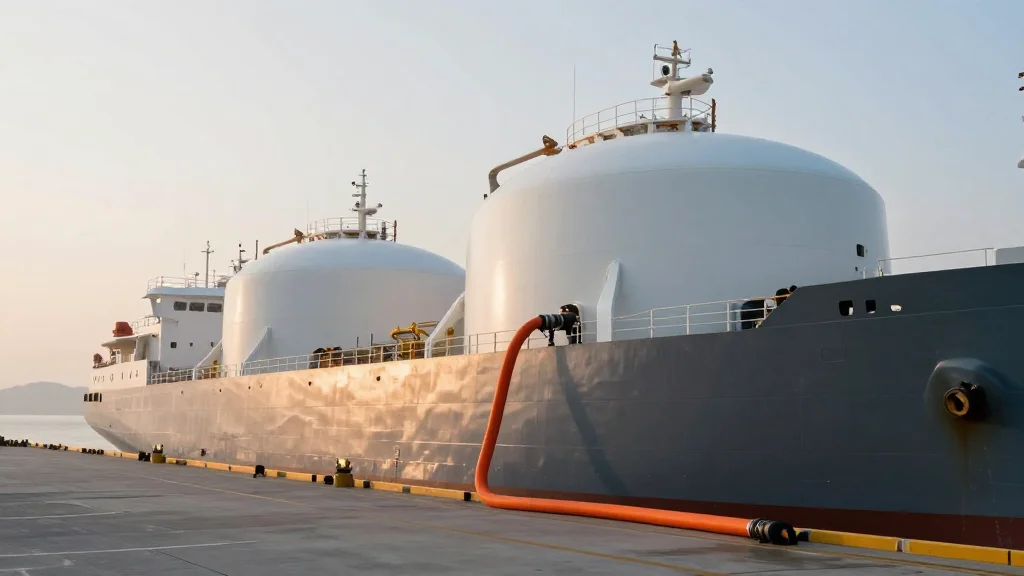
April Orders for Alternative-Fuelled Ships up Sharply
Companies Mentioned
Why It Matters
The surge in alternative‑fuel ship orders signals accelerating industry commitment to decarbonisation and positions the maritime sector for tighter IMO emissions regulations.
Key Takeaways
- •April saw 38 alternative‑fuel ship contracts, a sharp rise.
- •LNG and LPG dominate new orders, 20 and 14 vessels respectively.
- •Ammonia orders appear, but methanol orders remain at three year‑to‑date.
- •Alternative‑fuel vessels represent 1% of fleet but 15% of orderbook.
- •Global alternative‑fuel ship count grew twelve‑fold since 2020.
Pulse Analysis
The April spike in alternative‑fuel ship contracts underscores a turning point for maritime decarbonisation. DNV’s data shows 38 new agreements, a dramatic jump from the single‑digit figures of the preceding months, yet still shy of the 49 contracts recorded a year earlier. The year‑to‑date tally of 84 vessels, excluding traditional LNG carriers, reflects a broader diversification of ship types—from car carriers to cruise liners—indicating that ship owners are embedding low‑carbon solutions across the fleet spectrum.
Fuel choice remains a decisive factor in the transition. Liquefied natural gas (LNG) and liquefied petroleum gas (LPG) together account for 34 of the April orders, reinforcing their status as the most mature and commercially viable alternatives. Ammonia’s emergence, with four bulk‑carrier contracts, points to growing confidence in zero‑carbon fuels, while methanol’s stagnation—only three year‑to‑date orders and none in April—highlights supply‑chain and certification hurdles that still need resolution. These dynamics shape investment priorities for shipyards, engine manufacturers, and fuel infrastructure providers.
Regulatory momentum amplifies the market signal. The recent MEPC 84 meeting delivered a cautiously optimistic outlook for stricter IMO emissions targets, encouraging shipowners to lock in alternative‑fuel vessels now rather than risk future compliance costs. Coupled with a twelve‑fold increase in the global alternative‑fuel fleet since 2020, the data suggests a rapid scaling of clean‑shipping projects. Stakeholders should monitor fuel‑availability pipelines, financing mechanisms, and evolving carbon‑pricing regimes, as they will dictate whether the current orderbook surge translates into a sustained reduction in maritime greenhouse‑gas emissions.
April orders for alternative-fuelled ships up sharply
Comments
Want to join the conversation?
Loading comments...