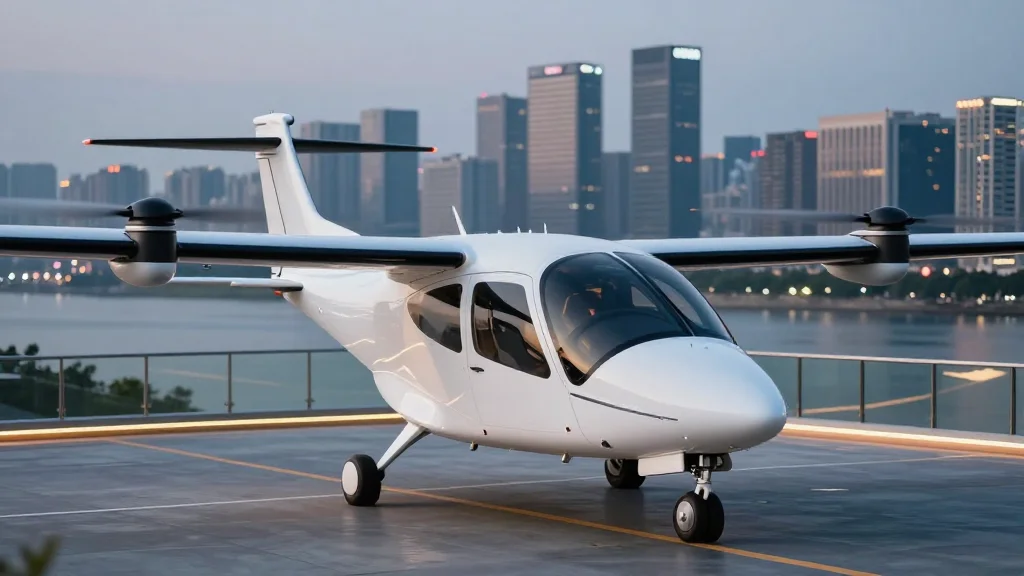
Archer, Joby Expect to Begin Commercial Air Taxi Flights in US Cities This Year
Companies Mentioned
Why It Matters
The rollout marks the transition from testing to revenue‑generating operations, potentially reshaping urban mobility and creating new revenue streams for manufacturers, airports, and municipalities.
Key Takeaways
- •Archer and Joby target 2026 commercial flights in several U.S. cities
- •FAA eVTOL Integration Pilot Program accelerates air‑taxi certification and operations
- •Vertiports at LaGuardia and Orlando airports will host charging infrastructure
- •Wisk Aero pursues autonomous eVTOL commercial service by 2030, unlike rivals
- •Supernal cuts staff, raising doubts on Hyundai’s air‑mobility strategy
Pulse Analysis
The U.S. Federal Aviation Administration’s eVTOL Integration Pilot Program (eIPP) is fast‑tracking the entry of electric vertical takeoff and landing aircraft into the national airspace. By providing a streamlined certification pathway and coordinating with state transportation agencies, the program reduces regulatory friction that has long delayed advanced air‑mobility projects. Analysts see the eIPP as a catalyst for a new urban transportation layer, promising to alleviate ground congestion while opening revenue streams for manufacturers, infrastructure operators, and municipalities alike.
Archer Aviation and Joby Aviation are the two frontrunners poised to launch commercial services this year. Archer has filed FAA applications for roughly a dozen cities, including hubs in Southern California, Texas and Florida, and expects public flights by the second half of 2026. Joby, fresh from demonstration flights in New York City, is installing charging stations at two Manhattan heliports and negotiating vertiport agreements at LaGuardia and Orlando International airports. These infrastructure moves aim to embed eVTOLs into existing airport ecosystems, making short‑haul trips as routine as a subway ride.
Beyond the piloted models, Boeing’s Wisk Aero is betting on a fully autonomous eVTOL, targeting commercial operations by 2030. Its pilot‑less approach could lower operating costs and sidestep pilot‑training bottlenecks, but it also faces stricter safety scrutiny. Meanwhile, Hyundai’s Supernal has slashed 80 % of its workforce, casting doubt on its ability to compete in the crowded market. The divergent strategies underscore a sector at a crossroads: rapid commercialization for early movers versus longer‑term autonomy ambitions, with investors watching closely for the first profitable air‑taxi network.
Archer, Joby expect to begin commercial air taxi flights in US cities this year
Comments
Want to join the conversation?
Loading comments...