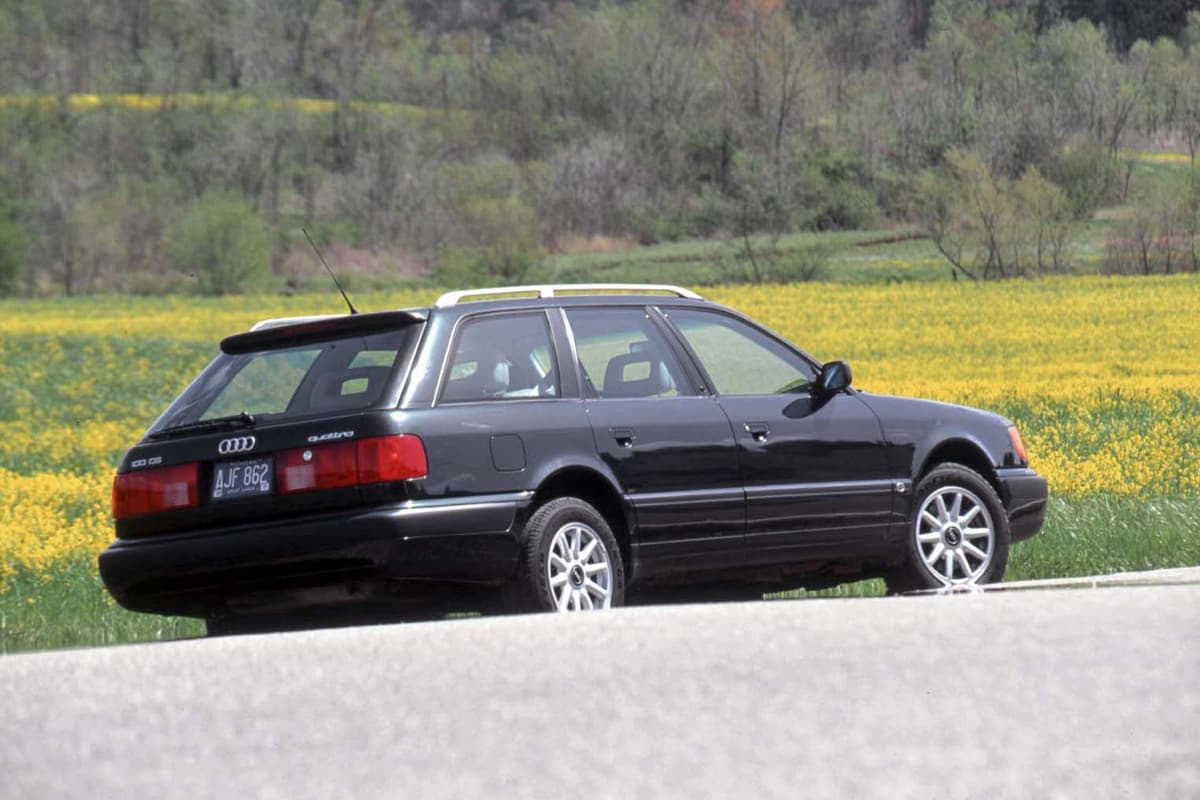
Archive Road Test: 1993 Audi 100CS Quattro Wagon
•March 5, 2026
0
Why It Matters
The 100CS Quattro Wagon demonstrates Audi’s early commitment to premium AWD wagons, foreshadowing the crossover segment that now dominates family transportation. Its blend of luxury, utility, and performance set a benchmark for competitors.
Key Takeaways
- •Base price $41,226, targeting affluent families.
- •2.8L V6 delivers 172 hp, 0‑60 in 10.8 sec.
- •Quattro AWD provides 0.80 g skidpad, stable handling.
- •Seats seven via split rear bench and fold‑up third seat.
- •Features heated seats, roof rails, remote memory functions.
Pulse Analysis
In the early 1990s, European automakers began courting North American families with upscale wagons that could rival the emerging SUV market. Audi’s 100CS Quattro Wagon arrived at a time when all‑wheel‑drive was still a rarity outside of performance coupes, positioning the brand as a pioneer of luxury utility. Priced above $40,000, the model targeted affluent buyers who demanded both the practicality of a seven‑passenger layout and the driving dynamics associated with Audi’s flagship sedans.
The technical package underscored Audi’s engineering ambition. A 2.8‑liter V‑6 produced 172 horsepower, while the Quattro permanent AWD system delivered a 0.80 g skidpad figure, translating to confident cornering on wet or uneven surfaces. The new four‑speed automatic, equipped with a D‑3‑2‑1 shift pattern, offered flexibility for both spirited driving and relaxed cruising. Interior appointments—leather seats, walnut‑trimmed dash, heated front seats, and a programmable infrared remote—combined luxury with functional convenience, reinforcing the wagon’s dual identity as a family hauler and a performance‑oriented vehicle.
The legacy of the 100CS Quattro Wagon is evident in today’s crossover SUV segment, where manufacturers blend passenger capacity, all‑wheel‑drive traction, and premium amenities. Audi’s early adoption of AWD in a wagon foreshadowed the brand’s later success with the Q5 and Q7 line‑ups, which dominate the modern luxury crossover market. By delivering a vehicle that could comfortably transport a family while offering engaging dynamics, Audi set a template that continues to influence automotive design and consumer expectations nearly three decades later.
Archive Road Test: 1993 Audi 100CS Quattro Wagon
0
Comments
Want to join the conversation?
Loading comments...