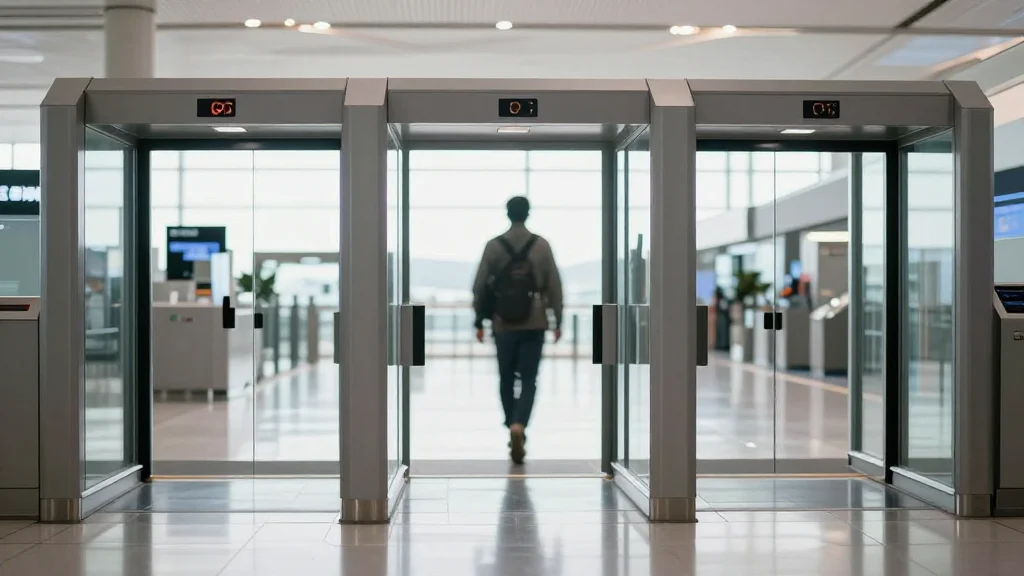
ATL Expands Innovation with Three CLEAR eGates at South Checkpoint
Why It Matters
The eGates cut identity‑check time, improving passenger flow and operational efficiency as travel demand spikes. The project showcases how biometric automation can be scaled across U.S. airports through TSA collaboration.
Key Takeaways
- •Three CLEAR eGates installed at ATL’s South Checkpoint
- •Biometric verification bypasses TSA podium, speeding identity checks
- •Expansion supports anticipated 1.2 million World Cup visitors in 2026
- •Public‑private partnership sets model for airport security automation
Pulse Analysis
Biometric eGate technology is reshaping airport security by merging identity verification with automated screening. CLEAR’s facial‑recognition system links a traveler’s live image to a pre‑enrolled profile, eliminating the need for a manual TSA ID check. This not only speeds the checkpoint process but also adds a layer of data‑driven security that can flag anomalies in real time. As the Transportation Security Administration partners with private innovators, the model promises faster, more consistent experiences across the nation’s busiest hubs.
For Hartsfield‑Jackson, the addition of three eGates at the South Checkpoint arrives at a pivotal moment. The 2026 FIFA World Cup is projected to bring over 1.2 million international visitors to the United States, with Atlanta serving as a primary gateway. By increasing throughput capacity, the airport can mitigate congestion during peak travel windows, protect on‑time performance, and enhance its reputation as a tech‑forward hub. The eGates also complement the broader CLEAR+ program, which now extends expedited processing to travelers from 40 countries, further streamlining the experience for global passengers.
The broader aviation industry watches ATL’s rollout as a proof point for public‑private collaboration in security innovation. Successful scaling of biometric eGates could accelerate adoption at midsize and regional airports seeking to balance safety with efficiency. Moreover, the data collected through these systems can inform predictive staffing models and resource allocation, driving cost savings for airlines and airports alike. As biometric verification becomes more commonplace, stakeholders will need to address privacy safeguards while leveraging the operational gains demonstrated at Atlanta.
ATL Expands Innovation with three CLEAR eGates at South Checkpoint
Comments
Want to join the conversation?
Loading comments...