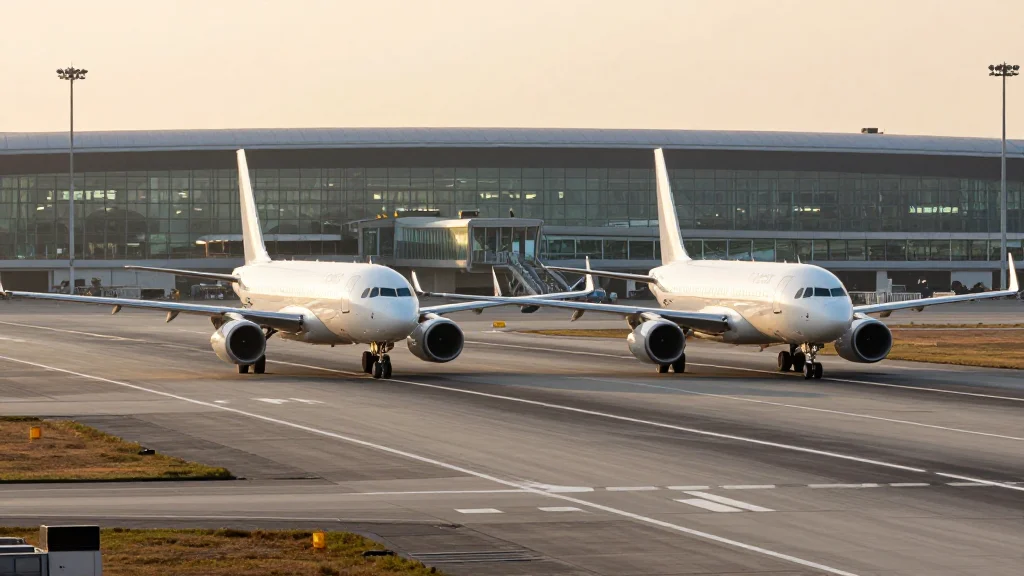
Atlanta Holds Passenger Crown as Chicago O'Hare Tops Aircraft Movements in 2025 ACI Rankings

Companies Mentioned
Why It Matters
The ACI rankings are a key reference for airlines when allocating capacity, negotiating slot agreements, and planning new routes. Atlanta’s passenger lead reinforces its status as a strategic hub for U.S. carriers, influencing decisions on fleet deployment and market entry. Chicago O’Hare’s dominance in aircraft movements highlights the importance of operational efficiency, which can lower costs for airlines and improve on‑time performance. Together, these trends shape investment priorities for airports worldwide, driving capital toward runway expansions, terminal modernization, and digital traffic management tools. Moreover, the rankings provide policymakers with data to assess the health of the global air transport system, informing infrastructure funding and sustainability initiatives. As the industry seeks to balance growth with environmental goals, understanding where traffic concentrates helps target emissions reduction efforts and capacity planning.
Key Takeaways
- •Atlanta retains the top spot for total passenger traffic in ACI's 2025 rankings.
- •Chicago O’Hare leads the world in aircraft movements for 2025.
- •Rankings are based on data from over 2,700 airports covering passengers, cargo, and movements.
- •Final detailed rankings will be released in July 2026.
- •Results influence airline route planning, airport investment, and slot negotiations.
Pulse Analysis
ACI’s 2025 rankings reaffirm the United States’ dual dominance in both passenger volume and operational throughput, a rare combination that gives American hubs strategic leverage in global airline negotiations. Atlanta’s sustained passenger lead is not merely a function of its geographic location; it reflects a deliberate hub‑and‑spoke strategy executed by Delta Air Lines, which has invested heavily in slot acquisition, terminal upgrades, and passenger amenities. This model creates a network effect—more passengers attract more airlines, which in turn generate additional demand.
Chicago O’Hare’s aircraft movement supremacy tells a complementary story. While passenger numbers are crucial, the sheer frequency of takeoffs and landings signals an airport’s capacity to handle dense traffic efficiently. O’Hare’s investment in runway reconfiguration and next‑generation air traffic control systems has paid dividends, allowing it to squeeze more movements out of existing infrastructure. For airlines, this translates into tighter schedules, reduced ground time, and lower operating costs—advantages that can be decisive in a price‑sensitive market.
Looking forward, the July 2026 release will likely reveal whether Asian airports can close the gap as they recover from pandemic‑induced demand shocks. Airports such as Beijing Capital and Dubai International are expanding capacity and adopting sustainability measures that could shift the balance. However, unless U.S. hubs continue to modernize and address capacity constraints—particularly at O’Hare, where terminal congestion remains a concern—their lead may erode. Investors and airline strategists should monitor the forthcoming data for signs of emerging challengers and adjust their exposure to airport‑related assets accordingly.
Atlanta Holds Passenger Crown as Chicago O'Hare Tops Aircraft Movements in 2025 ACI Rankings
Comments
Want to join the conversation?
Loading comments...