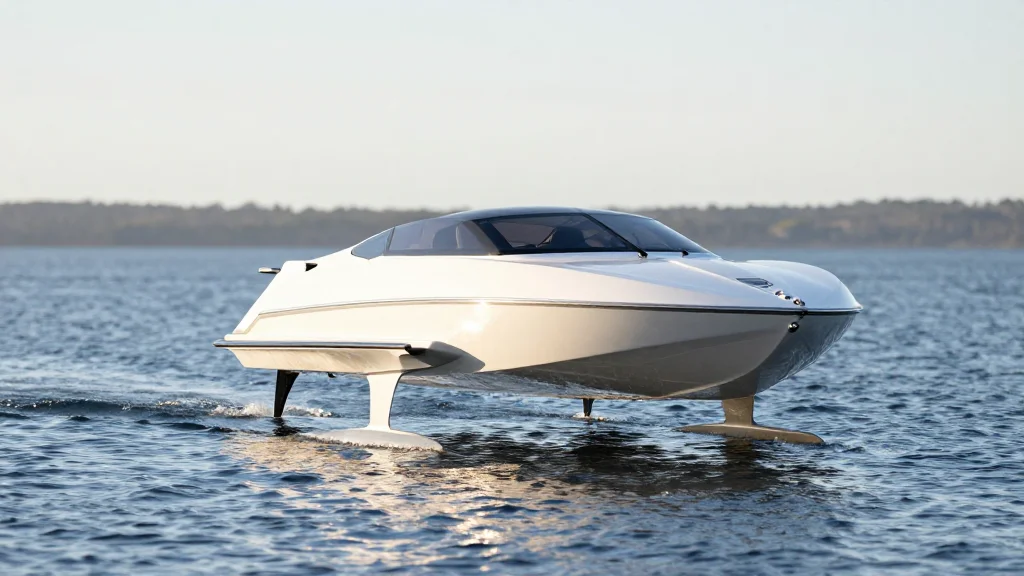
Australia’s First Electric Hydrofoil Boats to Be Rolled Out on Tasmania’s Derwent River
Why It Matters
The project demonstrates a scalable, low‑infrastructure solution for clean commuter and tourism transport, showcasing how renewable grids can power next‑generation marine mobility.
Key Takeaways
- •Vessev VS‑9 10‑seat hydrofoil arrives Hobart early 2025
- •Boats reach 30 knots, 50 nm range, charge 1 nm per minute
- •Network aims to cover 60 km of Derwent River
- •Zero‑emission operation leverages Tasmania’s near‑100% renewable grid
Pulse Analysis
Hydrofoil technology, once confined to high‑performance yachts, is now entering the public transport arena. By lifting the hull on carbon‑fibre foils, vessels dramatically reduce drag, achieving speeds up to 30 knots while producing virtually no wake. This efficiency translates into three‑fold lower energy consumption compared with conventional ferries, making electric propulsion viable even on modest battery packs. As cities worldwide grapple with congestion and emissions, electric hydrofoils offer a compelling alternative that blends speed, comfort, and environmental stewardship.
Tasmania’s Derwent River pilot leverages the island’s unique energy landscape. With almost all electricity generated from hydropower, wind, and solar, charging the VS‑9 and future VS‑12 boats yields true zero‑emission operation. Fly Derwent plans a 60‑kilometre corridor linking New Norfolk to Opossum Bay, targeting both daily commuters and premium tourists. The rapid charge rate—adding one nautical mile of range per minute—means vessels can be turned around quickly, supporting high‑frequency service without extensive shore‑side infrastructure. On‑site battery storage and vehicle‑to‑grid concepts under study could further stabilise the local grid and provide ancillary services.
If successful, the Derwent River model could accelerate adoption of electric hydrofoils in other water‑rich regions. The technology’s low wake and minimal shoreline impact sidestep many regulatory hurdles that plague traditional ferry expansions. Moreover, the modular nature of Vessev’s VS‑12, a 30‑seat platform, allows operators to scale capacity in line with demand, making the solution attractive for both dense urban waterways and scenic tourism routes. As climate‑focused investors seek tangible decarbonisation projects, electric hydrofoil networks may emerge as a high‑visibility, low‑carbon transport option, reshaping how cities think about river and coastal mobility.
Australia’s first electric hydrofoil boats to be rolled out on Tasmania’s Derwent River
Comments
Want to join the conversation?
Loading comments...