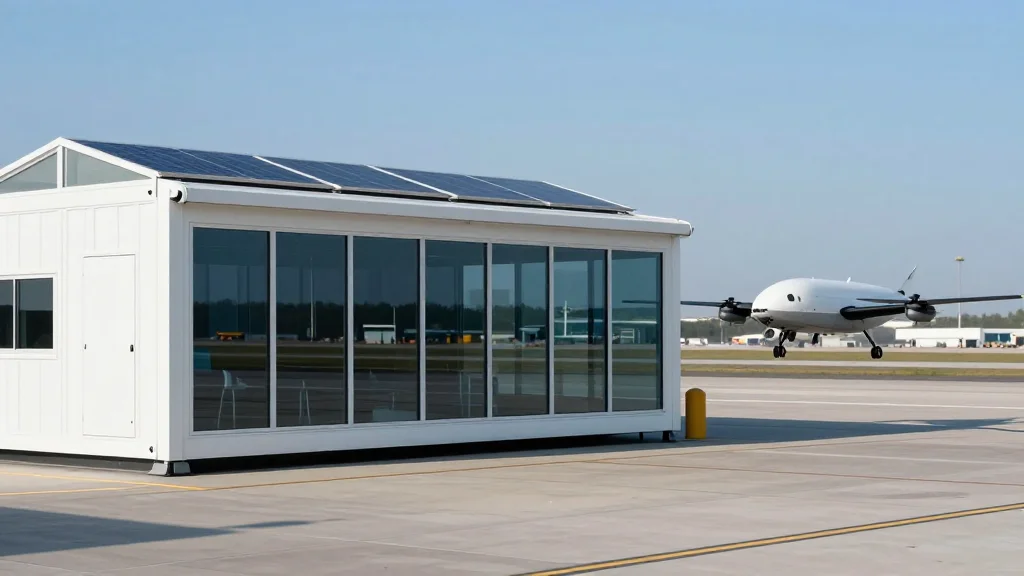
Australia’s Latrobe Airport to Establish an Advanced Air Mobility Command Centre
Why It Matters
The command centre fast‑tracks Australia’s entry into the global AAM market, creating a hub for innovation, talent and sustainable aviation that can draw industry partners and capital.
Key Takeaways
- •Yarra Drones leads AAM Command Centre at Latrobe Airport.
- •Precinct offers integrated R&D, testing, and commercialisation facilities.
- •LaunchPad building unites industry, innovators, and academia under one roof.
- •Renewable energy integration targets zero‑emission aviation operations.
- •Project positions Victoria as Australia’s AAM innovation hub.
Pulse Analysis
The rapid rise of advanced air mobility (AAM) is reshaping urban transport, with pilots in the United States, Europe, and Asia already testing passenger‑grade eVTOLs and cargo drones. Australia, long a leader in aerospace research, has lagged behind in dedicated AAM infrastructure. The creation of the Latrobe Aerospace Technology Precinct in Victoria marks a strategic shift, offering the nation its first fully integrated site for research, development, testing, and evaluation of unmanned aerial systems. By anchoring the precinct with a purpose‑built LaunchPad, the region aims to attract global OEMs and startups seeking a regulatory‑friendly environment.
Yarra Drones, a Melbourne‑based operator with a proven track record in remote piloting and air‑space management, has been tasked with establishing the Advanced Air Mobility Command Centre. The centre will serve as a coordination hub for flight operations, data analytics, and safety oversight, leveraging the LaunchPad’s modular labs and test bays. A distinctive feature is the precinct’s commitment to zero‑emission operations, embedding solar generation and battery storage to power test flights and ground support equipment. This green infrastructure not only reduces carbon footprints but also demonstrates a viable model for sustainable aviation ecosystems.
The Latrobe initiative is expected to generate a cascade of economic benefits, from high‑skill jobs to ancillary services such as component manufacturing and training programs with local universities. Early‑stage investors are watching closely, as the command centre could become a proving ground for commercial eVTOL routes and logistics drones, accelerating certification pathways. For the broader Australian aerospace sector, the precinct offers a template for public‑private collaboration that could be replicated in other states, positioning the country to compete for a share of the projected $1.5 trillion global AAM market by 2035.
Australia’s Latrobe Airport to establish an advanced air mobility command centre
Comments
Want to join the conversation?
Loading comments...