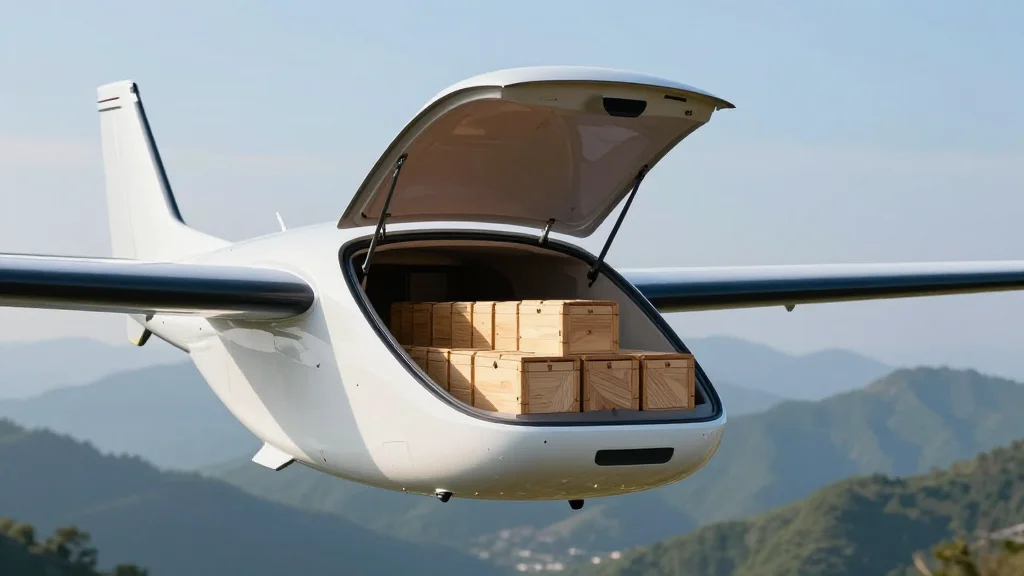
AutoFlight’s 2‑Ton eVTOL Tea Delivery Marks China’s First Heavy‑Payload Urban Air Mobility Test

Companies Mentioned
Why It Matters
The trial demonstrates that heavy‑payload eVTOLs can move beyond passenger‑shuttle concepts to address real‑world logistics challenges in difficult terrain. By coupling electric vertical flight with existing high‑speed rail, AutoFlight offers a low‑carbon, time‑critical delivery option that could reshape supply chains for high‑value agricultural products, reducing spoilage and expanding market reach for remote producers. If replicated nationwide, the model could alleviate congestion on mountain highways, lower transportation‑related emissions, and stimulate economic development in China’s less‑connected regions. The successful certification also signals regulatory confidence in large‑scale unmanned cargo operations, a prerequisite for broader commercial adoption.
Key Takeaways
- •AutoFlight’s CarryAll V2000CG completed a 120 km eVTOL cargo flight in 37 minutes, carrying a 2‑ton payload of fresh tea.
- •The flight linked Anshun and Guiyang, then used high‑speed rail to deliver the cargo to Shanghai within 24 hours.
- •The aircraft holds the first Type, Production, and Airworthiness Certificates for a 2‑ton eVTOL from China’s CAAC.
- •The integrated eVTOL‑rail model eliminates diesel emissions and cuts transit time by over 80 % compared with road transport.
- •AutoFlight is preparing to certify its 6‑seat passenger eVTOL, V2000EM Prosperity, while expanding cargo partnerships across agricultural regions.
Pulse Analysis
AutoFlight’s breakthrough illustrates a pivotal shift from experimental eVTOL prototypes to commercially viable cargo solutions. Historically, vertical‑takeoff aircraft have been limited to small payloads, restricting their utility to niche passenger services or short‑range medical evacuations. By achieving certification for a two‑ton platform, AutoFlight bridges the gap between drone‑scale delivery and traditional freight, positioning itself at the forefront of a nascent heavy‑payload market.
The strategic coupling with China’s high‑speed rail network leverages existing infrastructure, sidestepping the massive capital outlay required for dedicated vertiport hubs. This hybrid approach reduces the total cost of ownership for shippers while delivering a clear environmental advantage: electric propulsion eliminates tailpipe emissions, and rail transport already operates on a largely electrified grid. Competitors such as Lilium and Joby are focusing on passenger‑centric designs; AutoFlight’s cargo emphasis could carve out a distinct market segment, especially in regions where terrain makes road transport inefficient.
Looking ahead, the key challenge will be scaling the model beyond pilot projects. Regulators will need to establish robust traffic‑management frameworks for autonomous cargo flights, and operators must prove consistent reliability under diverse weather conditions. If AutoFlight can demonstrate repeatable performance and secure a network of regional partners, the company could catalyze a broader transition toward electric, high‑speed logistics that reshapes supply chains across China and potentially other mountainous economies worldwide.
AutoFlight’s 2‑Ton eVTOL Tea Delivery Marks China’s First Heavy‑Payload Urban Air Mobility Test
Comments
Want to join the conversation?
Loading comments...