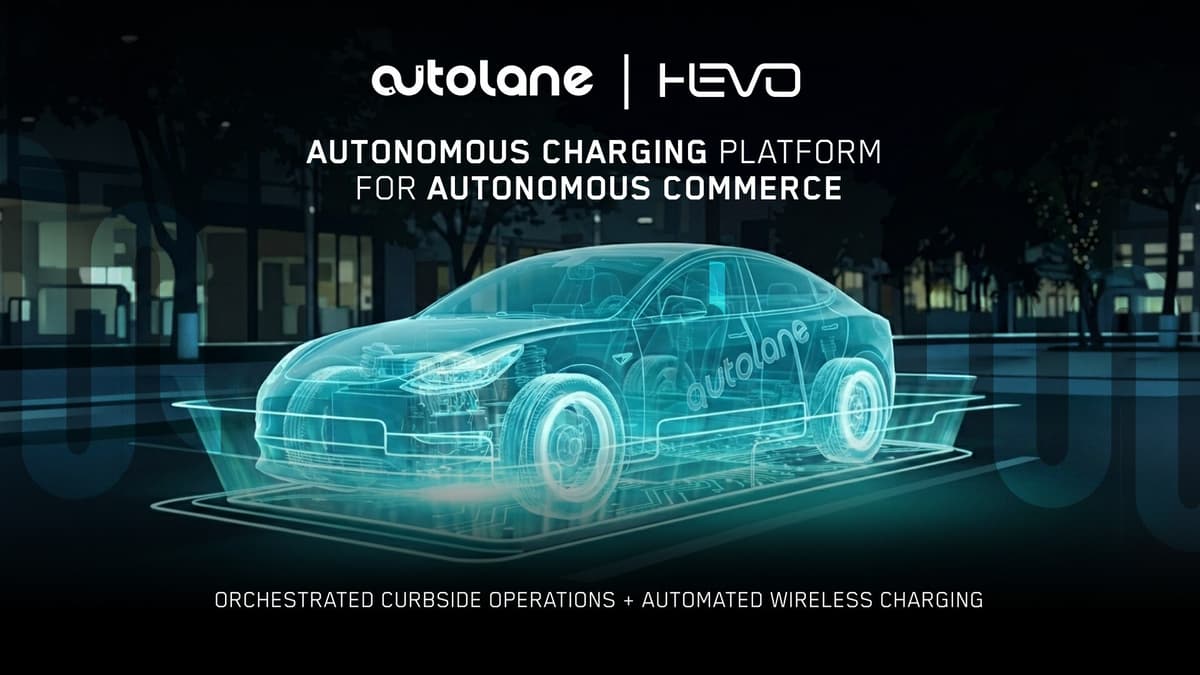
Autolane and Hevo Partner on AV Wireless Charging
•March 4, 2026
0
Why It Matters
By automating the charging step, the partnership removes a critical manual bottleneck, enabling truly end‑to‑end autonomous commerce and reducing operational labor costs.
Key Takeaways
- •Partnership launches 2026 wireless charging trials for autonomous fleets.
- •Autolane’s OS directs AVs to charge without human help.
- •Hevo supplies hardware and fleet‑management software for wireless power.
- •Focus sectors: delivery, logistics, rideshare, retail hubs.
- •Scalable blueprint planned for multiple vehicle platforms and markets.
Pulse Analysis
Wireless charging has long been touted as a game‑changer for electric mobility, but its adoption in autonomous fleets has lagged due to integration complexity and infrastructure costs. Traditional plug‑in models require human intervention, creating scheduling inefficiencies and limiting the scalability of autonomous services. Recent advances in resonant inductive power transfer, combined with robust fleet‑management platforms, are finally aligning the technology’s readiness with market demand, especially in high‑turnover environments like last‑mile delivery and rideshare hubs.
The Autolane‑Hevo alliance leverages this convergence by pairing a sophisticated curbside operating system with proven wireless charging hardware. Autolane’s software orchestrates vehicle routes, identifies optimal dwell locations, and triggers charging cycles automatically, while Hevo’s hardware delivers power without physical connectors. This seamless integration promises to cut idle time, extend vehicle utilization rates, and simplify maintenance workflows. Early trials will evaluate real‑world performance on commercially available EVs, focusing on reliability, energy transfer efficiency, and the impact on overall fleet economics.
If the 2026 pilots succeed, the partnership could set a new industry benchmark for autonomous logistics. Retail centers, campus mobility networks, and mixed‑use properties stand to benefit from reduced infrastructure footprints and lower labor overhead. Moreover, a scalable blueprint across multiple vehicle platforms would accelerate adoption, prompting competitors to invest in similar solutions. As autonomous commerce scales, autonomous charging will likely become a prerequisite, reshaping how fleets are managed and how urban mobility ecosystems are designed.
Autolane and Hevo partner on AV wireless charging
0
Comments
Want to join the conversation?
Loading comments...