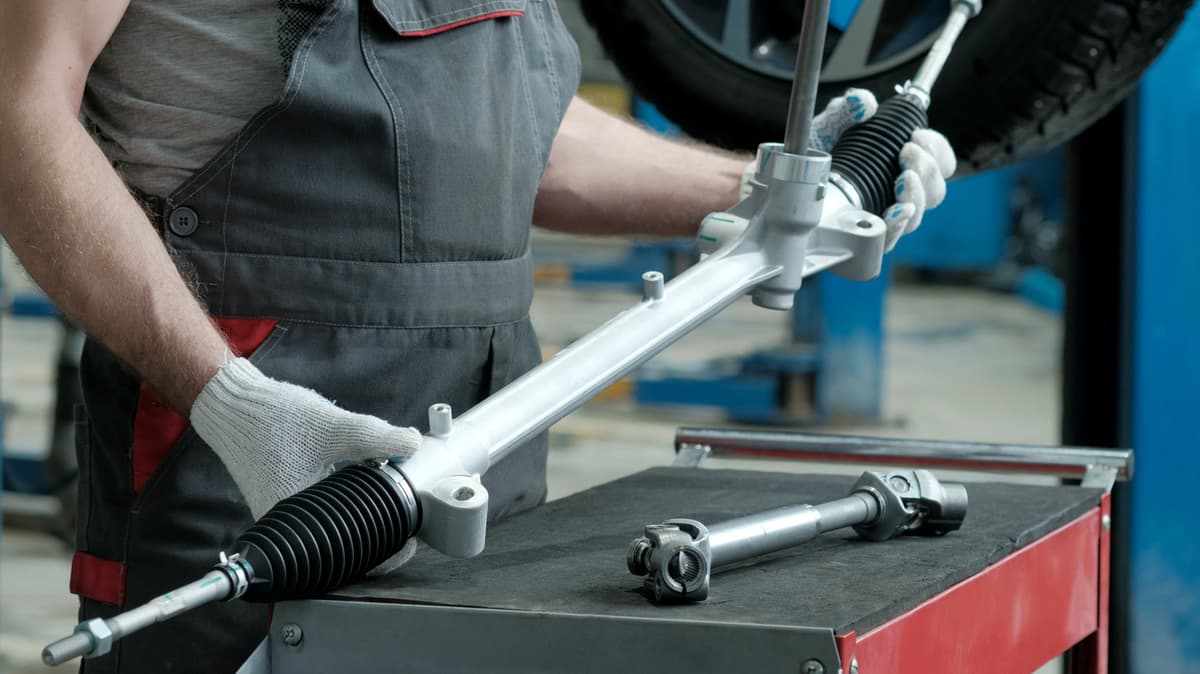
Automakers Adopted Rack-And-Pinion Steering Because It Was Better Than Alternatives

Companies Mentioned
Why It Matters
The dominance of rack‑and‑pinion shapes vehicle engineering costs, packaging constraints, and driver experience, influencing everything from mass‑market cars to future electronic steering systems.
Key Takeaways
- •Rack‑and‑pinion offers lighter, cheaper, more compact steering design
- •Recirculating‑ball steering remains in trucks and select off‑road SUVs
- •Variable‑ratio racks introduced in 1970s enable tunable steering ratios
- •Steer‑by‑wire still relies on rack‑and‑pinion for wheel actuation
- •Mercedes switched G‑Class to rack‑and‑pinion in 2019
Pulse Analysis
The shift to rack‑and‑pinion steering in the mid‑20th century was not merely a technical curiosity; it was a strategic response to manufacturing economies of scale. By consolidating the steering mechanism into a single gear‑and‑rack assembly, automakers reduced part counts, lowered material usage, and freed up valuable engine‑bay space. Those savings translated into lower vehicle prices and lighter curb weights, both critical competitive levers as consumer demand surged after World War II. The design’s inherent simplicity also meant fewer failure points, boosting reliability metrics that mattered to fleet operators and everyday drivers alike.
Beyond cost, rack‑and‑pinion introduced a new degree of tuning flexibility that reshaped vehicle dynamics. Engineers could adjust tooth spacing or pinion size to alter the steering ratio, directly influencing how many steering‑wheel turns translate into wheel angle. The 1970s saw the advent of variable‑ratio racks, enabling progressive steering feel—quick response at low speeds for maneuverability and finer control at highway speeds for stability. This adaptability supports a wide spectrum of platforms, from compact hatchbacks seeking nimble handling to performance sedans demanding precise feedback, reinforcing rack‑and‑pinion’s universal appeal.
Today, the legacy of rack‑and‑pinion persists even as the industry eyes steer‑by‑wire and fully electronic control systems. While some manufacturers retain recirculating‑ball setups in rugged models like the Jeep Wrangler for durability under extreme loads, the majority are transitioning to electronic actuation that still depends on a physical rack to move the wheels. This hybrid approach underscores the mechanical design’s robustness while allowing software‑defined steering characteristics. As autonomous driving advances, the underlying rack‑and‑pinion architecture will likely remain a foundational element, ensuring that legacy reliability meets next‑generation flexibility.
Automakers Adopted Rack-And-Pinion Steering Because It Was Better Than Alternatives
Comments
Want to join the conversation?
Loading comments...