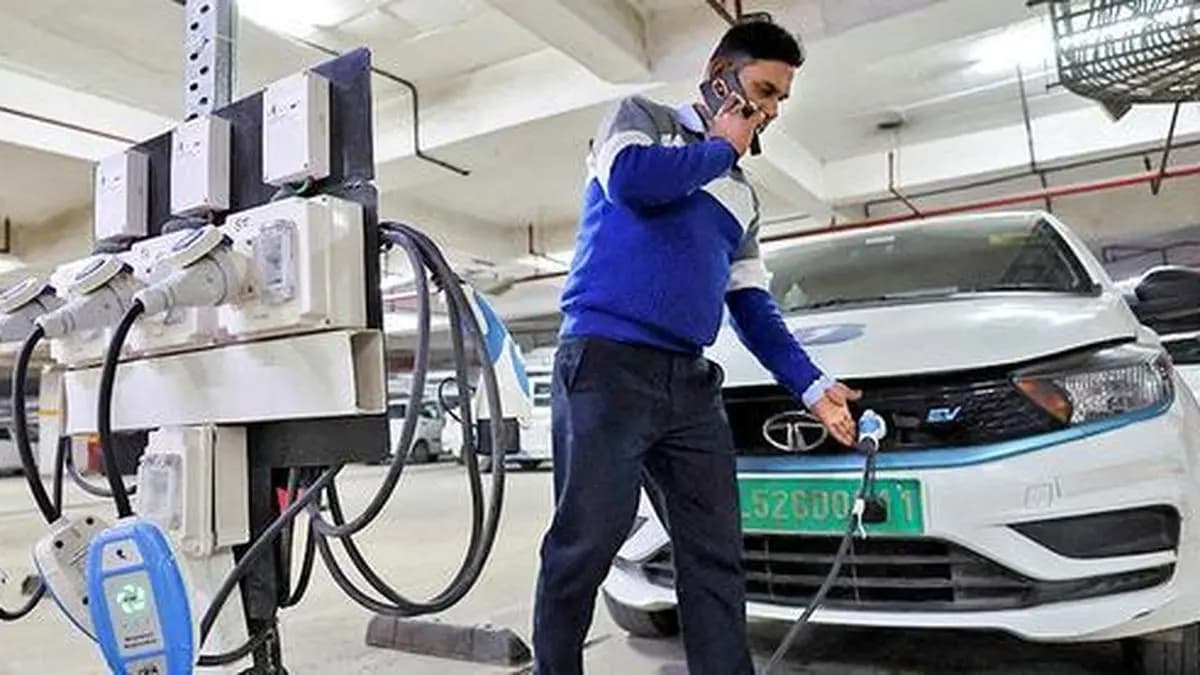
Automakers Say PM’s EV Push Can Help Grow Penetration
Companies Mentioned
Why It Matters
The initiative could reshape India’s automotive landscape by unlocking affordable EVs for the majority of buyers, while slashing the country’s annual oil import bill by an estimated $60 billion. This creates a strategic win for both the economy and climate goals.
Key Takeaways
- •PM's EV push targets 30% vehicle sales by 2030
- •Mass‑market cars under $15k hold 65% sales share
- •Government allocated $1.3 bn to EV scheme PM‑E‑DRIVE
- •Tata aims to price EVs starting around $9,600
- •EV growth could cut $60 bn yearly oil import bill
Pulse Analysis
India’s electric‑vehicle ambition has moved from a niche policy to a national priority, anchored by Prime Minister Narendra Modi’s recent appeal for cleaner mobility. The PM‑E‑DRIVE programme, backed by roughly $1.3 billion, funds incentives for two‑wheelers, three‑wheelers, buses and commercial trucks, while a parallel $60 million allocation fast‑tracks the rollout of nearly 5,000 public chargers. Together, these measures aim to create a robust charging ecosystem that reduces range anxiety and positions India as a manufacturing hub for affordable EVs.
The decisive factor for scaling EV adoption lies in the mass‑market passenger‑car segment, where price sensitivity dominates. Vehicles priced below $15,000—approximately ₹12 lakh—represent 65% of India’s car sales but currently suffer from low electric penetration due to limited affordable models. Tata Motors is leading the charge with EVs starting around $9,600, and Maruti Suzuki is leveraging its e‑Vitara platform for both domestic sales and exports to over 100 countries. By localising components and streamlining production, manufacturers can lower costs, making electric cars competitive with internal‑combustion rivals.
Beyond consumer benefits, the EV surge carries profound macro‑economic implications. Reducing reliance on imported crude oil aligns with India’s energy‑security agenda, especially amid geopolitical volatility in West Asia. Analysts estimate that achieving the 30% EV share by 2030 could save the nation about $60 billion annually in oil import expenditures. Moreover, a thriving EV supply chain can boost exports, attract foreign investment, and help India meet its net‑zero commitments, positioning the country as a pivotal player in the global clean‑mobility transition.
Automakers say PM’s EV push can help grow penetration
Comments
Want to join the conversation?
Loading comments...