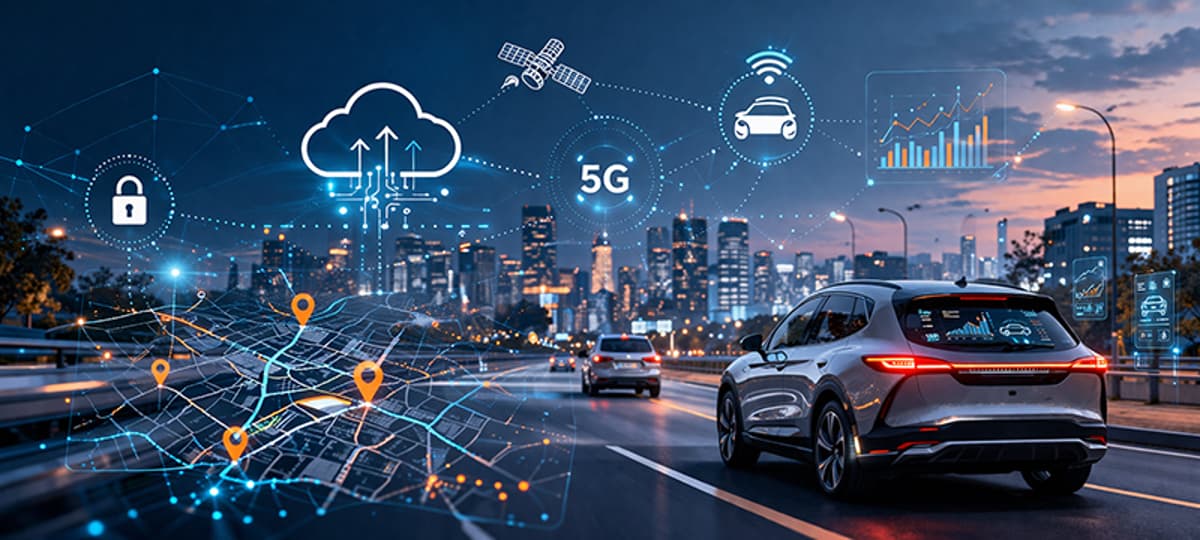
Automotive IoT: Connected Vehicles, Telematics and Software-Defined Mobility
Why It Matters
The shift to connected, software‑defined vehicles unlocks operational efficiencies and recurring revenue streams for OEMs and service providers, reshaping the automotive value chain. However, addressing cybersecurity and regulatory hurdles will be decisive for widespread adoption.
Key Takeaways
- •Automotive IoT links vehicles to cloud, edge, and network for real‑time data.
- •Telematics drives fleet efficiency, predictive maintenance, and usage‑based insurance.
- •Software‑defined vehicle architecture separates hardware from software, allowing OTA updates.
- •5G, LTE‑M, and V2X standards are critical for scalable connectivity.
- •Security, data governance, and system complexity remain major deployment challenges.
Pulse Analysis
The automotive industry is in the midst of a digital transformation, with Automotive IoT projected to generate more than $200 billion in revenue by 2030, according to multiple analyst forecasts. This surge is fueled by the convergence of ubiquitous cellular connectivity, declining sensor costs, and the rise of data‑centric services such as fleet optimization and usage‑based insurance. As vehicles become mobile data hubs, OEMs are partnering with cloud providers and telecom operators to build end‑to‑end platforms that can ingest terabytes of telemetry daily. The resulting ecosystem blurs the line between transportation and technology, positioning connected cars as integral components of smart‑city infrastructure.
At the heart of Automotive IoT lies a layered architecture that blends in‑vehicle ECUs, a telematics control unit, edge compute nodes, and centralized cloud services. Edge processing handles latency‑sensitive tasks—collision avoidance, real‑time diagnostics—while the cloud performs large‑scale analytics, machine learning, and service orchestration. Software‑defined vehicle platforms decouple functionality from hardware, enabling over‑the‑air firmware patches and feature rollouts without a physical recall. Standards such as 5G, LTE‑M, NB‑IoT, and V2X ensure reliable, low‑latency communication, yet the heterogeneous mix of protocols (CAN, Ethernet, AUTOSAR) adds integration complexity that developers must manage.
The business impact of this connectivity is twofold: operational efficiency and new revenue streams. Fleet operators leverage real‑time location and health data to cut fuel consumption and downtime, while insurers adopt usage‑based pricing models that reward safe driving. OEMs are experimenting with subscription services—advanced driver‑assist features, infotainment upgrades, and battery‑as‑a‑service—turning a vehicle into a platform for recurring income. Nevertheless, the expanded attack surface demands robust cybersecurity frameworks, and regulators are tightening data‑privacy rules across jurisdictions. Companies that can balance innovation with compliance will capture the lion’s share of the emerging Automotive IoT market.
Automotive IoT: Connected Vehicles, Telematics and Software-Defined Mobility
Comments
Want to join the conversation?
Loading comments...