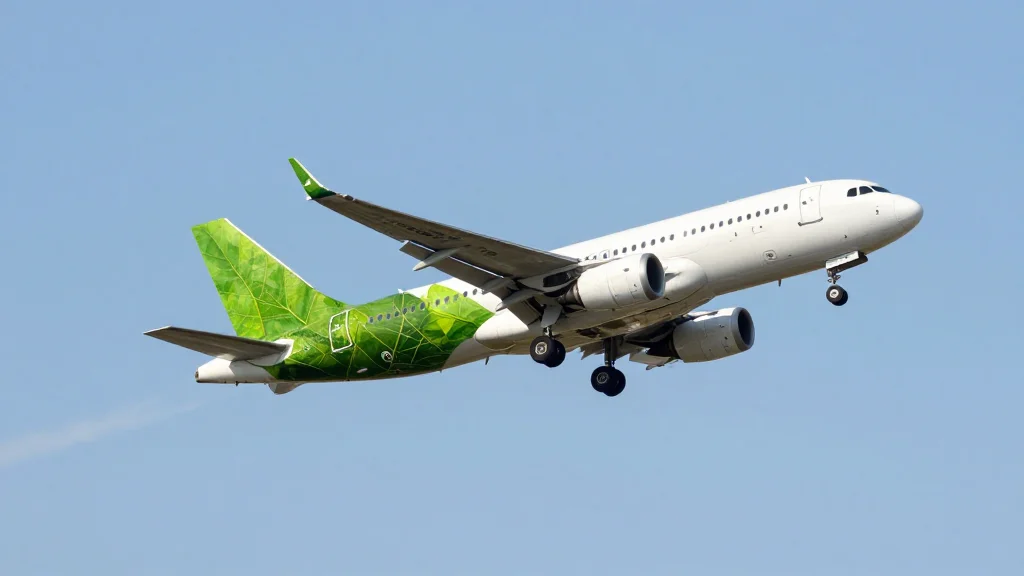
Aviation’s Climate Reckoning Demands Action, Not Delay
Why It Matters
Aviation accounts for roughly 2‑3% of global CO₂ emissions; achieving net‑zero is critical to preserving the sector’s growth and public legitimacy. Coordinated policy, financing, and technology deployment are the only path to meet climate targets on schedule.
Key Takeaways
- •ICAO targets net‑zero aviation emissions by 2050
- •Sustainable aviation fuels expected to supply >50% of reductions
- •Over 150 ICAO members submitted climate action plans
- •Finvest Hub links decarbonisation projects with private capital
- •Climate Week will focus on implementation, not just ambition
Pulse Analysis
Aviation’s contribution to global greenhouse‑gas emissions has become a flashpoint for regulators, investors, and travelers alike. While the sector fuels economic integration, its growth trajectory clashes with the tightening carbon budgets set by the Paris Agreement. ICAO, the UN agency that standardises global air navigation, has responded by cementing a 2050 net‑zero target and urging member states to embed that ambition in national policies. This strategic shift reflects a broader industry consensus that the technology—ranging from next‑generation aircraft to electric propulsion—is ready, but the political and financial will must catch up.
Central to the decarbonisation roadmap is the scaling of sustainable aviation fuels, which industry analysts estimate could deliver more than half of the required emissions cuts by mid‑century. Yet SAF’s promise hinges on massive new production capacity, supply‑chain logistics, and certification frameworks. ICAO’s Finvest Hub and the ACT‑SAF program are designed to bridge the financing gap, channeling institutional and private capital into SAF projects, especially in emerging economies where funding is scarce. Complementary initiatives like ACT‑LTAG build regulatory expertise, ensuring that countries can draft and enforce robust climate policies that attract long‑term investment.
The upcoming ICAO Aviation Climate Week marks a decisive moment, moving the dialogue from lofty declarations to actionable milestones. Delegates will convene to test harmonised standards, share best‑practice monitoring tools, and lock in financing commitments for SAF and digital‑enabled efficiency gains. Success will depend on delivering clear, predictable regulatory signals that give investors confidence to commit billions of dollars. If the industry can translate alignment into rapid implementation, it stands a realistic chance of meeting the 2050 net‑zero benchmark and preserving aviation’s role in the global economy.
Aviation’s Climate Reckoning Demands Action, Not Delay
Comments
Want to join the conversation?
Loading comments...