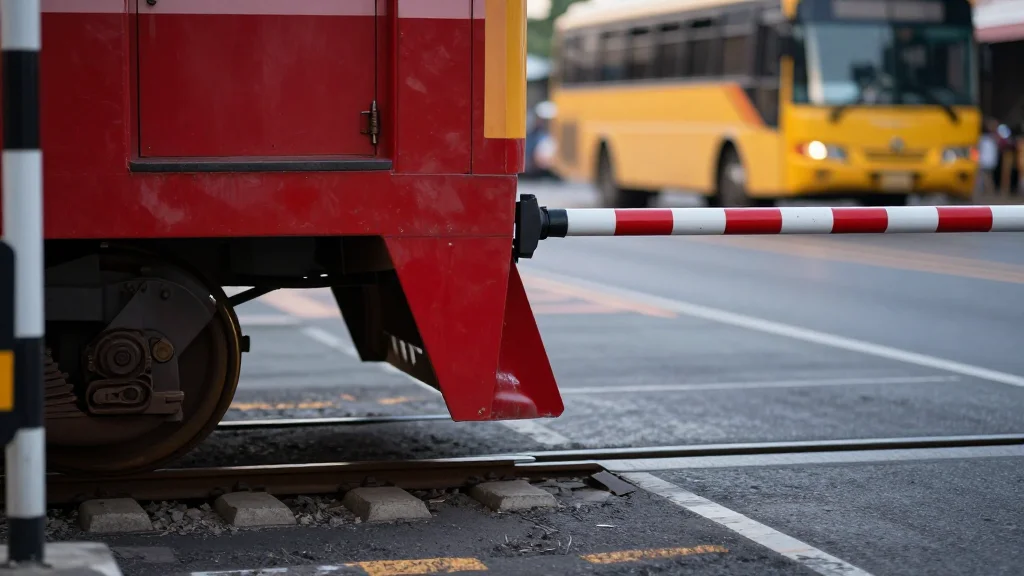
Bangkok Freight‑Train‑Bus Crash Kills 8, Injures Over 30

Why It Matters
The Bangkok crash underscores a systemic safety gap in Thailand’s transport network, where aging rail‑road crossings intersect densely populated urban arteries. Each fatal incident erodes public confidence and imposes economic costs through lost productivity, medical expenses, and infrastructure repairs. A thorough investigation and subsequent policy reforms could serve as a catalyst for broader regional upgrades, influencing how governments across Southeast Asia prioritize funding for automated crossing technology and stricter enforcement of traffic rules. Beyond immediate safety concerns, the incident has implications for Thailand’s logistics sector. Freight trains are a backbone of the country’s supply chain, moving goods from ports to inland markets. Persistent safety issues risk disrupting these flows, potentially increasing freight costs and affecting export competitiveness. Strengthening rail‑road integration could improve overall transport efficiency, supporting Thailand’s ambition to become a regional logistics hub.
Key Takeaways
- •Eight fatalities and at least 35 injuries reported in Bangkok freight‑train‑bus collision.
- •Police chief Urumporn Koondejsumrit confirmed the death toll and serious‑condition injuries.
- •Prime Minister Anutin Charnvirakul ordered a full investigation into crossing safety.
- •Witnesses described the bus catching fire instantly and the scene as chaotic.
- •The crash adds to Thailand’s history of deadly rail‑road incidents, prompting calls for automated crossing upgrades.
Pulse Analysis
Thailand’s transport safety record has long been a point of contention, but the Bangkok crash could finally tip the policy conversation toward decisive action. Historically, the State Railway of Thailand has operated with limited capital for safety upgrades, relying on manual gates that depend on human vigilance. The cumulative cost of accidents—both human and economic—has begun to outweigh the perceived savings of low‑tech solutions. In the wake of this tragedy, policymakers are likely to face mounting pressure from civil society, industry groups, and international partners to allocate budget for sensor‑based barriers, real‑time monitoring, and public awareness campaigns.
Comparatively, neighboring countries such as Malaysia and Vietnam have already begun large‑scale modernization of level crossings, integrating GPS‑linked warning systems that automatically halt road traffic when a train approaches. Thailand’s lag in adopting similar technology creates a competitive disadvantage, especially as regional supply chains become more integrated under initiatives like the ASEAN Economic Community. A swift, transparent response could not only prevent future loss of life but also signal to investors that Thailand is committed to a safe, reliable logistics environment.
Looking ahead, the investigation’s findings will likely shape the next legislative cycle. If systemic failures are identified, the government may introduce stricter penalties for crossing violations and fast‑track funding for automated barriers. Conversely, if driver negligence is the primary cause, the focus may shift to driver training and enforcement. Either scenario presents an opportunity for private‑sector participation, as technology firms and engineering firms vie for contracts to modernize the nation’s crossing infrastructure. The outcome will be a bellwether for how Southeast Asian nations balance cost, safety, and growth in their transport ecosystems.
Bangkok Freight‑Train‑Bus Crash Kills 8, Injures Over 30
Comments
Want to join the conversation?
Loading comments...