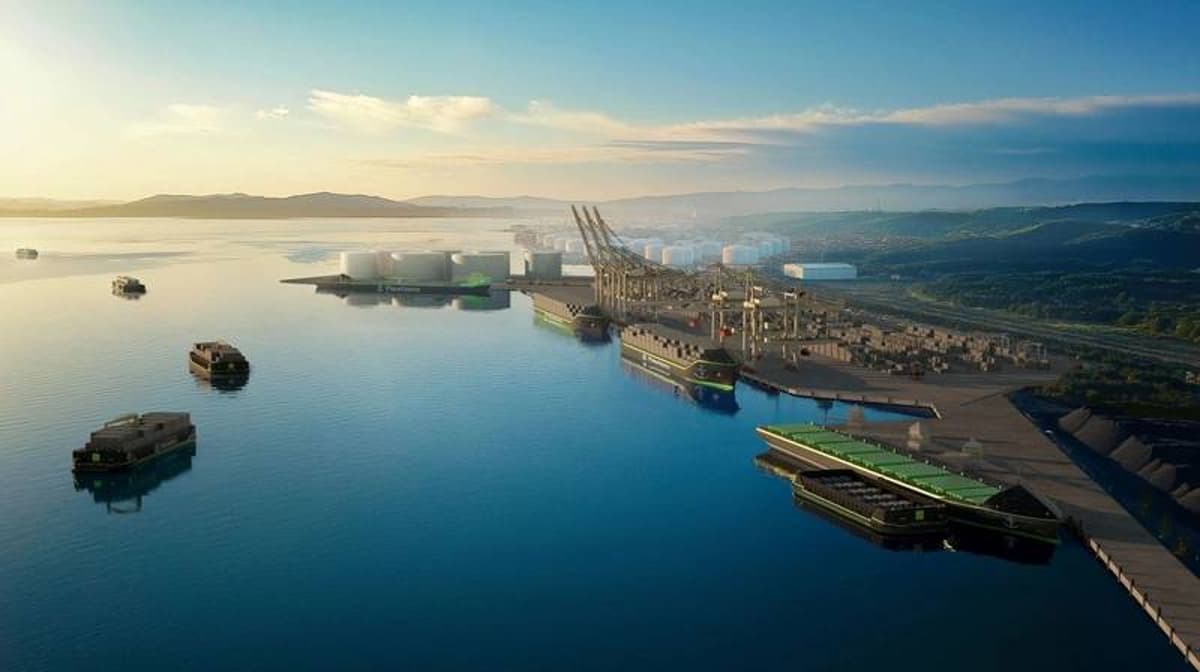
BATTERIES: FleetZero Aims to Help Rewrite the Rules of Marine Power
Why It Matters
By delivering cost‑effective, high‑density batteries, FleetZero accelerates the maritime sector’s shift away from diesel and alternative fuels, a critical step toward global decarbonization. Its scalable approach could redefine ship design and supply chains, influencing both operators and shipyards.
Key Takeaways
- •FleetZero raised $60M, targeting 300 MWh battery output this year.
- •Leviathan LFP batteries claim double energy density at half cost.
- •Kraken integration platform cuts shipboard electrical footprint, lowering installation costs.
- •Houston base leverages port, energy sector, and skilled labor for scale.
- •Company plans modular hull concepts to reshape shipbuilding.
Pulse Analysis
The shipping industry faces mounting pressure to cut greenhouse‑gas emissions, and battery propulsion is emerging as a viable alternative to traditional diesel or speculative fuels like ammonia. Recent cost reductions in lithium‑iron‑phosphate chemistry, combined with advances in energy‑density modeling, have made large‑scale marine batteries economically attractive. FleetZero’s focus on modular, containerized units aligns with operators’ need for retrofits that minimize downtime while delivering measurable fuel savings across bulkers, tankers, and container vessels.
FleetZero differentiates itself through two core products. The Leviathan system leverages proprietary packaging and LFP chemistry to deliver roughly twice the energy density of competing marine batteries at about half the price, addressing the long‑standing trade‑off between safety, cost, and performance. Complementing this, the Kraken integration platform consolidates power electronics and switchgear, shrinking the shipboard footprint and reducing installation labor. Together, these solutions lower the total cost of ownership and make electrification feasible for a broader range of vessel classes, accelerating fleet‑wide adoption.
Beyond the hardware, FleetZero’s strategic placement in Houston provides access to a deep talent pool, a major port, and a robust energy ecosystem, facilitating rapid scale‑up. The company’s ambition to pair battery packs with modular hull construction hints at a broader industrial reset, where ship components are prefabricated inland and assembled at coastal yards. If successful, this model could compress build cycles, lower capital expenditures, and set new standards for sustainable shipbuilding across the global maritime supply chain.
BATTERIES: FleetZero aims to Help Rewrite the Rules of Marine Power
Comments
Want to join the conversation?
Loading comments...