Berlin Is Ground Zero In The War Between Cars & Bicycles
Companies Mentioned
Why It Matters
The outcome will shape Berlin’s urban mobility model, influencing European cities’ approaches to climate‑friendly transport and public‑space allocation. Election‑driven policy shifts could either accelerate bike‑centric reforms or reinforce car‑friendly status quos, affecting emissions, congestion and local economies.
Key Takeaways
- •Petition to limit private cars to 12 trips per year gains tens of thousands of signatures
- •Pro‑car parties, including AfD, campaign on preserving driver rights in upcoming elections
- •Berlin’s congestion rivals NYC’s despite half the population, prompting pricing debates
- •Paris’s bike‑lane success cited as template, but Berlin faces stronger suburban opposition
Pulse Analysis
Berlin’s transport battle reflects a broader European shift toward reclaiming street space for people, not cars. While Paris leveraged its compact administrative borders to roll out hundreds of kilometres of protected bike lanes, Berlin must contend with a sprawling metropolitan area where commuters from the outskirts rely heavily on private vehicles. The city’s congestion, measured by the TomTom Traffic Index, rivals that of New York City, yet Berlin has roughly half the population and vehicle fleet. This paradox fuels calls for congestion‑pricing, a tool already proven to cut vehicle entries by tens of millions in New York’s first year.
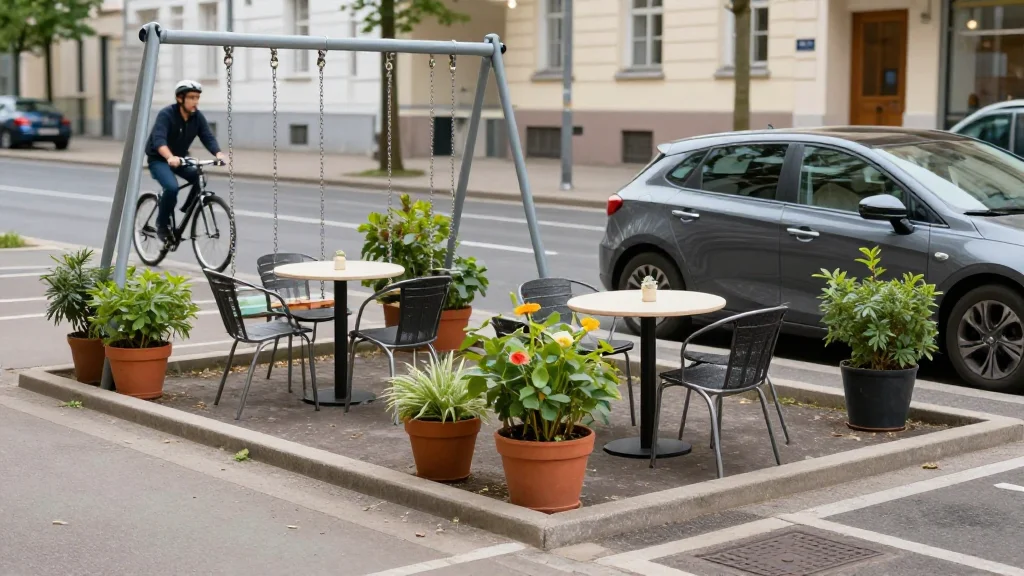
The grassroots petition circulating in Berlin illustrates how civic activism can translate into electoral leverage. By proposing to replace thousands of on‑street parking spots with cafés, playgrounds and urban gardens, organizers aim to reshape the city’s visual and functional landscape. The slogan “Fewer cars, More Berlin” captures a growing sentiment that public spaces should prioritize social interaction and environmental health over automobile convenience. However, the counter‑movement, led by the AfD and other conservative groups, frames these proposals as attacks on personal freedom, echoing similar culture‑war narratives seen in U.S. politics.
If Berlin’s voters endorse the bike‑friendly agenda, the city could become a benchmark for mid‑size European capitals seeking to reduce emissions and improve livability without sacrificing economic vitality. Successful implementation would likely involve a mix of protected bike lanes, expanded public‑transport frequency, and targeted congestion fees—strategies that align with EU climate targets and the growing demand for sustainable urban mobility. Conversely, a pro‑car victory could stall or reverse recent gains, reinforcing car dependency and limiting the city’s ability to meet its carbon‑reduction commitments. The stakes extend beyond Berlin, offering a real‑time case study of how transport policy, electoral politics, and climate imperatives intersect in modern cities.
Berlin Is Ground Zero In The War Between Cars & Bicycles
Comments
Want to join the conversation?
Loading comments...