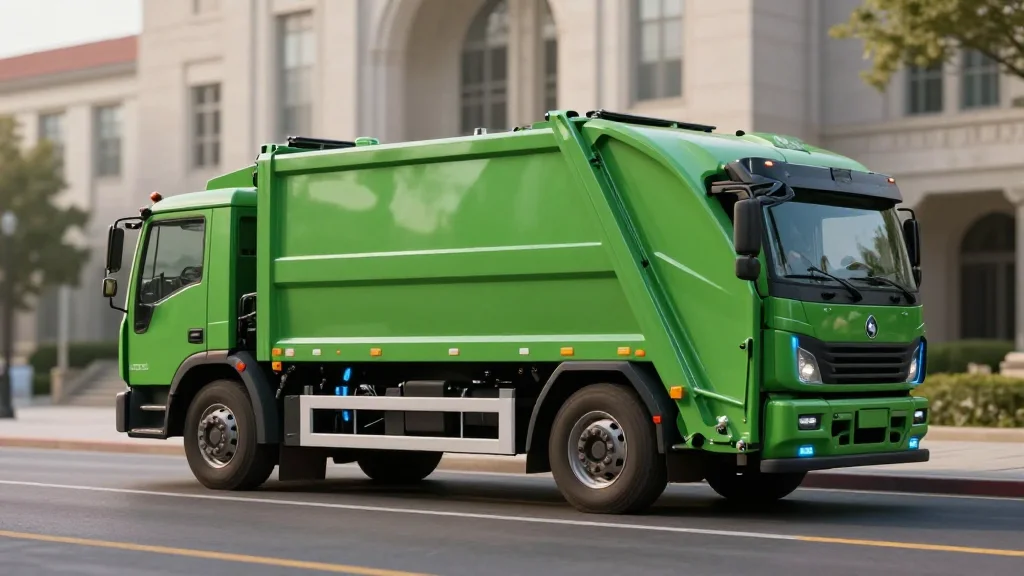
Big Orange Goes Green: UT Knoxville to Deploy Nine Electric Trucks
Why It Matters
Deploying electric refuse trucks on a large campus proves the practicality of zero‑emission waste collection and sets a replicable model for other institutions seeking to cut carbon footprints while enhancing grid resilience.
Key Takeaways
- •UT Knoxville adds nine electric trucks, including a 200‑mile refuse vehicle
- •Volterra truck uses 499 kWh battery, supports fast and Level 2 charging
- •Bidirectional charging lets trucks act as mobile power sources during outages
- •Project funded by $3 M state grant, $315 k, and $700 k university funds
- •Onboard routing software optimizes routes, extending battery efficiency
Pulse Analysis
Electrifying waste management is gaining traction as municipalities and large campuses look for ways to reduce diesel emissions. The University of Tennessee, Knoxville’s new fleet demonstrates how electric refuse trucks can handle the stop‑and‑go demands of garbage collection while delivering zero‑tailpipe pollutants. By pairing high‑capacity lithium‑ion packs with hydraulic lift systems, the Volterra truck maintains the torque needed for compacting recyclables, positioning electric powertrains as a viable alternative to traditional diesel rigs.
The technical specifications of UTK’s fleet underscore a broader shift toward smarter, more flexible electric vehicles. A 499 kWh battery provides about 200 miles of operation—enough for roughly 110 collection cycles—while fast‑charging infrastructure minimizes downtime. Integrated route‑planning algorithms calculate the most efficient paths, conserving energy and keeping drivers on schedule. Notably, bidirectional charging enables the trucks to feed electricity back into the campus grid during emergencies, turning the fleet into a distributed energy resource that can bolster resilience against power outages.
Funding the transition required a blended financing approach: a $3 million grant from the Tennessee Department of Environment and Conservation, a $315,000 contribution from the Student Environmental Initiatives Fund, and roughly $700,000 from university facilities. This public‑private partnership model offers a template for other universities and municipalities seeking to modernize fleets without shouldering the full cost upfront. As state incentives for clean transportation persist and battery costs continue to decline, the market for electric refuse trucks is poised for rapid growth, promising both environmental benefits and new revenue streams from ancillary services like grid support.
Big Orange goes green: UT Knoxville to deploy nine electric trucks
Comments
Want to join the conversation?
Loading comments...