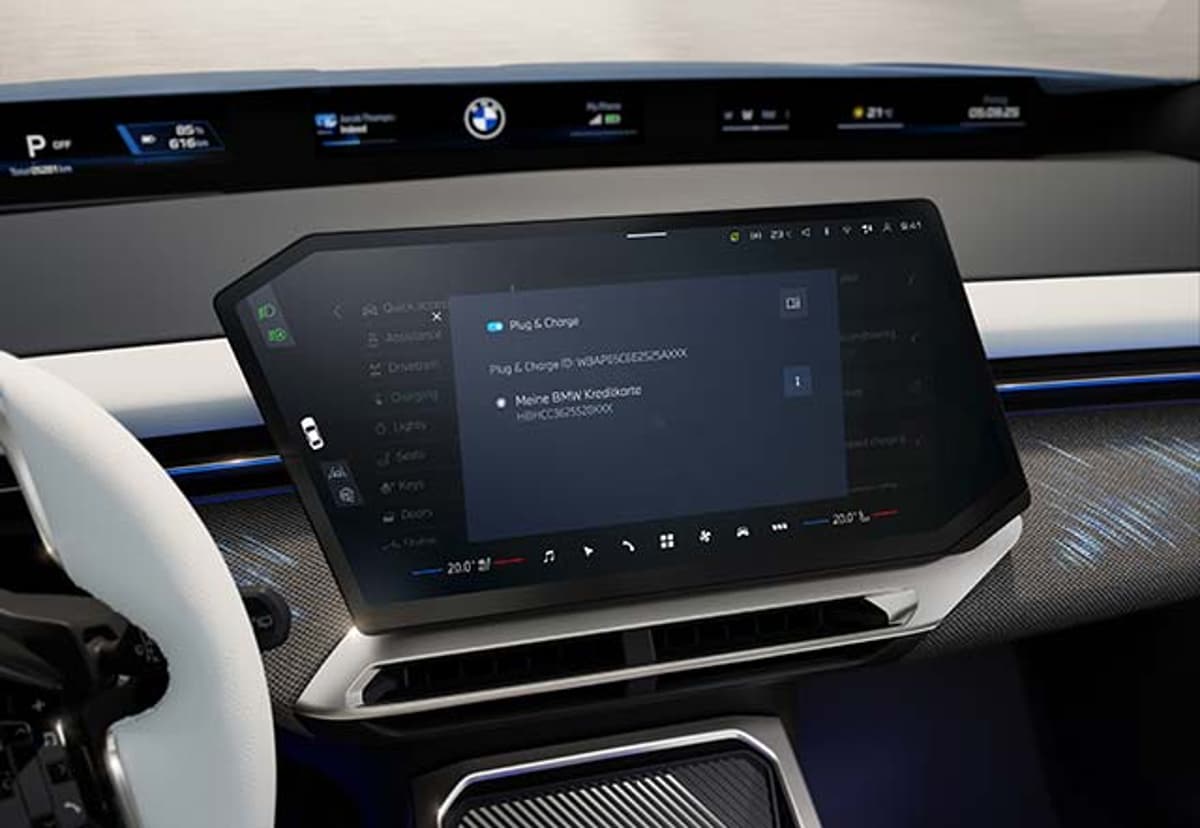
BMW Simplifies EV Charging with Contract-Free Plug & Charge
Why It Matters
Removing contracts and app‑based steps lowers a key barrier to public EV charging, making electric mobility more convenient for everyday drivers, tourists and fleet operators, which could accelerate broader EV adoption.
Key Takeaways
- •Contract‑free Plug & Charge launched for BMW and MINI EVs in Germany.
- •Automatic vehicle authentication uses stored credit card, no apps needed.
- •Over 1,400 Mer Germany stations now support instant charging.
- •Pricing is pay‑as‑you‑go, displayed in‑car and app.
- •Expansion to additional European operators planned for 2026.
Pulse Analysis
BMW’s contract‑free Plug & Charge leverages the growing Hubject ecosystem to let drivers authenticate and pay for DC charging directly from the vehicle. Once the driver logs into the car with a BMW or MINI ID, the system pulls the stored credit‑card details, initiates authentication at a participating Mer Germany station, and starts charging without any manual steps. The pay‑as‑you‑go model mirrors traditional fuel purchases, displaying real‑time rates on the instrument cluster and in the myBMW app, thereby removing the subscription friction that has hampered many public‑charging experiences.
The convenience factor addresses a well‑documented pain point for EV owners: the need to juggle multiple apps, RFID cards, or contractual agreements before a single charge. By simplifying the process, BMW not only improves the user experience for its own customers but also opens the door for occasional drivers, tourists, and corporate fleets who may only need sporadic access to public chargers. This aligns with broader industry trends where automakers such as Tesla, Volkswagen and Hyundai are experimenting with seamless charging solutions, but many still require a pre‑registered account or subscription. BMW’s ad‑hoc billing could set a new benchmark for flexibility and cost transparency in the market.
Looking ahead, BMW’s roadmap to add more operators and expand into additional European markets signals a strategic push to make contract‑free charging a continental standard. As the European Union tightens emissions targets and governments invest heavily in charging infrastructure, solutions that reduce friction will be crucial for meeting adoption goals. Charging network operators may need to adapt their business models, offering more open, interoperable access while maintaining revenue streams. For investors and industry watchers, BMW’s move underscores the accelerating convergence of automotive software, fintech, and energy services—a convergence that could reshape the economics of electric mobility over the next decade.
BMW Simplifies EV Charging with Contract-Free Plug & Charge
Comments
Want to join the conversation?
Loading comments...