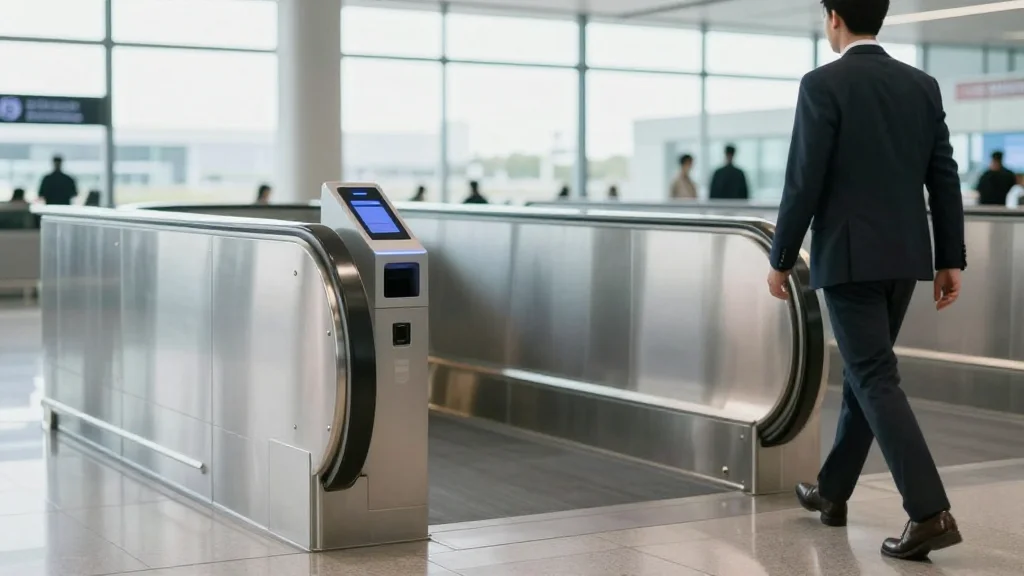
Border Control Remains an Obstacle to Seamless Travel
Why It Matters
Border inefficiencies erode the value of airport automation and can diminish passenger satisfaction, making coordinated identity solutions a critical competitive differentiator for airlines and airports alike.
Key Takeaways
- •Biometric deployments projected to generate $15.8B market value
- •Over 2,100 eGates installed worldwide in past five years
- •EU Entry/Exit System cost €915m (~$1B) drives operational stress
- •Biometric corridors can process 30+ passengers per minute
- •Data governance, liability, and consent alignment remains biggest hurdle
Pulse Analysis
Airports have spent billions modernising check‑in, security and boarding, yet the final hurdle—border control—remains a bottleneck. Biometric technologies such as facial recognition have moved from pilots to production, underpinning bag‑drop, security lanes and even lounge access. This diffusion has created a $15.8 billion market outlook for airport biometrics, signalling that operators view identity verification as a journey‑wide enabler rather than a single checkpoint. However, the lack of a unified framework means that the seamless travel promise still falters at the gate.
Regulators are accelerating the push for integrated borders. The European Union’s Entry/Exit System, a digital overhaul of visa‑free travel, has already consumed at least €915 million (approximately $1 billion) and imposes new data‑capture, quality and exception‑handling requirements on airports during peak periods. While automated eGates have expanded by over 2,100 units in five years, they function as isolated islands rather than components of a fluid passenger flow. The concept of biometric corridors—continuous verification across airline, airport and border touchpoints—has shown early throughput of more than 30 travelers per minute, suggesting a viable path to de‑congested terminals if stakeholders can align processes.
The real challenge now lies in governance, not hardware. Questions around data ownership, liability, standards and passenger consent have stalled broader adoption, as public agencies prioritize security and sovereignty while commercial operators chase efficiency and revenue. The market is shifting toward platform‑based solutions that orchestrate data across multiple entities, inviting digital‑identity providers and mobility platforms into a space once dominated by a few incumbents. Success will depend on creating interoperable, trusted frameworks that allow a single biometric credential to be reused securely throughout the journey, turning borders from a constraint into an enabler of truly seamless travel.
Border control remains an obstacle to seamless travel
Comments
Want to join the conversation?
Loading comments...