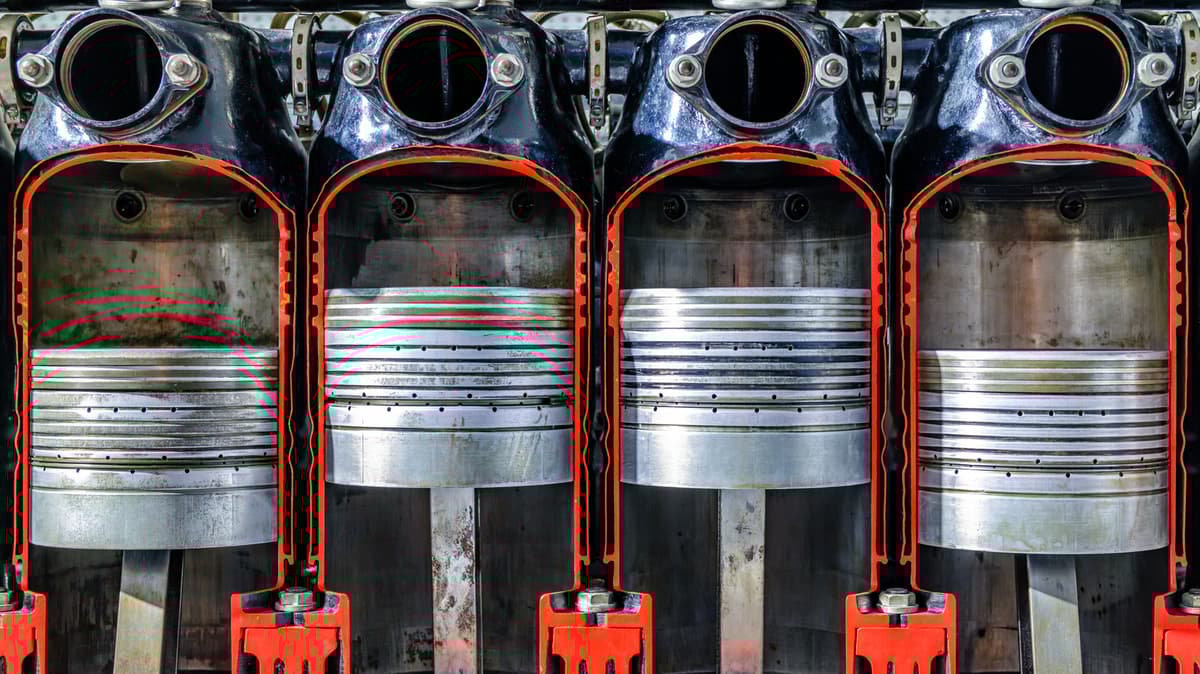
Bore Vs Stroke: How Does Each Impact Your Engine's Power?
Why It Matters
Choosing the right bore‑to‑stroke ratio directly impacts performance, fuel efficiency, and emissions, influencing product positioning in competitive automotive segments. It also guides engineering decisions as manufacturers balance power demands with regulatory constraints.
Key Takeaways
- •Oversquare engines favor high‑rpm horsepower with larger bore
- •Undersquare engines deliver strong low‑rpm torque via longer stroke
- •Bore size determines valve area and airflow capacity
- •Stroke length influences piston speed and mechanical leverage
- •Engine design matches vehicle role: sport cars vs trucks
Pulse Analysis
The bore‑to‑stroke ratio is a foundational design choice that dictates how an internal‑combustion engine breathes and generates force. An oversquare layout—where the cylinder diameter exceeds the piston travel—creates a spacious combustion chamber that can host larger valves and higher flow rates. This architecture excels at high engine speeds, allowing sport‑oriented vehicles to achieve peak horsepower well above 6,000 RPM. Conversely, an undersquare configuration—longer stroke than bore—produces greater mechanical leverage, translating into robust low‑end torque that is prized in trucks, SUVs, and marine applications where pulling power outweighs top‑speed ambitions.
Modern engineering mitigates the inherent compromises of each geometry through technologies such as variable valve timing, direct injection, and turbocharging. Variable valve timing can broaden the effective breathing window of an undersquare engine, while turbochargers compensate for the airflow limits of a long‑stroke design by forcing more air in at higher RPMs. Direct injection improves combustion efficiency across the rev range, helping both oversquare and undersquare engines meet stricter emissions standards without sacrificing performance. These advances enable manufacturers to fine‑tune power curves, delivering a blend of torque and horsepower that aligns with consumer expectations and regulatory pressures.
Looking ahead, the relevance of bore and stroke will evolve as electrification reshapes powertrains. Hybrid systems can pair a small, efficient internal‑combustion engine—often undersquare for optimal torque—with electric motors that supply high‑rpm horsepower, effectively sidestepping the traditional trade‑off. Nevertheless, for markets where ICEs remain dominant, mastering bore‑stroke dynamics remains essential for achieving the right balance of performance, efficiency, and durability. Companies that leverage this knowledge will retain a competitive edge as the industry transitions toward mixed‑power solutions.
Bore Vs Stroke: How Does Each Impact Your Engine's Power?
Comments
Want to join the conversation?
Loading comments...