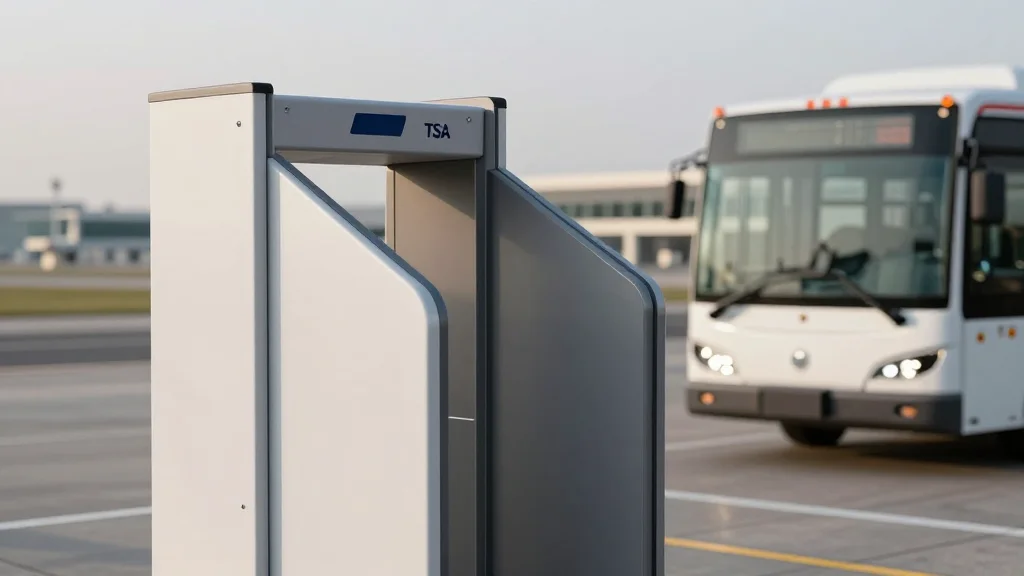
Boston Logan Launches Remote TSA Screening Pilot with Private Shuttle Service

Companies Mentioned
Why It Matters
The remote TSA screening pilot could redefine airport security logistics by decoupling the checkpoint from the terminal, offering a blueprint for faster, more flexible passenger processing. If successful, airlines may see reduced turnaround delays, and airports could handle higher passenger volumes without costly infrastructure expansions. However, the shift also raises fundamental questions about the role of government‑run security versus private contractors, especially regarding job security for TSA officers and the consistency of safety standards across disparate locations. Beyond operational benefits, the experiment signals a policy direction that could influence future legislation on airport security funding and labor protections. A positive outcome may accelerate privatization efforts, while any security lapses could trigger regulatory pushback and reinforce calls for maintaining a robust federal security workforce.
Key Takeaways
- •Boston Logan pilots remote TSA screening 25 miles from the airport
- •Landline will shuttle passengers in a secure bus, charging a fee
- •TSA Gold+ program aims to shift daily security duties to private contractors
- •Critics warn of potential job losses for the roughly 50,000 TSA officers
- •Success could lead to nationwide rollout of remote security checkpoints
Pulse Analysis
The Boston remote screening trial is a litmus test for a long‑standing debate over the privatization of aviation security. Historically, the TSA’s Screening Partnership Program has allowed private firms to handle passenger checks at a limited set of airports, but this pilot pushes the envelope by moving the entire checkpoint off‑site. The move could alleviate chronic congestion at Logan, a hub that routinely sees long lines during peak travel periods, and it aligns with airlines’ desire for smoother boarding processes.
From a market perspective, the partnership with Landline opens a new revenue stream for private logistics firms while potentially reducing airport operating costs. If the pilot demonstrates measurable time savings—say, cutting average wait times by 30 percent—airlines could negotiate lower fees for the service, creating a competitive advantage for carriers that adopt the model early. Conversely, labor unions and consumer groups may rally against perceived erosion of federal oversight, especially if data on safety outcomes is not transparently shared.
Looking ahead, the pilot’s scalability will hinge on regulatory clarity. The TSA must establish rigorous standards for off‑site screening facilities, including background checks, equipment certification, and real‑time monitoring. Any lapse could become a flashpoint for political scrutiny, especially given the agency’s recent history of staffing crises during government shutdowns. Ultimately, Boston’s experiment could either catalyze a new era of hybrid security models—blending federal standards with private execution—or reinforce the need for a fully government‑run system to safeguard public confidence.
Boston Logan Launches Remote TSA Screening Pilot with Private Shuttle Service
Comments
Want to join the conversation?
Loading comments...