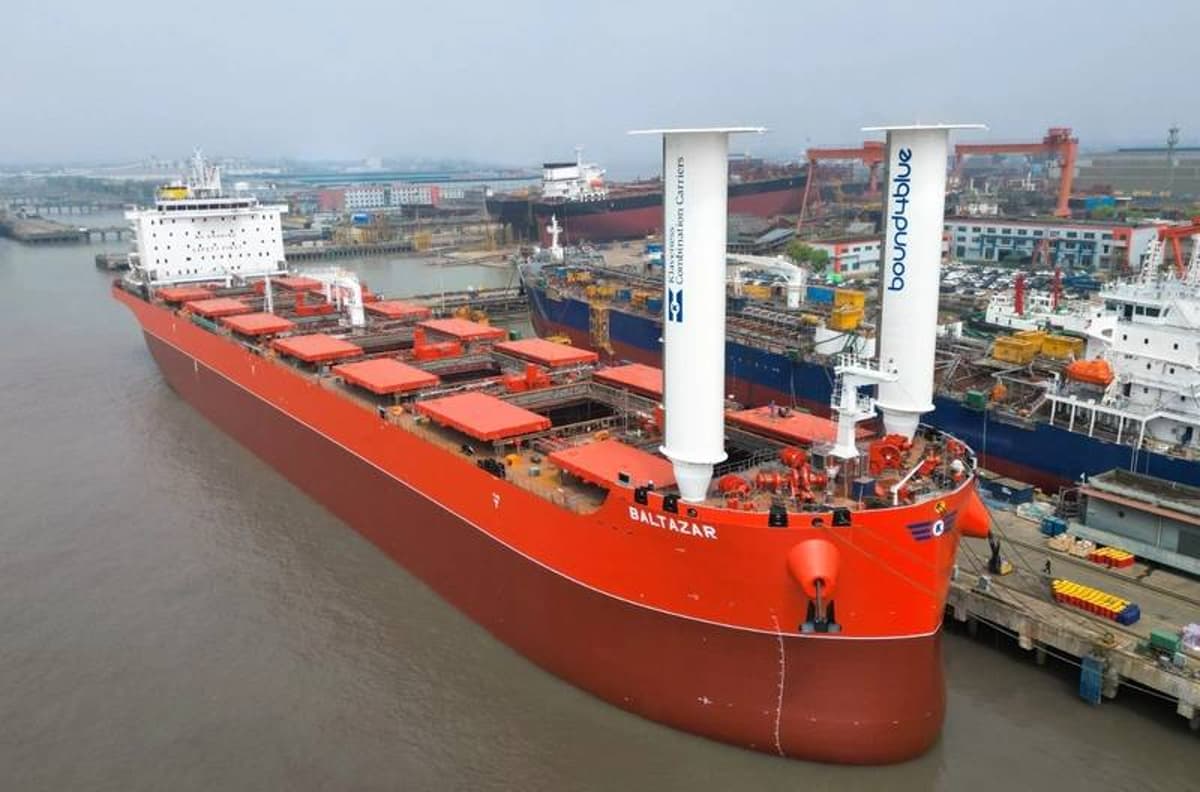
Bound4blue Installs Wind Propulsion System on KCC’s Vessel Newbuild
Why It Matters
By harnessing wind power, the sails can lower operating costs and help KCC meet tightening emissions regulations, while demonstrating the commercial viability of wind‑assisted technology for large carriers.
Key Takeaways
- •bound4blue installed two 24‑m eSAIL suction sails on MV Baltazar.
- •Installation marks first China‑manufactured suction sails for a combination carrier.
- •Sails aim to cut fuel use and emissions via wind thrust.
- •Project expands bound4blue’s presence in Asian shipbuilding market.
Pulse Analysis
The shipping sector is under intense pressure to cut greenhouse‑gas emissions as the International Maritime Organization tightens its carbon intensity targets for 2030 and beyond. Among the emerging solutions, wind‑assisted propulsion has moved from experimental rigs to commercial applications, offering a zero‑fuel source that can complement traditional engines. Companies such as bound4blue have refined the concept with suction‑sail eSAIL technology, which creates thrust by accelerating airflow over a smooth, low‑drag surface. This approach promises measurable fuel savings without the complexity of rotating blades, making it attractive to operators seeking both regulatory compliance and cost efficiency.
The recent installation of two 24‑metre eSAILs on the MV Baltazar, a new combination carrier for Klaveness Combination Carriers, marks a milestone for both the technology and its supply chain. Built at New Yangzi Shipbuilding, the vessel is the first to receive suction sails manufactured locally in China, reducing lead times and logistics costs for future Asian projects. Expected to commence service in the third quarter of 2026, the sails are projected to cut fuel consumption by up to 10 percent, translating into lower CO₂ emissions and operating expenses for KCC. The project also adds to bound4blue’s growing roster of high‑profile clients, which includes Maersk Tankers and BW Epic Kosan.
Bound4blue’s Chinese rollout signals a broader shift toward regional production of green maritime technologies, a trend that could accelerate adoption across the global fleet. As shipowners grapple with rising bunker prices and stricter emissions penalties, wind‑assisted systems offer a competitive edge, especially for vessels with long, steady voyages like combination carriers. Investors are taking note; the market for wind‑propulsion equipment is projected to exceed $1 billion by 2030, driven by both newbuild integrations and retrofits. Continued collaborations between technology firms, shipyards, and forward‑thinking operators will be crucial to scaling the solution and achieving the industry’s decarbonisation goals.
bound4blue Installs Wind Propulsion System on KCC’s Vessel Newbuild
Comments
Want to join the conversation?
Loading comments...