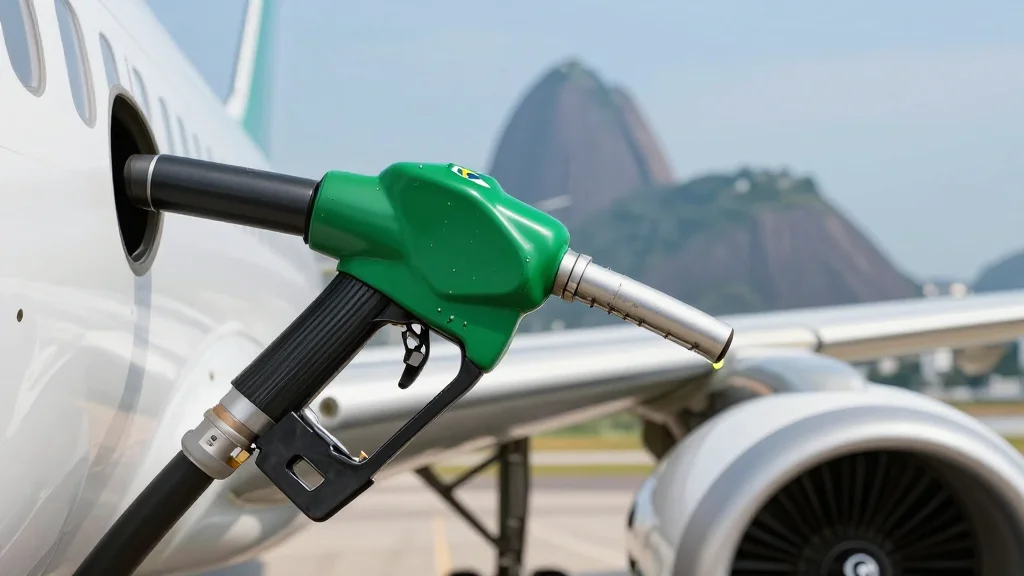
Brazil’s Opportunity to Be a SAF Powerhouse
Companies Mentioned
Why It Matters
Brazil’s SAF capacity could dramatically cut aviation emissions while boosting energy security and creating export‑ready biofuel industries, reshaping the global decarbonisation landscape.
Key Takeaways
- •Brazil could produce 12 Mt SAF by 2030, five times 2026 global output
- •180 Mt biomass feedstock potential could yield 60 Mt SAF by 2050
- •Existing 15 SAF projects could add 2 Mt capacity if completed
- •Clean electricity mix and ethanol expertise give Brazil competitive edge
- •Policy incentives and book‑and‑claim system crucial for scaling SAF
Pulse Analysis
The aviation sector faces mounting pressure to meet net‑zero targets, and sustainable aviation fuel is the most viable near‑term solution. Brazil’s agricultural base, dominated by sugar‑cane ethanol, positions it uniquely to supply the raw materials needed for large‑scale SAF production. IATA’s recent call to action underscores that the country could meet a substantial share of the 500 Mt SAF demand airlines anticipate by 2050, leveraging its existing biofuel infrastructure to accelerate market entry.
Beyond feedstock abundance, Brazil benefits from one of the world’s cleanest electricity grids and a mature ethanol refining sector. These assets lower the carbon intensity of SAF pathways such as HEFA and ethanol‑to‑jet, making the product more competitive against fossil jet fuel. However, scaling from pilot projects to commercial volumes requires coordinated policy measures: production incentives, financing mechanisms, and alignment with international standards like CORSIA. A transparent book‑and‑claim system, embedded in the ProBioQAV framework, would enable airlines to purchase verified SAF credits, fostering demand while supply chains mature.
If Brazil can unlock its projected 12 Mt SAF output by 2030, the economic ripple effects could be transformative. New jobs would emerge across agriculture, logistics, and advanced fuel processing, while export opportunities could position Brazil as a net SAF exporter. Energy security would improve as reliance on imported fossil fuels wanes, and the broader bioeconomy would benefit from higher-value downstream products. Strategic sequencing of infrastructure rollout and policy mandates will be critical to achieving price reductions and market scale, turning Brazil’s natural advantages into a sustainable aviation hub.
Brazil’s Opportunity to Be a SAF Powerhouse
Comments
Want to join the conversation?
Loading comments...