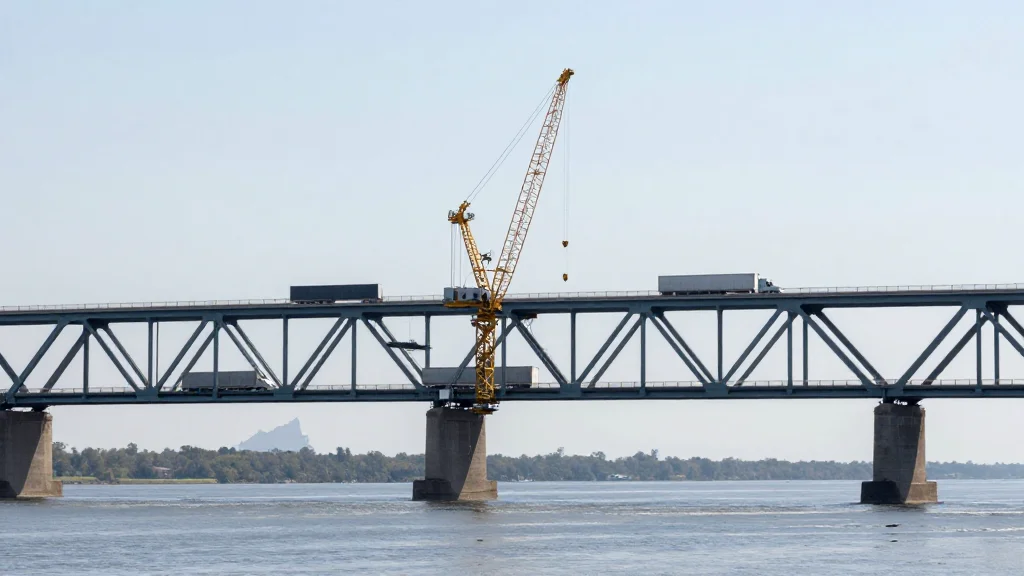
Brent Spence Bridge Corridor Project Triggers Major I‑75 Closures in Ohio and Kentucky

Why It Matters
The Brent Spence Bridge Corridor Project sits at the intersection of two major interstate highways that move a staggering volume of freight and commuter traffic. By addressing chronic bottlenecks, the project aims to reduce shipping delays, lower fuel consumption, and improve road safety—benefits that extend far beyond the Cincinnati‑Covington metro area. However, the extensive ramp closures and detours introduced during construction pose immediate challenges for logistics firms that rely on predictable transit times, potentially inflating costs for downstream manufacturers and consumers. The project's success—or failure—will serve as a bellwether for how the United States tackles aging infrastructure while keeping the economy moving. Moreover, the $4 billion investment, bolstered by $1.63 billion in federal grants, underscores the growing political will to fund large‑scale transportation upgrades. If the project delivers on its promises, it could catalyze similar initiatives on other congested corridors, reshaping national freight strategy and reinforcing the United States' competitive edge in global supply chains.
Key Takeaways
- •May 7: Gov. DeWine and Gov. Beshear broke ground on the $4.05 billion Brent Spence Bridge Corridor Project.
- •Project funded by $1.63 billion in USDOT grants, one of the largest transportation grants in U.S. history.
- •More than $1 billion in freight moves daily through the I‑71/I‑75 corridor that the bridge serves.
- •Permanent closure of West Fifth Street ramp and the $8.8 million "Texas Turnaround" beginning May 26 and October respectively.
- •Ramp closures expected to last until as late as summer 2027, with full project completion targeted for 2033.
Pulse Analysis
The Brent Spence Bridge Corridor Project illustrates the classic infrastructure paradox: massive long‑term gains are offset by short‑term pain. Historically, bridge replacements in high‑traffic corridors have triggered similar disruption cycles—think the I‑35W bridge collapse in Minneapolis or the I‑95 overhaul in Baltimore—yet the economic payoff often justifies the inconvenience. In this case, the $4 billion price tag is justified not only by the need to restore emergency shoulders and add capacity but also by the strategic importance of the I‑71/I‑75 nexus for national freight. The project's funding structure, with a sizable federal grant component, signals a shift toward more collaborative financing models that could accelerate future megaprojects.
From a competitive standpoint, the bridge's bottleneck has long been a choke point for manufacturers in the Midwest seeking to ship to ports on the Gulf Coast. By alleviating this pinch, the corridor could reclaim market share from rail and air freight alternatives, reinforcing trucking's dominance in domestic logistics. However, the interim closures risk eroding that advantage if shippers divert to alternative routes that add mileage and time. Logistics firms are likely to hedge by building buffer inventory or renegotiating carrier contracts, which could dampen the projected cost savings.
Looking ahead, the project's success hinges on disciplined project management and transparent communication with the public. The phased reopening of ramps, coupled with real‑time traffic monitoring, will be critical to maintaining confidence among commuters and freight operators. If the state agencies can deliver the promised improvements on schedule, the Brent Spence Bridge could become a template for tackling other aging infrastructure assets across the country, demonstrating that strategic investment, even when disruptive, can yield lasting economic dividends.
Brent Spence Bridge Corridor Project Triggers Major I‑75 Closures in Ohio and Kentucky
Comments
Want to join the conversation?
Loading comments...