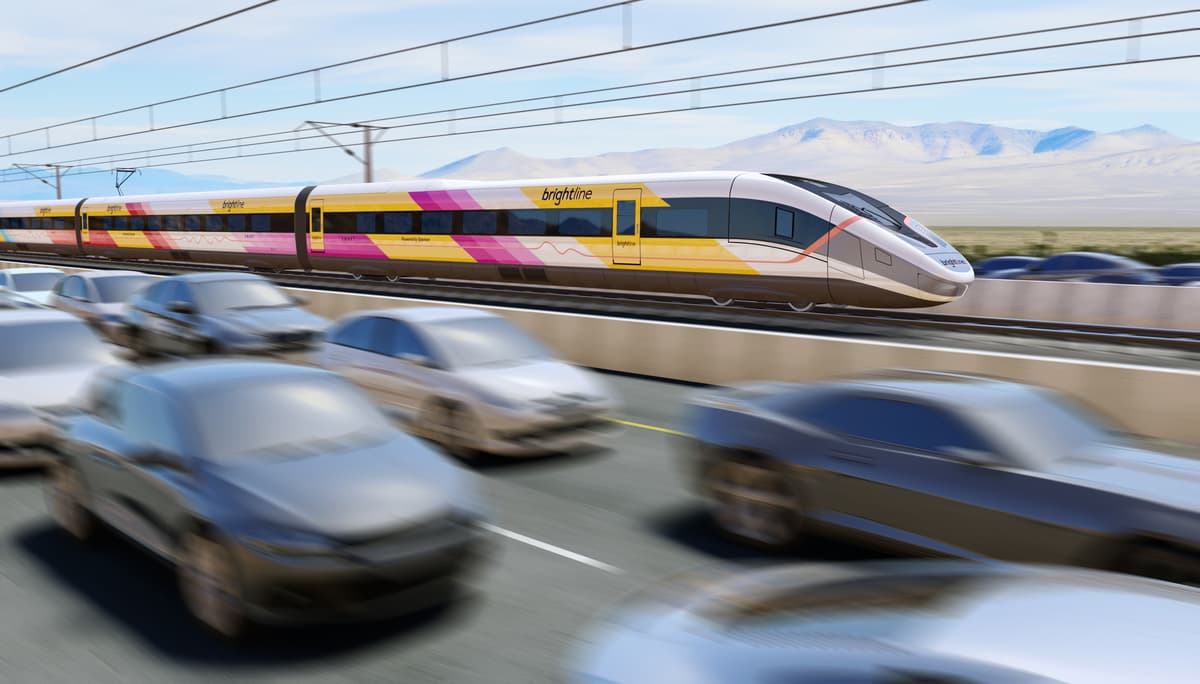
Brightline West Cites Construction Progress, Still No Federal Loan
•March 2, 2026
0
Why It Matters
Securing the federal loan is critical to bridge the financing gap and keep the $21 billion project on schedule, influencing the viability of the first private high‑speed rail in the United States. The outcome will shape future public‑private infrastructure partnerships in the rail sector.
Key Takeaways
- •$6B federal RRIF loan still pending
- •$4B senior loan package under negotiation
- •Project cost now $21.05B
- •Key construction milestones achieved
- •Private‑equity interest increasing
Pulse Analysis
Brightline West represents a bold attempt to introduce private, all‑electric high‑speed rail to the United States, targeting the lucrative Southern California‑Las Vegas corridor. While the Florida‑based parent already operates a successful passenger service, the West project must overcome a far larger capital hurdle, with total costs now exceeding $21 billion. The federal Railroad Rehabilitation and Improvement Financing loan, a cornerstone of the financing stack, remains in limbo, pushing the company to secure a parallel $4 billion senior loan from a banking consortium. This dual‑track approach reflects a broader industry trend where private developers seek diversified funding sources to mitigate the risk of delayed public capital.
The financing challenge is compounded by recent cost escalations; the project’s budget swelled by $5.3 billion due to rising construction prices and expanded scope. Such inflationary pressures have heightened the urgency for both federal and private capital. Fortress Investment Group, the ultimate owner, reports growing interest from private‑equity lenders capable of filling the financing gap, yet the RRIF loan remains a prerequisite for equity deployment and loan disbursement. This dynamic underscores the delicate balance between achieving cost certainty for the government and maintaining momentum for private investors.
On the construction front, Brightline West has reported tangible progress: underground infrastructure, column structures, and the first elevated decks are in place, and drainage work is complete. Engineering documents with the Nevada Department of Transportation are 70 percent finished, and 15 contracts have received NDOT approval. These milestones demonstrate that, despite financing uncertainty, the project is moving forward on the ground. The upcoming March update will be a litmus test for the company’s ability to align financing commitments with construction schedules, a development that could set a precedent for future U.S. high‑speed rail initiatives.
Brightline West cites construction progress, still no federal loan
0
Comments
Want to join the conversation?
Loading comments...