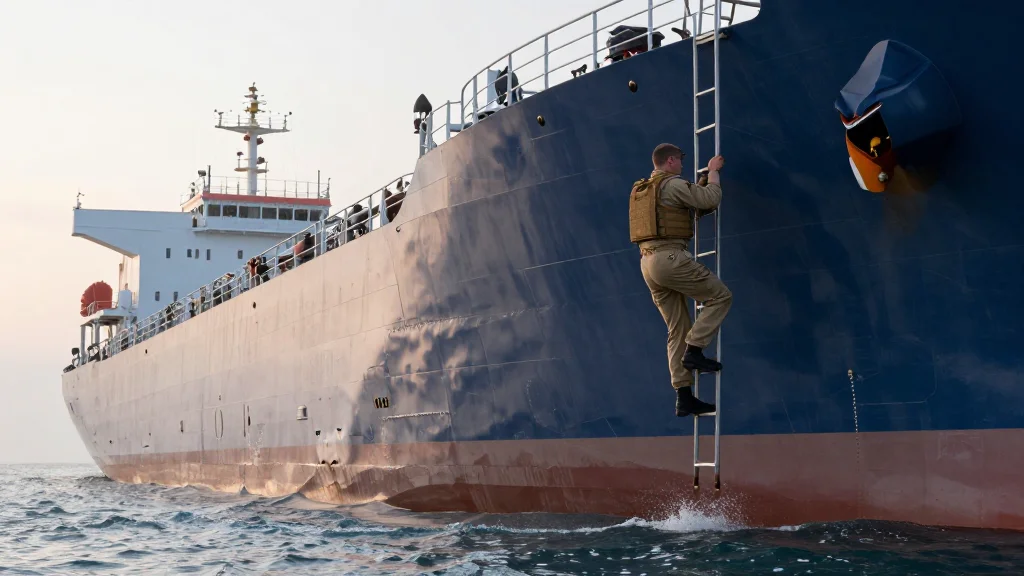
Britain Seizes Its First Shadow Fleet Tanker
Why It Matters
The seizure demonstrates the UK’s escalating commitment to enforce sanctions on Russia’s covert oil logistics, potentially disrupting a lucrative illicit supply chain and signaling tougher maritime security to other shadow‑fleet operators.
Key Takeaways
- •UK seized Russian‑linked Aframax tanker *Smyrtos* in English Channel.
- •Operation involved Royal Marines, NCA, French Navy, HMS *Somerset* and assets.
- •Vessel carries ~600,000 barrels (~$30 billion) of oil, flagged Cameroon.
- •First UK boarding of a shadow‑fleet tanker, lagging behind EU peers.
- •Future cargo seizure unclear; legal process may affect outcome.
Pulse Analysis
The term ‘shadow fleet’ refers to vessels that operate under opaque ownership structures, often using flags of convenience to evade sanctions and conceal the origin of cargo. Since the start of the Ukraine conflict, Russia has relied heavily on such a fleet to move crude and refined products to markets that would otherwise be closed. European authorities have gradually tightened controls, issuing black‑list designations and requiring rigorous documentation. The *Smyrtos*, an Aframax tanker flagged in Cameroon, appeared on both EU and UK sanction lists, indicating that it was suspected of transporting Russian oil while masking its true provenance.
The boarding on June 14 was executed under Article 110 of the United Nations Convention on the Law of the Sea, which permits a warship to board a vessel when there are reasonable grounds to suspect it lacks a legitimate flag. A joint task force comprising Royal Marines, the National Crime Agency, the French Navy, HMS *Somerset* (a Type 23 frigate), HMS *Ledbury* and a P‑8 Poseidon aircraft coordinated the operation. After the crew was secured, the *Smyrtos* was escorted to an anchorage off England’s south coast for a comprehensive safety and certification inspection, a standard procedure before any legal adjudication.
The capture of an estimated 600,000 barrels—valued at roughly $30 billion at current market rates—highlights the financial stakes tied to shadow‑fleet interdictions. By demonstrating the willingness to seize high‑value oil cargoes, the United Kingdom sends a clear signal to ship owners and charterers that evasion will carry tangible costs. If the cargo is ultimately confiscated, it could tighten global oil supply and reinforce price volatility, especially as European refiners scramble for alternative sources. The incident also positions the UK as a more assertive player in maritime enforcement, potentially prompting other nations to adopt similar hard‑line tactics.
Britain Seizes its First Shadow Fleet Tanker
Comments
Want to join the conversation?
Loading comments...