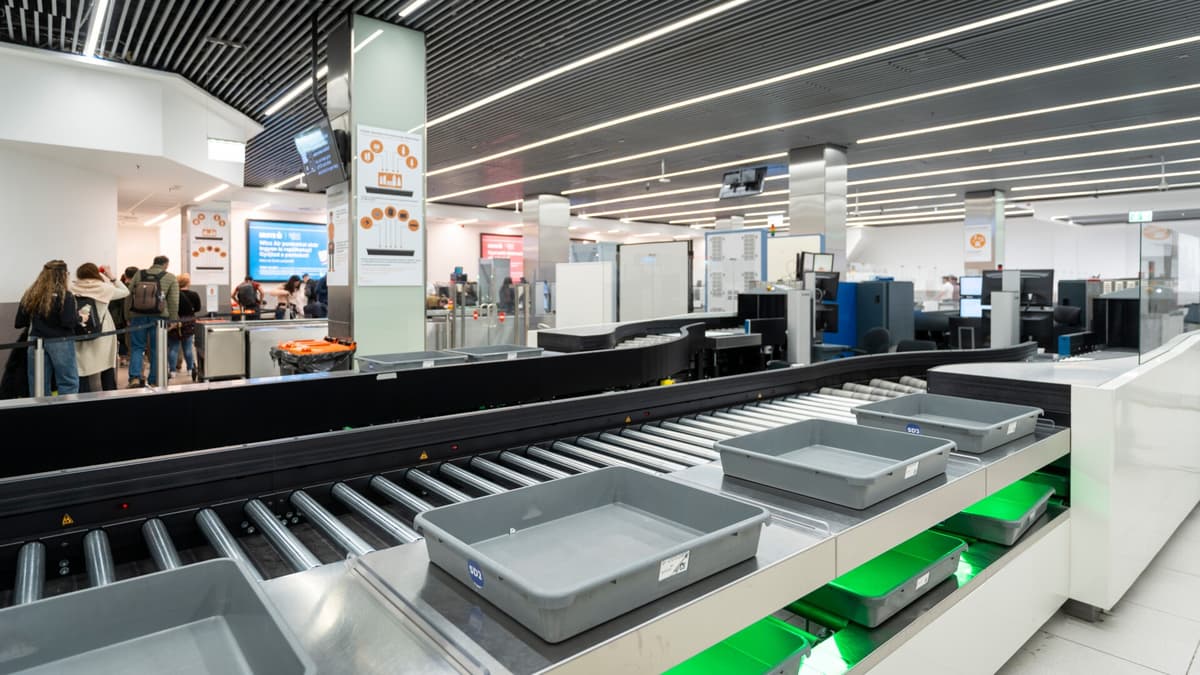
Budapest Airport Introduces New Security Screening System
Companies Mentioned
Why It Matters
The faster, automated screening enhances passenger experience while allowing the airport to handle higher traffic without congestion. It signals a shift toward standardized, data‑rich security operations across VINCI’s worldwide network.
Key Takeaways
- •NextGen Security cuts Budapest wait times to under one minute.
- •Automated trays and redesigned workspaces boost processing capacity by 20‑30%.
- •Staff training aligns with new equipment for consistent security performance.
- •VINCI aims to scale the system across Europe, Japan, Latin America.
Pulse Analysis
Budapest Ferenc Liszt International Airport has become the latest VINCI Airports hub to deploy its NextGen Security system, a technology‑driven redesign of the screening area. The new lanes combine high‑speed tray conveyors, advanced X‑ray imaging and biometric verification to accelerate passenger flow. By integrating automated tray handling with a reconfigured workspace, the airport aims to cut average security wait times to under one minute during peak periods. The rollout follows similar upgrades at Edinburgh and Gatwick, signaling VINCI’s push toward a unified European security standard.
The streamlined layout also introduces dedicated preparation zones that separate luggage staging from passenger queues, reducing bottlenecks. Automation lowers manual handling for security officers, improving ergonomics and allowing staff to focus on threat detection rather than repetitive tasks. Complementary training programmes have been launched to upskill personnel on the new equipment, ensuring consistent performance across the network. Early data from Budapest suggests that the upgraded process can handle a 20‑30% increase in passenger volume without extending dwell times, a critical advantage as travel demand rebounds post‑pandemic.
VINCI Airports plans to replicate the NextGen model at facilities in Europe, Japan and Latin America, creating a scalable template for modern security operations. The initiative aligns with broader industry trends toward contactless screening and data‑driven risk assessment, which regulators increasingly favor for both safety and passenger convenience. Airports that adopt such systems can differentiate themselves in a competitive market, attract airlines seeking reliable turnaround times, and potentially command higher retail revenues from smoother passenger journeys. The rollout also provides valuable data for continuous improvement of threat detection algorithms.
Budapest Airport Introduces New Security Screening System
Comments
Want to join the conversation?
Loading comments...