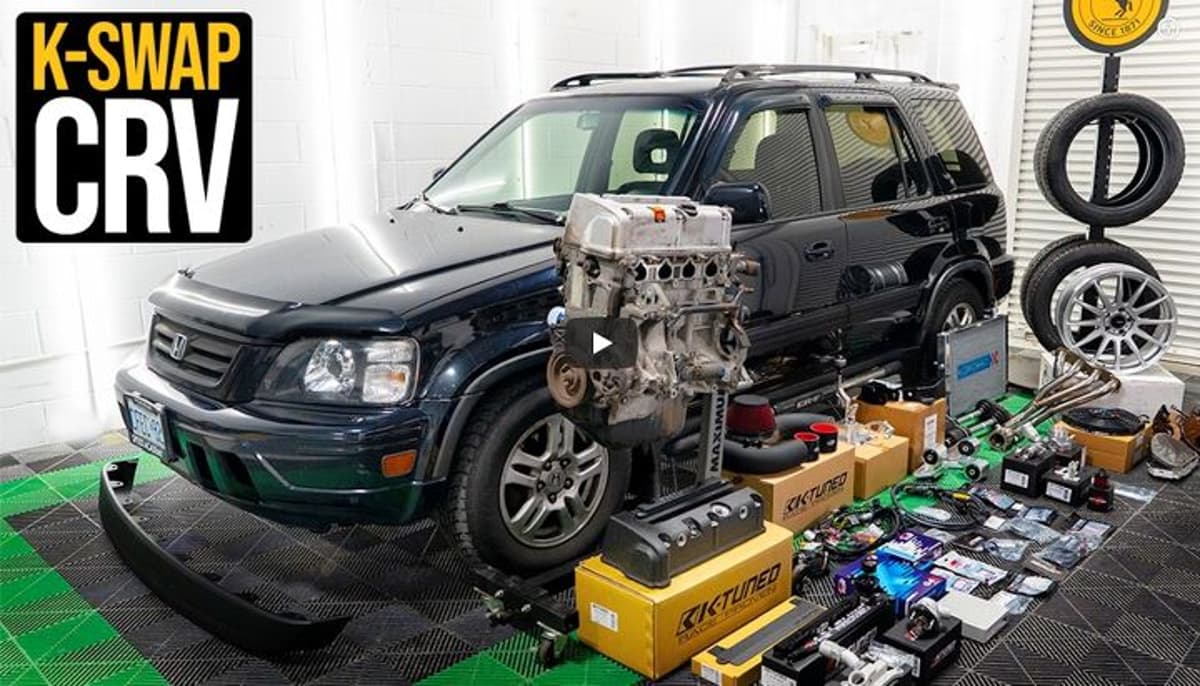
Building the Ultimate Honda CR-V: K-Swap Gets Complicated
Key Takeaways
- •K24a2 engine adds 200 hp to 2000 CR-V
- •Custom radiator from Coyo solves fitment issues
- •Manual AWD 5‑speed transmission requires extensive pedal and shifter fabrication
- •Exhaust needed full custom 3‑inch pipe and high‑flow cat
- •Project highlights complex engineering for modern drivetrain in aging SUV
Pulse Analysis
The Honda CR‑V is one of the best‑selling compact SUVs in the United States, but its aging powertrain can feel dated after 20‑plus years. Speed Academy’s latest episode shows how a 2000 model can be reborn with a 2.4‑liter K24a2 engine from the Acura TSX, delivering roughly 200 horsepower and a modern rev range. By pairing the engine with a manual five‑speed transmission taken from a newer AWD CR‑V, the builders aim to create a performance‑focused daily driver that retains the original vehicle’s practicality. The project illustrates the growing interest in “K‑swap” conversions that blend reliability with sportier output.
Turning the concept into a functional car proved far more intricate than bolting the engine in place. The stock radiator conflicted with the new accessory layout, prompting the team to install a purpose‑built Coyo radiator and fabricate custom brackets and fan mounts. Plumbing the cooling, heater, and power‑steering lines required a mix of K‑Tuned components, AN fittings, and improvised hoses, while the shift from automatic to manual demanded a clutch pedal, master cylinder, and a cut‑out tunnel for the shifter. Even the exhaust had to be re‑engineered—a 3‑inch custom pipe and high‑flow catalytic converter were fabricated to clear the AWD driveshaft.
Beyond the mechanical feat, the build underscores a broader market trend: owners are willing to invest significant time and money to extend the life of older platforms rather than replace them. Companies such as Hasport and K‑Tuned are capitalizing on this demand by offering bolt‑on kits, while YouTube channels like Speed Academy provide step‑by‑step guidance that lowers the barrier to entry for DIY enthusiasts. As emissions regulations tighten, the inclusion of a high‑flow cat shows that performance upgrades can coexist with environmental compliance, hinting at a future where legacy SUVs remain viable performance vehicles.
Building the Ultimate Honda CR-V: K-Swap Gets Complicated
Comments
Want to join the conversation?