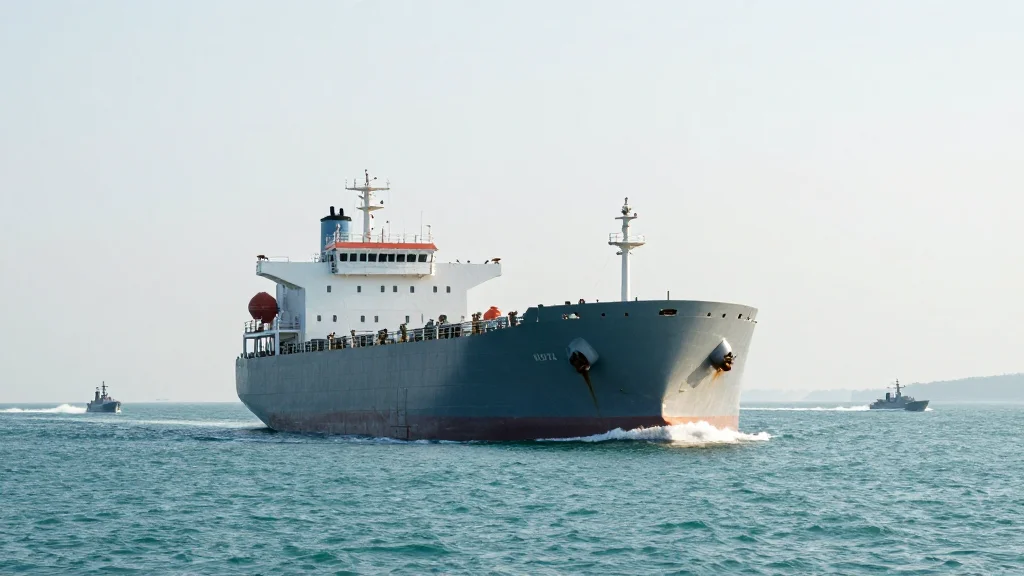
Bulker Attacked by Small Craft in the Strait of Hormuz
Why It Matters
The incident underscores escalating maritime security risks in a chokepoint that handles a third of global oil shipments, prompting shippers to reassess routing and insurance costs. It also highlights the parallel blockades by Iran and the United States, which could disrupt regional trade flows and energy markets.
Key Takeaways
- •Greek-owned bulker Minoan Falcon attacked by small craft near Sirik
- •Ship entered Iran's 12‑mile territorial sea, then disabled AIS transponder
- •IRGC ordered anchored vessels at Ras al Khaimah to relocate to Dubai
- •US Central Command reported turning back 49 vessels under its enforcement
- •April saw 25 Iranian tankers depart; several were redirected or seized
Pulse Analysis
The Strait of Hormuz remains one of the world’s most contested maritime corridors, funneling roughly 20 million barrels of oil daily. Recent confrontations reflect a broader power play between Tehran and Washington, each asserting a de facto blockade to pressure the other’s regional allies. Small‑craft attacks, like the one on the Minoan Falcon, serve as low‑cost tactics to signal resolve without escalating to full‑scale naval engagements, yet they raise immediate safety concerns for commercial vessels navigating the narrow passage.
The Minoan Falcon incident illustrates how commercial ships can become collateral in geopolitical games. After entering Iran’s 12‑mile territorial sea, the bulker reversed course and later switched off its AIS, a move that complicates tracking and raises red‑flag alerts for insurers. Concurrently, Iran’s Islamic Revolutionary Guard Corps issued a fresh Channel 16 directive, compelling vessels anchored at Ras al Khaimah to relocate to Dubai under threat of unspecified repercussions. On the opposite side, U.S. Central Command disclosed that it has forced 49 ships to turn back, reinforcing its “total enforcement” stance. These parallel actions intensify operational uncertainty for shippers, who must now factor potential detours, delays, and heightened insurance premiums into voyage planning.
For the broader shipping industry, the dual blockades signal a need for robust risk‑mitigation strategies. Companies are likely to increase reliance on real‑time intelligence services, diversify routing options, and negotiate more comprehensive war‑risk coverage. Moreover, the episode may prompt policymakers to revisit diplomatic channels aimed at de‑escalating tensions in the Gulf, given the direct impact on global energy supply chains. Stakeholders who proactively adapt to this volatile environment will better safeguard cargo value and maintain supply‑chain resilience amid an increasingly unpredictable geopolitical landscape.
Bulker Attacked by Small Craft in the Strait of Hormuz
Comments
Want to join the conversation?
Loading comments...