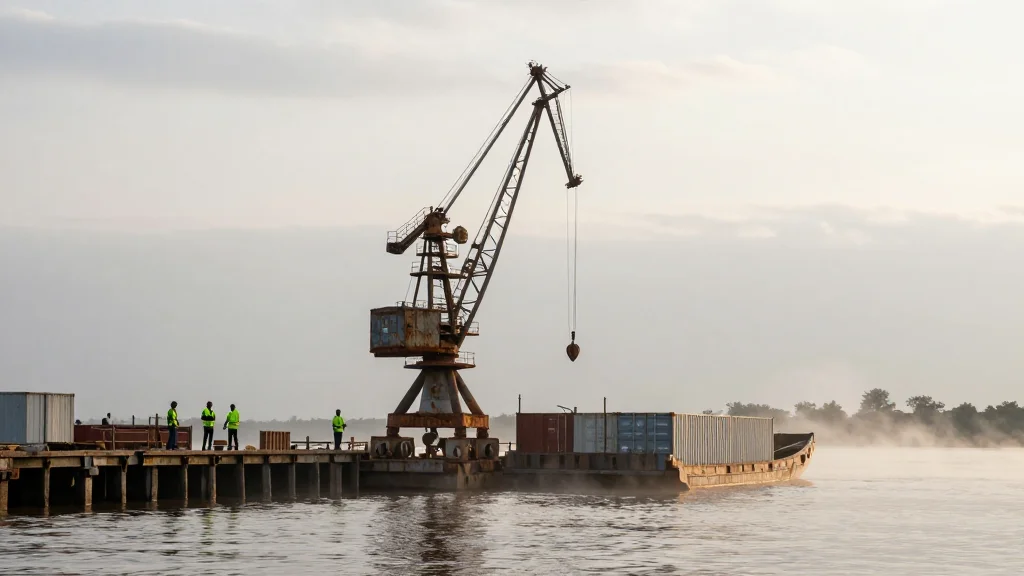
Burundi’s Main Port Struggles to Recover From Flooding
Why It Matters
As a landlocked nation, Burundi’s economy hinges on the port; its disruption threatens supply chains, prices, and regional trade. Building climate‑resilient infrastructure is essential for economic stability and for the broader East African corridor.
Key Takeaways
- •Port of Bujumbura handles >80% of Burundi’s imports and exports
- •Floods caused $210 million losses and displaced 48,000 people
- •$93 million renovation project was halted by the disaster
- •New design will prioritize climate‑resilience and improved drainage
Pulse Analysis
Burundi’s reliance on the Port of Bujumbura illustrates how a single inland water hub can underpin an entire nation’s trade. With a population of 13.7 million and nine‑tenths living below the poverty line, the country depends on the lake‑linked port for more than 80 percent of its imports and exports. The port’s strategic position connects Burundi to Tanzanian and Zambian corridors, turning Lake Tanganyika into a de‑facto seaport. Yet climate‑induced flooding has exposed the fragility of this lifeline, prompting urgent attention from policymakers and development financiers.
The late‑2023 floods were catastrophic: water levels rose sharply, inundating docks, warehouses, and adjacent road networks. Estimated damages total $210 million, while 48,000 residents were displaced and 240,000 people affected nationwide. The disaster struck just after a $93 million renovation—financed by the African Development Bank, the European Union and other partners—was announced to modernise the port and boost regional connectivity. With the project stalled, UNDP‑commissioned engineers now recommend a redesign that embeds robust drainage, flood‑proof structures, and adaptable capacity to withstand future hydrological extremes. This shift from repair to resilience reflects a growing consensus that climate risk must be baked into infrastructure planning in low‑income, landlocked economies.
The implications extend beyond Burundi’s borders. A resilient Bujumbura port would safeguard trade routes for Tanzania, Zambia and the wider East African Community, preserving market access for millions of consumers. Moreover, the financing blueprint—public‑private partnerships backed by multilateral donors—offers a replicable model for other vulnerable nations seeking to protect critical assets. As climate change accelerates, the Bujumbura case underscores the urgency of integrating adaptation measures into development projects, ensuring that essential infrastructure can continue to function under stress and support economic growth.
Burundi’s Main Port Struggles to Recover From Flooding
Comments
Want to join the conversation?
Loading comments...