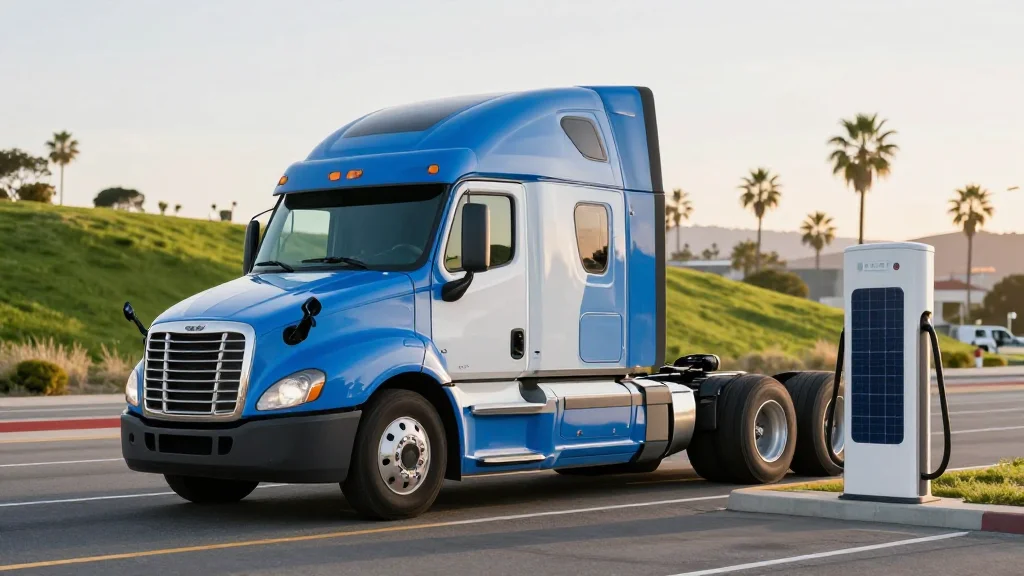
California Rolls Out $1 Billion Electric‑Truck Rebate to Speed Zero‑Emission Freight

Companies Mentioned
Why It Matters
The Clean Fuel Reward tackles two entrenched problems: persistent air‑pollution in densely populated regions and the high upfront cost of electric trucks that has slowed adoption. By subsidizing up to $120,000 per vehicle, the program makes zero‑emission freight economically viable for small and medium‑sized fleets that collectively represent the bulk of on‑road diesel usage. Successful uptake could accelerate California’s broader climate agenda, reduce health‑related expenditures, and create a market precedent that other states may emulate, reshaping the national freight landscape. Beyond health and climate, the incentive could stimulate domestic manufacturing of electric powertrains and battery systems, fostering job growth in clean‑technology sectors. It also sends a clear signal to OEMs that demand for heavy‑duty electric trucks is not a niche market but a mainstream, policy‑driven opportunity, potentially spurring further innovation and price reductions.
Key Takeaways
- •California launches a $1 billion Clean Fuel Reward program for battery‑electric trucks.
- •Rebates range from $7,500 (Class 2b) to $120,000 (Class 8) per vehicle.
- •Only new battery‑electric trucks qualify; hybrids and hydrogen vehicles are excluded.
- •Program aims to cut air‑pollution‑related health costs estimated at $200 million annually in California.
- •Launch slated for Q4 2026 with full funding expected to be exhausted by 2029 if demand is strong.
Pulse Analysis
California’s rebate is more than a fiscal stimulus; it is a market‑shaping instrument that directly addresses the cost barrier that has kept electric heavy‑duty trucks out of reach for most carriers. Historically, adoption of new freight technologies—such as diesel engines in the 1930s—required a combination of regulatory mandates and financial incentives. The Clean Fuel Reward mirrors that playbook, but with a focus on point‑of‑sale rebates that bypass the complexities of tax‑credit accounting, a pain point for many small operators.
The program also reflects a strategic alignment with California’s renewable‑energy grid. As the state continues to expand solar and wind capacity, the marginal cost of electricity for charging fleets is expected to decline, further improving the total cost of ownership for electric trucks. This creates a virtuous cycle: higher electric‑truck penetration drives demand for more renewable generation, which in turn lowers charging costs and reinforces the business case for electrification.
However, the exclusion of hydrogen‑fuel‑cell trucks could limit long‑term flexibility, especially for routes requiring longer ranges or faster refueling. If hydrogen technology matures faster than anticipated, California may need to revisit its policy mix to avoid locking in a single technology path. For now, the rebate’s focus on battery‑electric trucks leverages existing infrastructure and supply chains, delivering immediate emissions reductions while the industry continues to evaluate alternative zero‑emission powertrains.
Overall, the Clean Fuel Reward positions California as a testbed for large‑scale, utility‑driven incentives. Its success or failure will likely inform federal policy discussions and could catalyze similar programs in other high‑emission states, accelerating the national transition to zero‑emission freight.
California Rolls Out $1 Billion Electric‑Truck Rebate to Speed Zero‑Emission Freight
Comments
Want to join the conversation?
Loading comments...