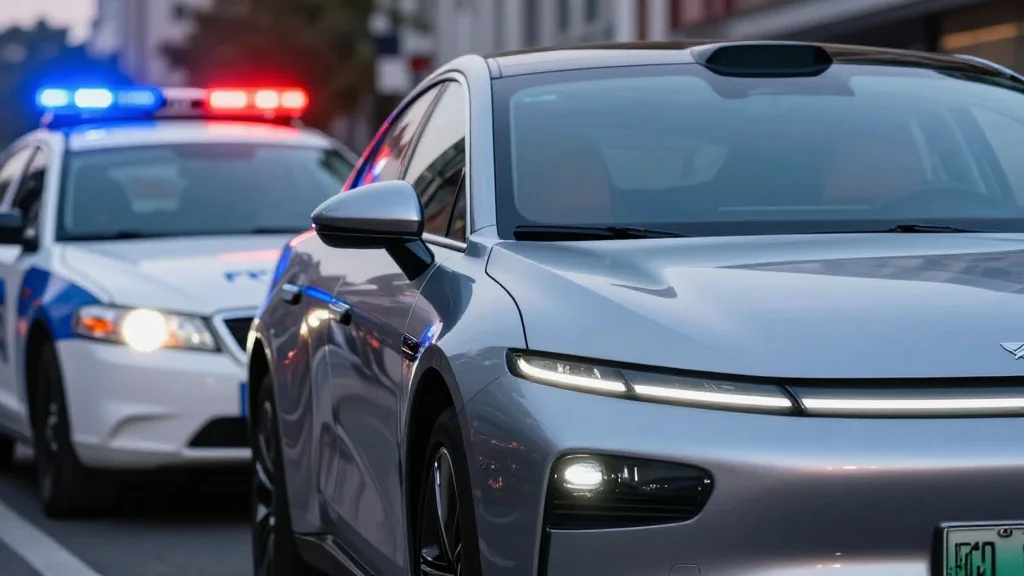
California to Ticket Driverless Cars for Traffic Violations Starting July 1

Why It Matters
The ability to ticket driverless cars closes a regulatory loophole that has hampered law‑enforcement’s capacity to enforce traffic safety on autonomous fleets. By holding manufacturers directly accountable, California aims to deter negligent programming and encourage faster remediation of software glitches that can endanger public safety. The policy also signals to other jurisdictions that enforcement, not just testing, is a critical component of AV deployment, potentially accelerating the adoption of similar frameworks nationwide. For the autonomous vehicle market, the rule introduces a new cost vector—real‑time compliance infrastructure and possible fines—that could affect pricing, investment decisions, and the speed of scaling robotaxi services. Companies that can quickly adapt may gain a competitive edge, while those lagging could see slower market penetration or face reputational damage if cited for repeated violations.
Key Takeaways
- •Effective July 1, California police can issue a “notice of AV non‑compliance” to autonomous vehicle manufacturers.
- •Manufacturers must respond within 30 seconds or face penalties, including fines for entering emergency zones.
- •The rule stems from a 2024 law that deepened regulation of driverless technology in the state.
- •Incidents prompting action include a Waymo illegal U‑turn in San Bruno and stalled Waymo cars during a San Francisco blackout.
- •Waymo, Tesla and other AV operators must upgrade software to meet the new real‑time response requirement.
Pulse Analysis
California’s enforcement framework is a watershed for autonomous vehicle governance, shifting the liability paradigm from the absent driver to the corporate owner. Historically, regulators have focused on safety standards and testing protocols, leaving a gray area for day‑to‑day traffic violations. By codifying a citation process, the DMV forces manufacturers to treat each vehicle as an extension of their operational footprint, akin to a fleet of traditional taxis that can be fined for infractions.
The 30‑second response mandate is particularly aggressive. It compels firms to embed low‑latency communication stacks into their AV platforms, a technical challenge that may favor larger players with deeper engineering resources. Smaller startups could find the compliance burden prohibitive, potentially consolidating the market around a few dominant operators. This dynamic could accelerate the exit of marginal players, reshaping the competitive landscape.
Looking ahead, the rule may catalyze a cascade of similar policies across the United States. States such as Arizona and Nevada, which have been testing grounds for AVs, lack comparable enforcement tools. If California’s model proves effective—reducing traffic disruptions and improving emergency response times—legislators elsewhere may adopt it, creating a de‑facto national standard. For investors, the development underscores the importance of regulatory risk assessment in AV portfolios; companies that demonstrate robust compliance architectures are likely to attract more capital, while those that stumble could see valuation pressure. Ultimately, the success of this policy will hinge on how quickly manufacturers can integrate real‑time compliance and whether the fines imposed are sufficient to change behavior without stifling innovation.
California to Ticket Driverless Cars for Traffic Violations Starting July 1
Comments
Want to join the conversation?
Loading comments...